
Data is everywhere, but without the right tools it can feel overwhelming. Business Intelligence (BI) and Analytics Services make sense of that complexity by turning raw information into clear, actionable insights. Whether through self‑service dashboards or advanced analytics, BI gives companies the ability to track performance, anticipate trends, and make confident decisions that drive growth.
What Are Business Intelligence Services?
Think of Business Intelligence (BI) as a way to bring scattered data into focus. By consolidating information, simplifying reports, and highlighting patterns, BI helps organizations see their current performance and understand their future direction. With forecasting models and operational analytics, businesses become more flexible, productive, and ready to take advantage of new opportunities. In short, BI provides leaders with the confidence to make smart, data-driven decisions in an information-driven world.
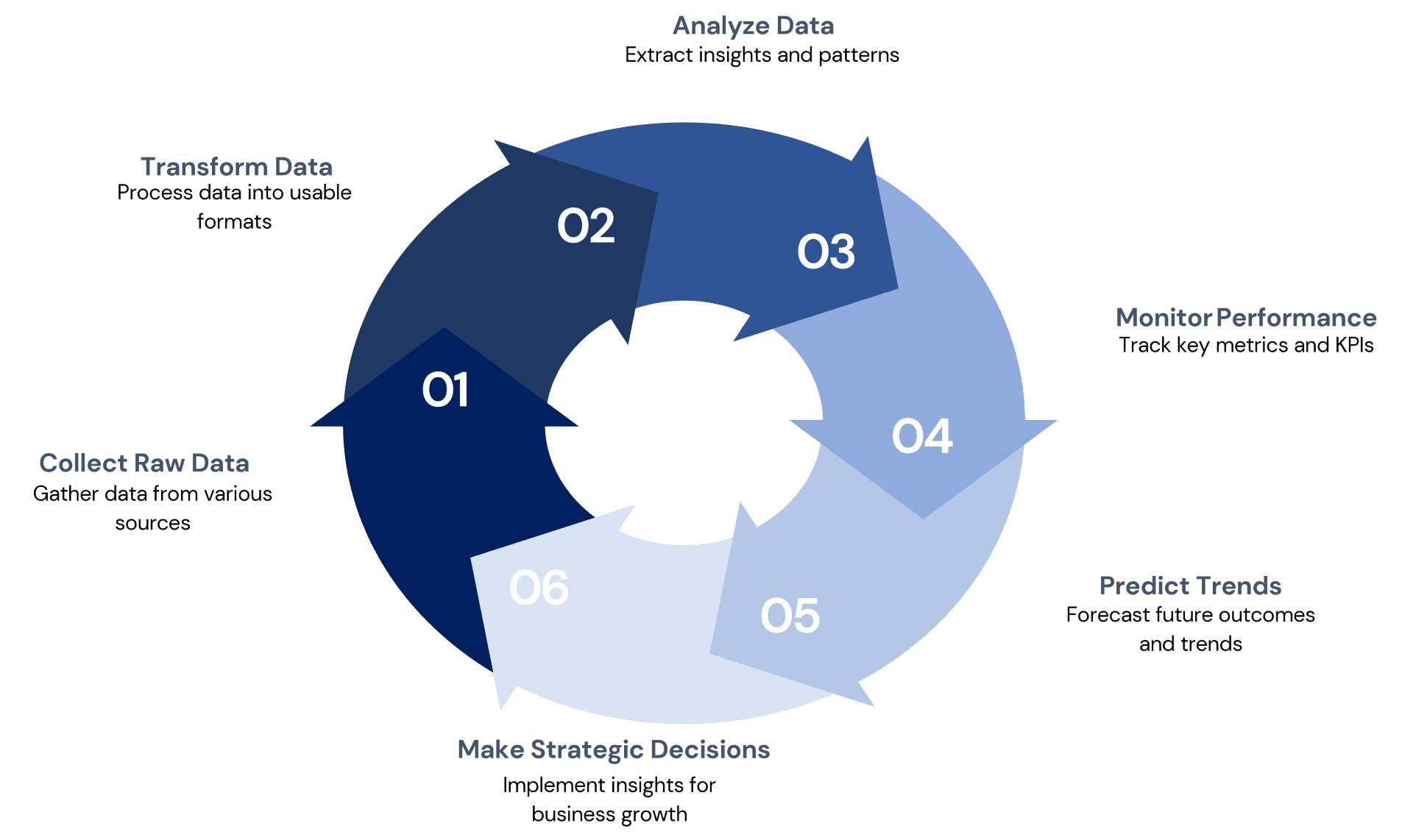
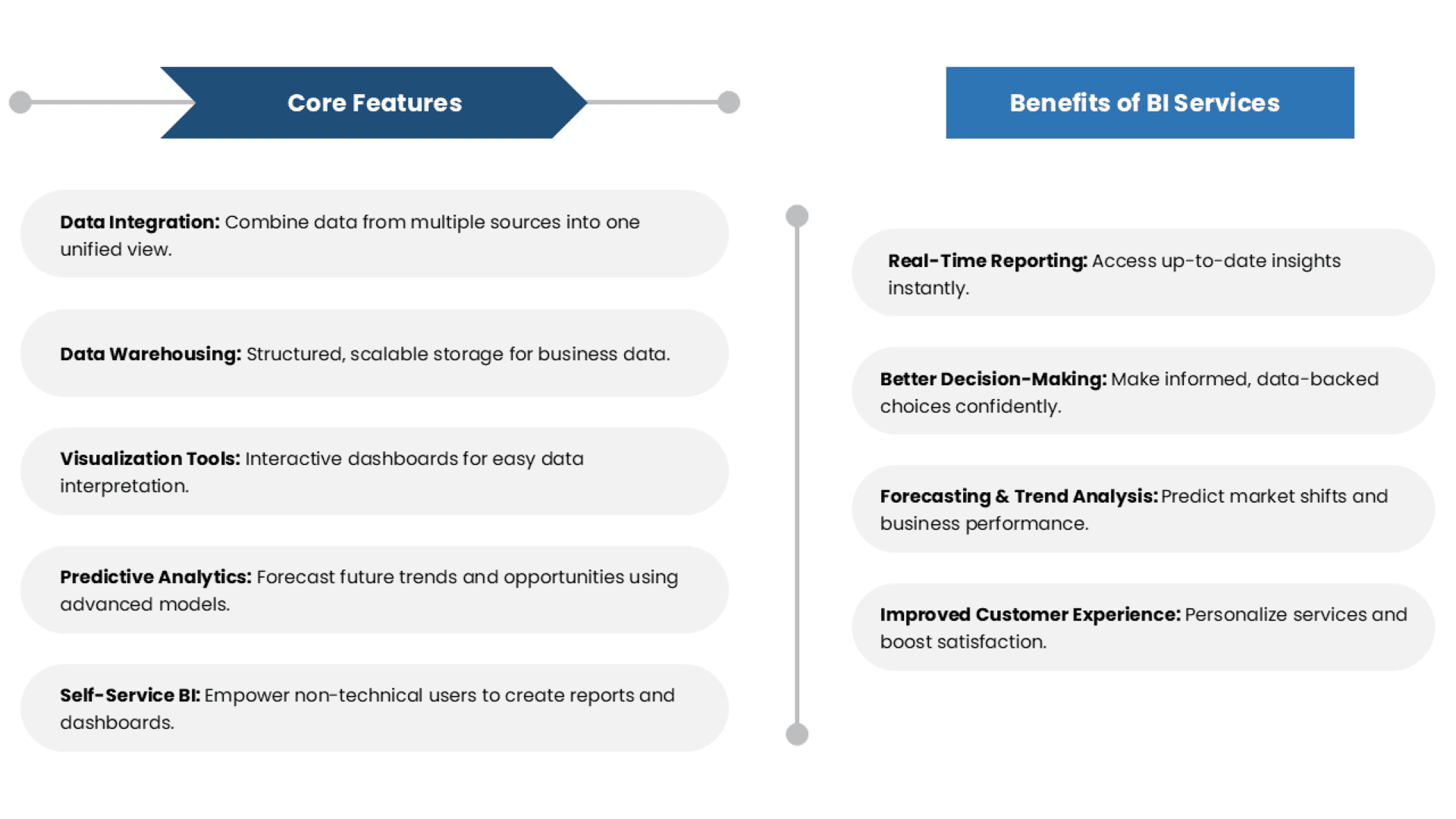
Core Components and Benefits of Business Intelligence
Data Integration: Process of bringing together data from several systems into one place.
Data Warehousing: This is a way to store business data in a structured and scalable way.
Visualization Tools: These interactive dashboards help people understand data.
Predictive Analytics: Looks at data to uncover patterns and commercial opportunities that might happen in the future.
Self-Service Tools: These let you gain insights faster and make you less reliant on IT.
Together, these components make BI practical, accessible, and powerful.
Key Business Intelligence Techniques
Business Intelligence and Analytics Services: Use dashboards and modeling to spot trends, set KPIs, and build smarter strategies.
Self-Service Business Intelligence: Gives non‑technical users the ability to explore data, create reports, and make faster decisions without relying on IT.
Business Intelligence and Data Analytics Services: Combine BI with machine learning and forecasting to move from “what happened” to “what’s next,” enabling proactive decision‑making.
Popular tools that support these techniques include Power BI, Tableau, Qlik Sense, Looker, and SAP BusinessObjects.
How Business Intelligence Improves Business Functions
BI is a great tool for a whole organization and not just one department. In short, it lets you:
Data consolidation for a single source of truth
Performance management to track KPIs
Market analysis to understand industry shifts
Customer insights to improve experiences
Predictive forecasting to anticipate future needs
These capabilities strengthen supply chains, improve financial planning, sharpen marketing strategies, and increase customer loyalty.
Why Business Intelligence Matters
Business Intelligence Services help companies stay ahead of the competition by giving them:
Real-time insights
Clearer decisions
Reliable forecasts
Along with BI, companies can find new avenues for growth, make their operations more efficient, and give better service to their customers.
Common Challenges in Using Business Intelligence
When firms opt to use BI solutions, they do face some problems:
Data Silos
Inconsistent Data Quality
Choosing the Right Tools
Getting Employees to Use Them
Businesses may overcome these challenges and fully use BI with the support of professionals and a clear plan.
How UnivDatos Helps Businesses Achieve BI Excellence
At UnivDatos, we deliver Business Intelligence (BI) and analytics solutions that make complex information clear. By bringing together data, improving its quality and consistency, and turning it into actionable insights, we help organizations make faster, smarter decisions. Our intuitive dashboards, reporting, and customized analytics allow teams to track performance, spot trends early, and act confidently. With strong governance and controls in place, UnivDatos makes sure every BI and analytics output is dependable, useful, and fits well with business goals, turning information into a real driver of growth.
Connect with us today and turn your data into a powerful driver of growth and success.