
W dzisiejszym, szybko zmieniającym się środowisku badawczym dane są wartościowe tylko wtedy, gdy są dokładne, aktualne i użyteczne. Wiele zespołów nadal traci czas i jakość na etapie prac terenowych z powodu procesów manualnych, niespójnej realizacji i opóźnionych kontroli.
W tym właśnie pomaga CAPI (Computer-Assisted Personal Interviewing – wywiad osobisty wspomagany komputerowo). CAPI modernizuje ankiety prowadzone przez ankieterów, rejestrując odpowiedzi bezpośrednio na urządzeniu cyfrowym, umożliwiając lepszą kontrolę, szybszy czas realizacji i lepszy wgląd w postęp prac terenowych.
Czym jest CAPI?
CAPI to metoda prowadzenia ankiet przez ankietera, w której odpowiedzi są wprowadzane bezpośrednio do tabletu, smartfona lub laptopa podczas wywiadu. W porównaniu z ankietami papierowymi (PAPI), CAPI redukuje błędy manualne, poprawia standaryzację i ułatwia monitorowanie.
Jest to szczególnie przydatne, gdy potrzebujesz:
Wywiady osobiste dla lepszej jakości odpowiedzi
Dłuższe lub bardziej złożone kwestionariusze
Ankiety wielojęzyczne
Prace terenowe w regionach o słabej łączności (z możliwością rejestrowania danych w trybie offline i późniejszej synchronizacji)
Jak działa proces CAPI
Projekt i programowanie kwestionariusza: Ankiety są programowane z:
Logiką skoków (routing)
Walidacjami i kontrolami zakresu
Pola obowiązkowe (w stosownych przypadkach)
Wersje wielojęzyczne
Kontrola wersji, aby zapobiec używaniu przez zespoły terenowe nieaktualnych kwestionariuszy
To poprawia spójność i zmniejsza liczbę błędów przy wprowadzaniu danych, których można uniknąć.
Gromadzenie danych w terenie (online lub offline): Ankieterzy przeprowadzają ankiety na zatwierdzonych urządzeniach. System jest przeznaczony do przeprowadzania ankiet w trybie offline/online w zależności od warunków terenowych, co oznacza, że wywiady można przeprowadzać offline na obszarach o słabej łączności, a dane są bezpiecznie przechowywane na urządzeniu i synchronizowane, gdy dostępna jest łączność.
Takie podejście zapewnia rzetelną realizację prac terenowych zarówno w środowiskach miejskich, jak i wiejskich, minimalizując przestoje i ryzyko operacyjne.
Monitorowanie i kontrola jakości: Gdy łączność jest dostępna, zespoły mogą monitorować prace terenowe w czasie zbliżonym do rzeczywistego, w tym:
Wskaźniki ukończenia i kwoty
Czas trwania wywiadów
Rejestrowanie GPS (tam, gdzie jest to dozwolone)
Oznaczenia niespójnych lub podejrzanych wzorców
Oczyszczanie i dostarczanie: Wyniki CAPI są łatwiejsze do standaryzacji i przygotowania do analizy. Ostateczne dostarczenie zazwyczaj obejmuje czyste zbiory danych i dokumentację (kwestionariusz, codebook, założenia/notatki logiczne).
Chociaż CAPI zmniejsza liczbę błędów transkrypcji, nadal wymagana jest końcowa kontrola jakości, szczególnie w przypadku pytań otwartych i wartości odstających.
CAPI a inne cyfrowe metody ankietowania
CAPI jest często mylony z innymi „cyfrowymi ankietami”, dlatego przedstawiamy proste porównanie:
CAPI: Prowadzone przez ankietera, osobiście lub w trybie wspomaganym, odpowiedzi wprowadzane na urządzeniu
CATI: Prowadzone przez ankietera przez telefon
CAWI: Samodzielne ankiety online/internetowe
PAPI: Wywiady papierowe z późniejszym ręcznym wprowadzaniem danych
CAPI to nie „badania internetowe”. To cyfrowe podejście do wywiadów terenowych.
W praktyce CAPI jest częścią szerszych cyfrowych usług gromadzenia danych, obok CATI i CAWI, przy czym kluczową różnicą jest realizacja w terenie prowadzona przez ankietera.
Jakie są główne zalety korzystania z usług CAPI?
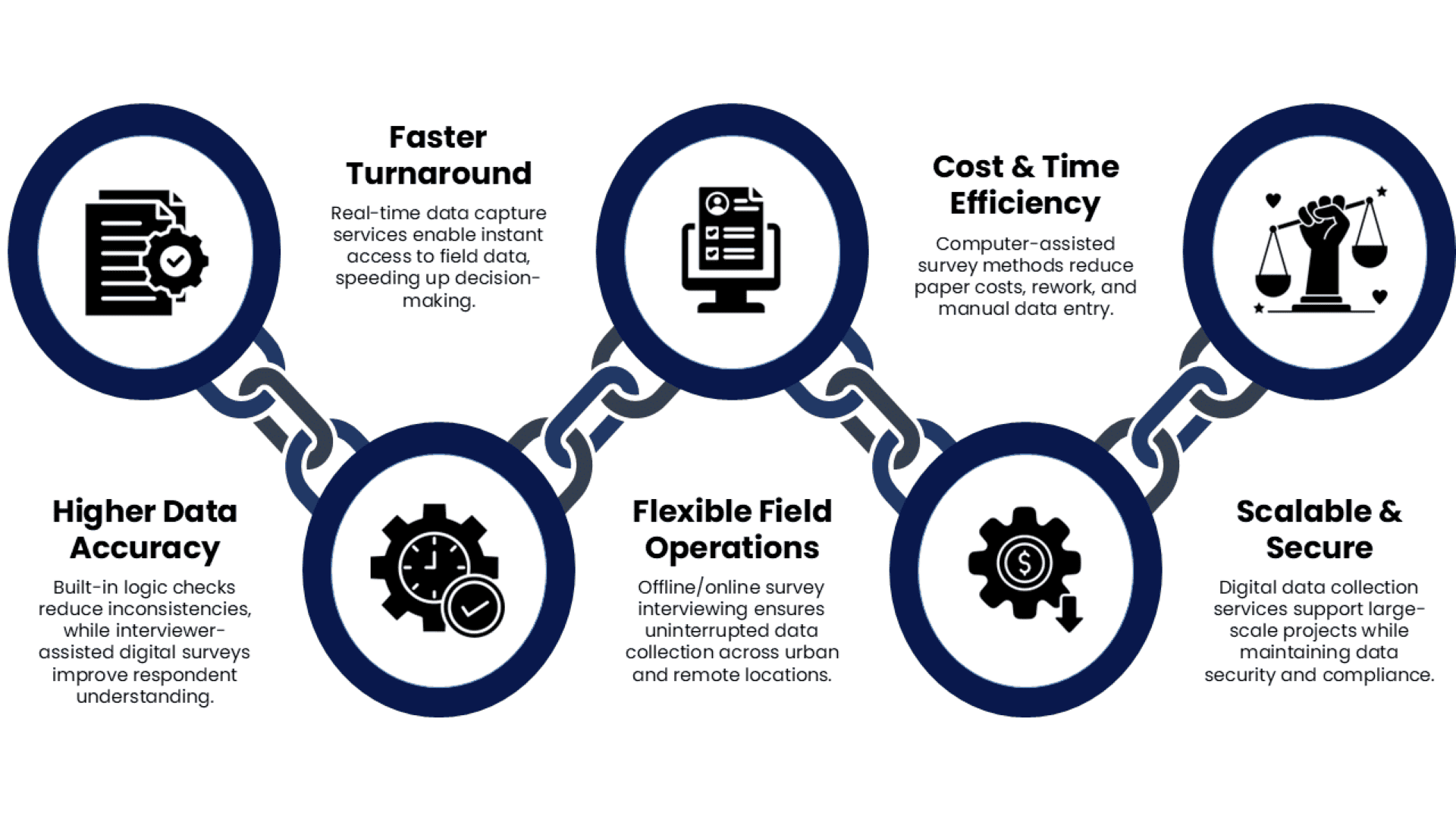
Jak CAPI jest wykorzystywany w różnych branżach
Wiele różnych typów firm używa CAPI, w tym:
Firmy zajmujące się badaniami rynku i społecznymi: CAPI nadaje się do ankiet konsumenckich, śledzenia marki, badań U&A oraz złożonych kwestionariuszy wymagających silnego routingu i walidacji.
Organizacje opieki zdrowotnej i nauk biologicznych: Cyfrowe ankiety prowadzone przez ankieterów mogą wspierać ścieżki pacjentów, perspektywy HCP i oceny placówek, jednocześnie wspierając wymogi dotyczące zgody, prywatności i przetwarzania danych.
Agencje rządowe i zajmujące się badaniami polityki: Przeprowadzanie wywiadów w trybie offline i bezpieczna synchronizacja pomagają włączyć populacje wiejskie i o słabej infrastrukturze do ankiet gospodarstw domowych i społecznych.
Kiedy CAPI może nie być najlepszym wyborem
CAPI jest potężny, ale nie jest najlepszym rozwiązaniem dla każdego pytania badawczego.
Rozważ alternatywy lub metody mieszane, gdy:
Potrzebujesz taniego, wysokoczęstotliwościowego śledzenia (CAWI może być szybszy i tańszy)
Tematy są bardzo wrażliwe, a prywatność jest trudna w ustawieniach twarzą w twarz
Populacja jest szeroko rozproszona, a zasięg telefoniczny/internetowy jest silniejszy (CATI/CAWI może być bardziej wydajny)
Gdy anonimowość jest krytyczna, a obecność ankietera może zniekształcać odpowiedzi (CAWI może być preferowane).
Najlepsze projekty wybierają metodę w oparciu o odbiorców, wrażliwość, budżet, harmonogram i wymagania dotyczące jakości danych.
UnivDatos: Dostawca usług CAPI, na którym możesz polegać
W UnivDatos zapewniamy kompleksowe usługi CAPI zaprojektowane z myślą o niezawodnej realizacji w terenie i czystych wynikach:
Programowanie kwestionariuszy (logika, walidacje, konfiguracja wielojęzyczna)
Przeszkolone sieci ankieterów (możliwość online/offline)
Ramy monitorowania w terenie i kontroli jakości
Czyste zbiory danych i dokumentacja gotowe do analizy
Jeśli chcesz szybszych prac terenowych, mocniejszych kontroli jakości i wyników, którym Twój zespół może zaufać, możemy pomóc w zaprojektowaniu podejścia CAPI, które pasuje do Twojej geografii, odbiorców i celów badawczych.
Powiedz nam, co badasz, a zaproponujemy praktyczny plan badań i harmonogram.
Skontaktuj się z nami już dziś, aby dowiedzieć się, jak zamienić swoje dane w decyzje, a decyzje w sukces!