Middle East & Africa UHT Milk Market: Current Analysis and Forecast (2025-2033)
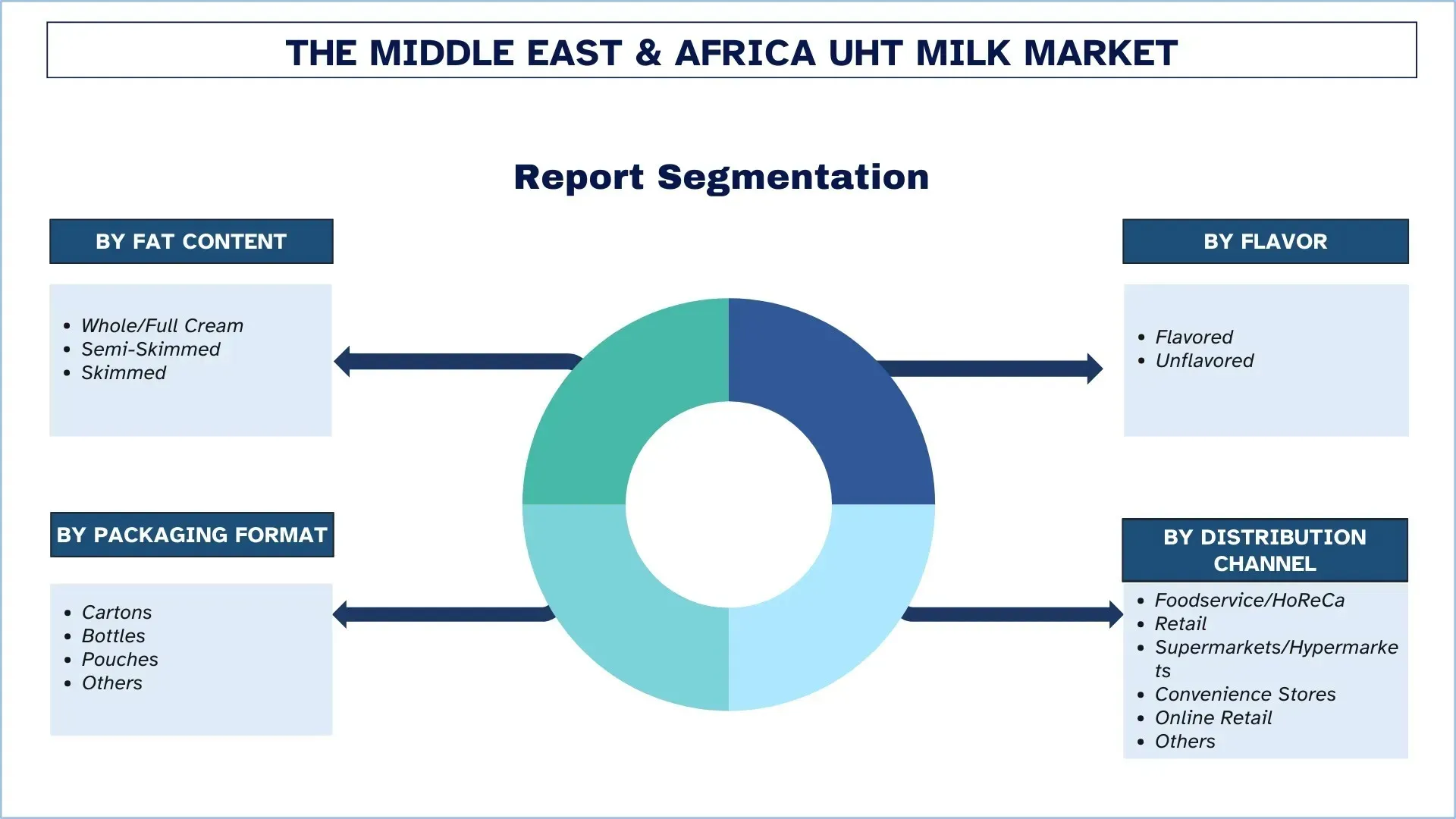
Emphasis By Fat Content (Whole/Full Cream, Semi-Skimmed, and Skimmed), by Flavor (Flavored and Unflavored), by Packaging Format (Cartons, Bottles, Pouches, and Others), by Distribution Channel (Foodservices/HoReCa, Retail, Supermarkets/Hypermarkets, Convenience Stores, Online Retail, and others), By Country (Saudi Arabia, UAE, Egypt, South Africa, Turkey, Israel, and the Rest of Middle East & Africa)
Middle East & Africa UHT Milk Market Size & Forecast
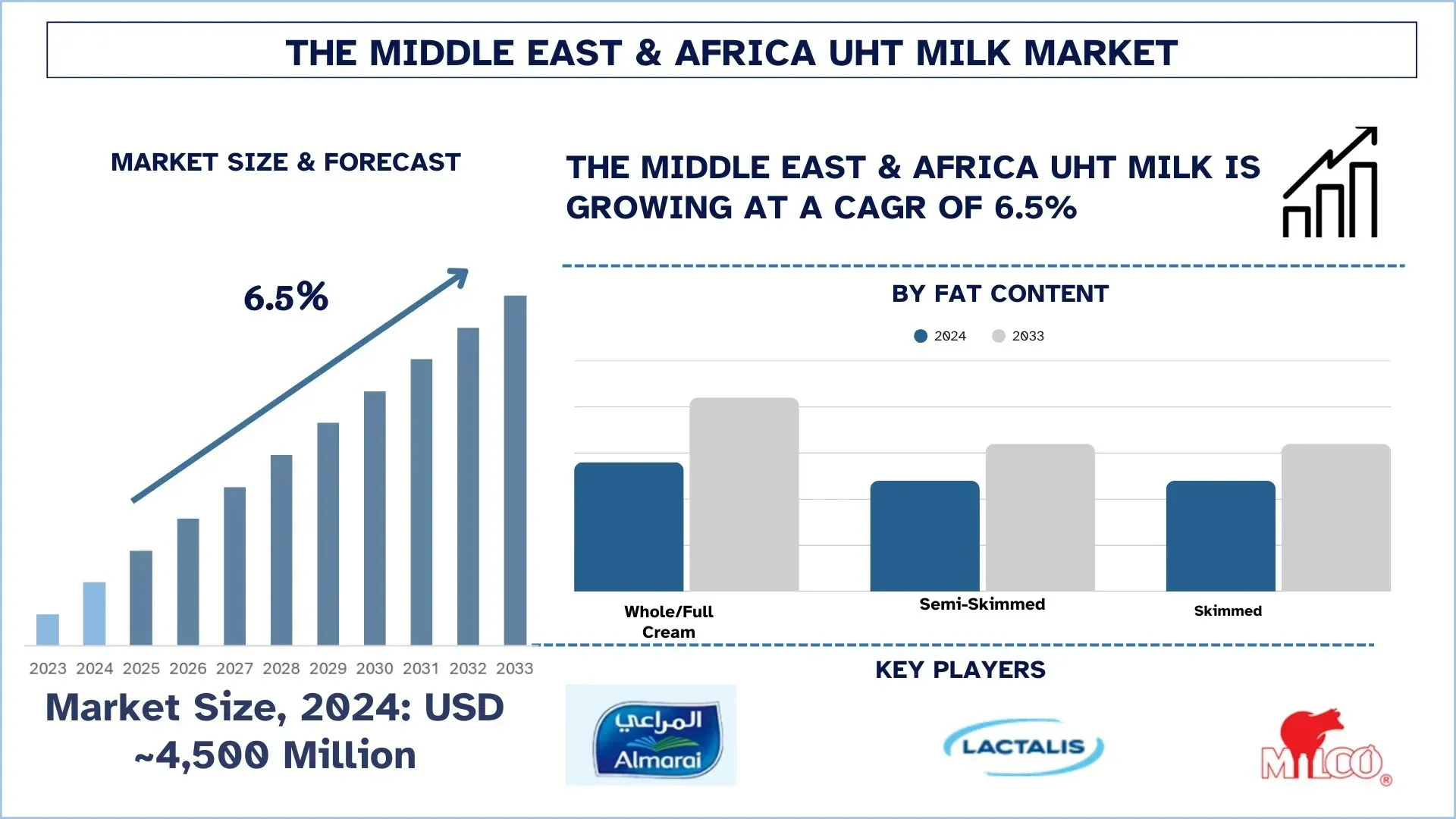
The Middle East & Africa UHT Milk Market was valued at USD 4,500 million in 2024 and is expected to grow at a strong CAGR of around 6.50% during the forecast period (2025- 2033F). Extended shelf-life suits hot climates, and Urbanization and changing lifestyles are some of the key factors that are supporting the market rise of UHT Milk in the Middle East & Africa region.
Middle East & Africa UHT Milk Market Analysis
The market of UHT milk in the Middle East and Africa is witnessing gradual growth, with the climatic conditions and changing consumption patterns contributing to the market growth, coupled with an enhanced distribution of packaged food. Fresh milk is not as viable in a large part of the region due to high temperatures, which demand more usage of ultra-high-temperature processed dairy items with a high shelf life. The growing urbanization, the alteration in family setup, and the growing role of women in the job market are influencing the need to have a convenient and long-lasting milk formula. Also, the increasing investment in contemporary retailing trends and the international dairy business are enhancing the availability of products. Food producers and governments are also looking at food security, further enhancing the position of shelf-stable dairy products in regional supply chains.
Middle East & Africa UHT Milk Market Trends
This section discusses the key market trends that are influencing the various segments of the Middle East & Africa UHT Milk market, as found by our team of research experts.
Shift toward fortified and value-added variants:
The shift to the fortified and value-added variants of milk is becoming a growing trend in the Middle East and Africa UHT milk market, with consumers becoming more interested in both nutrition and convenience. To improve the nutritional deficiencies of the region, the manufacturers are fortifying UHT milk with vitamins (A, D, B-complex), minerals (calcium and iron). This is more so among urban families, families with children, as well as the aging population, who are in need of functional health benefits in everyday food products. Moreover, such value-added products as lactose-free, low-fat, and protein-enriched UHT milk are on an upward trend with an increase in awareness of digestive health and lifestyle illnesses. Such fortified products enable the brands to stand out in a competitive market in a manner that they can charge high prices. With the ever-growing nature of the public health programs and nutritional awareness, the fortified UHT milk is gradually being placed as a viable option for enhancing the daily intake of nutrients without necessarily changing the intake patterns.
Key Market Segmentation:
This section provides an analysis of the key trends in each segment of the Middle East & Africa UHT Milk market report, along with forecasts at the country and regional levels for 2025-2033.
The Whole/Full Cream category has shown promising growth in the UHT Milk Market.
According to the fat content, the Middle East & Africa UHT Milk Market can be divided into Whole/Full Cream, Semi-Skimmed, and Skimmed. Among them, the Whole/Full Cream segment had the largest market share. This is mostly influenced by high consumer preference towards richer taste, more energy, and the use of traditional dieting habits in most countries within the region. Whole UHT milk is also popular in domestic consumption, tea and coffee making, and foodservice, and helps in supporting its demand. Besides, it has a higher adoption due to its reputation of being more satiating and healthier, especially among the family and price-sensitive consumers whose unit costs are lower.
The Unflavored category held a significant share of the Middle East & Africa UHT Milk Market.
Based on the flavor, the Middle East & Africa UHT market is bifurcated into flavored and unflavored. Of these, the unflavored milk has held the major market share. Some of the key factors contributing to higher market share are the usage of milk in traditional food items, tea, coffee, and various other beverages that require unflavored milk. Additionally, unflavored milk is relatively inexpensive as opposed to its counterpart. Considering these factors, the unflavored milk is expected to hold its major market share. However, as the younger population is seeking the addition of flavors in UHT milk, the category is witnessing rapid growth, which would help it grow at a faster pace.
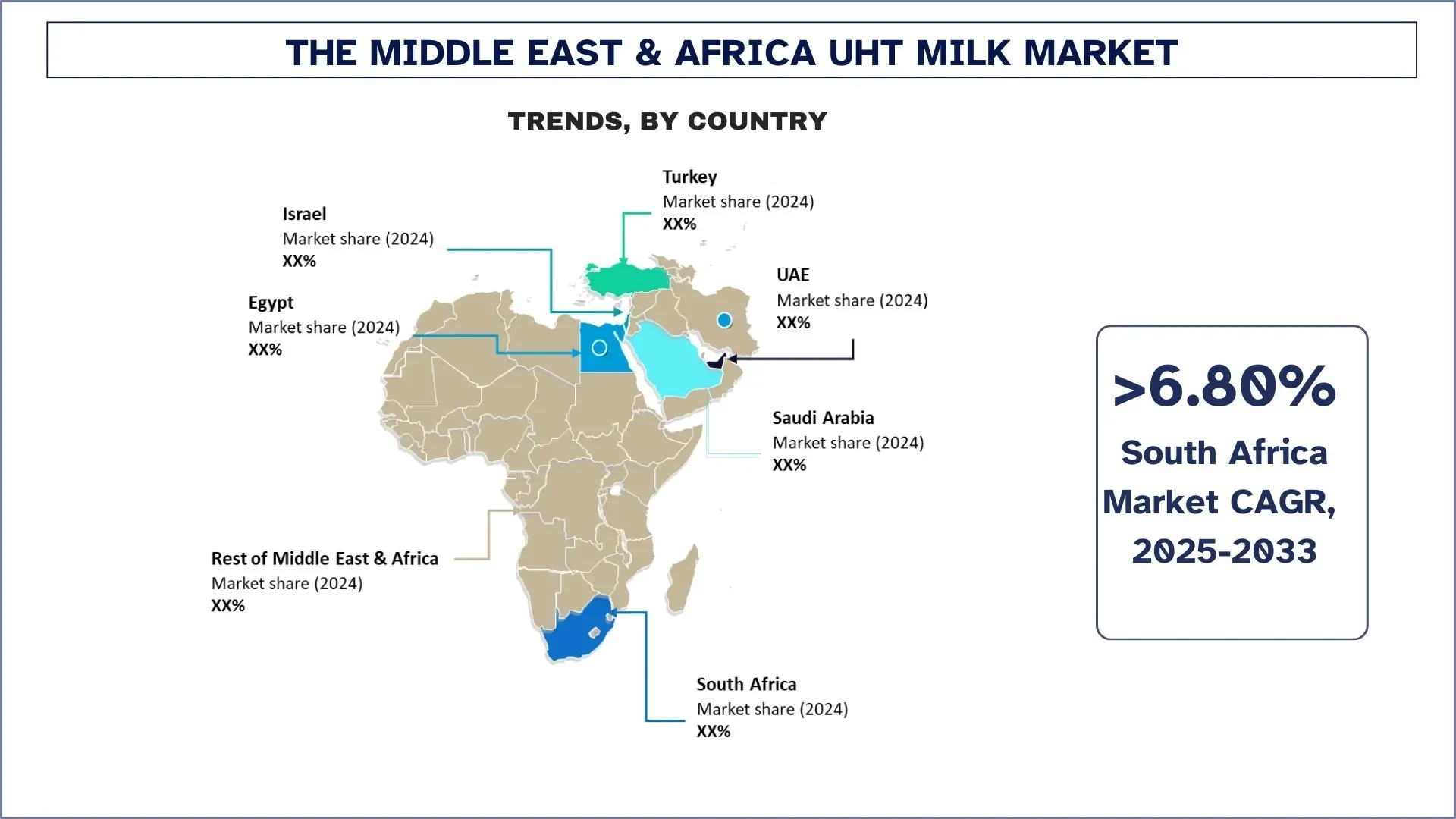
South Africa is expected to grow at a considerable rate during the forecast period.
The South Africa UHT milk market is experiencing robust growth and has contributed to the Middle East and Africa region as one of the major contributors. The demand in both urban and semi-urban regions is supported by high consumer acceptance of long-life milk and good retail infrastructure. UHT milk is highly demanded because of its large shelf life, cheapness, and applicability in bulk purchases in the household. Growing urbanization, active lifestyles, and the growing consciousness of food safety also contribute to the growth of the market. Moreover, the local dairy processors are also investing in modern product processing technology, product innovation, and better packaging formats such as fortified and flavored products. All these endow South Africa with the status of a high-growth and strategic market in the MEA UHT milk environment.
In 2025, Woodlands Dairy Group took over LandSmith Cheese Company and its subsidiaries after purchasing it from Sea Harvest Group Limited. The acquisition is aimed at solidifying the market position of Woodland Dairy group in products such as UHT Milk, Yoghurt, cheese, custard, flavored milk, etc., in the South African market.
Middle East & Africa UHT Milk Industry Competitive Landscape:
The Middle East & Africa UHT Milk market is competitive, with several global and international market players. The key players are adopting different growth strategies to enhance their market presence, such as partnerships, agreements, collaborations, new product launches, geographical expansions, and mergers and acquisitions.
Top Middle East & Africa UHT Milk Companies
Some of the major players in the market are Almarai Company, Saudia Dairy & Foodstuff Co., Groupe Lactalis, Nestlé S.A., Milco SA Proprietary Ltd, NADEC Foods, Arla Foods amba, Danone S.A., Al Rawabi Dairy Company LLC, and Al Ain Farm.
Middle East & Africa UHT Milk Market Report Coverage
Details | |
Base year | 2024 |
Forecast period | 2025-2033 |
Growth momentum | Accelerate at a CAGR of 6.50% |
Market size 2024 | USD 4,500 Million |
Country analysis | Saudi Arabia, UAE, Egypt, South Africa, Turkey, Israel, and the Rest of the Middle East & Africa |
Major contributing Country | Saudi Arabia is expected to dominate the market during the forecast period. |
Companies profiled | Almarai Company, Saudia Dairy & Foodstuff Co., Groupe Lactalis, Nestlé S.A., Milco SA Proprietary Ltd, NADEC Foods, Arla Foods amba, Danone S.A., Al Rawabi Dairy Company LLC, and Al Ain Farm. |
Report Scope | Market Trends, Drivers, and Restraints; Revenue Estimation and Forecast; Segmentation Analysis; Demand and Supply Side Analysis; Competitive Landscape; Company Profiling |
Segments Covered | by Fat Content, by Flavor, by Packaging Format, by Distribution Channel, by Country |
Reasons to Buy the Middle East & Africa UHT Milk Market Report:
The study includes market sizing and forecasting analysis confirmed by authenticated key industry experts.
The report briefly reviews overall industry performance at a glance.
The report covers an in-depth analysis of prominent industry peers, primarily focusing on key business financials, type portfolios, expansion strategies, and recent developments.
Detailed examination of drivers, restraints, key trends, and opportunities prevailing in the industry.
The study comprehensively covers the market across different segments.
Deep dive Country-level analysis of the industry.
Customization Options:
The Middle East & Africa UHT Milk Market can be customized as per requirements or any other market segment. Besides this, UnivDatos understands that you may have your own business needs; hence, feel free to contact us to get a report that completely suits your requirements.
Table of Content
Research Methodology for the Middle East & Africa UHT Milk Market Analysis (2023-2033)
We analyzed the historical market, estimated the current market, and forecasted the future market of the Middle East & Africa UHT Milk market to assess its application in major countries. We conducted exhaustive secondary research to gather historical market data and estimate the current market size. To validate these insights, we carefully reviewed numerous findings and assumptions. Additionally, we conducted in-depth primary interviews with industry experts across the UHT Milk value chain. After validating market figures through these interviews, we used both top-down and bottom-up approaches to forecast the overall market size. We then employed market breakdown and data triangulation methods to estimate and analyze the market size of industry segments and sub-segments.
Market Engineering
We employed data triangulation techniques to finalize the overall market estimation and derive precise statistical numbers for each segment and sub-segment of the Middle East & Africa UHT Milk market. We split the data into several segments and sub-segments by analyzing various parameters and trends, by Fat Content, by Flavor, by Packaging Format, by Distribution Channel, and by country within the Middle East & Africa UHT Milk market.
The Main Objective of the Middle East & Africa UHT Milk Market Study
The study identifies current and future trends in the Middle East & African UHT Milk market, providing strategic insights for investors. It highlights Country-level market attractiveness, enabling industry participants to tap into untapped markets and gain a first-mover advantage. Other quantitative goals of the studies include:
Market Size Analysis: Assess the current forecast and market size of the Middle East & Africa UHT Milk market and its segments in terms of value (USD).
Middle East & Africa UHT Milk Market Segmentation: Segments in the study include areas by Fat Content, by Flavor, by Packaging Format, by Distribution Channel, and by
Regulatory Framework & Value Chain Analysis: Examine the regulatory framework, value chain, customer behavior, and competitive landscape of the Middle East & Africa UHT Milk industry.
Country Analysis: Conduct a detailed Country analysis for key areas such as Saudi Arabia, UAE, Egypt, South Africa, Turkey, Israel, and the Rest of the Middle East & Africa.
Company Profiles & Growth Strategies: Company profiles of the Middle East & Africa UHT Milk market and the growth strategies adopted by the market players to sustain the fast-growing market.
Frequently Asked Questions FAQs
Q1: What is the Middle East & Africa UHT Milk market’s current market size and growth potential?
The Middle East & Africa UHT Milk market was valued at 4,500 million in 2024 and is expected to grow at a CAGR of 6.50% during the forecast period (2025-2033).
Q2: Which segment has the largest share of the Middle East & Africa UHT Milk market by Fat Content?
The Whole/Full Cream segment had the largest market share. This is mostly influenced by high consumer preference towards richer taste, more energy, and the use of traditional dieting habits in most countries within the region.
Q3: What are the driving factors for the growth of the Middle East & Africa UHT Milk market?
• Urbanization and evolving lifestyles: Rapid urban growth and busier consumer routines are increasing demand for convenient, long-lasting dairy products.
• Rising awareness of food safety: Growing concern over hygiene and product safety is encouraging consumers to shift toward thermally processed, shelf-stable milk.
Q4: What are the emerging technologies and trends in the Middle East & Africa UHT Milk market?
• Shift toward fortified and value-added variants: Producers are introducing vitamin-enriched, low-fat, lactose-free, and protein-enhanced UHT milk to address nutritional needs and health-conscious consumption.
• Premium and flavored UHT offerings gain traction: Flavored and premium variants are attracting younger consumers and urban households seeking taste variety and lifestyle-oriented products.
Q5: What are the key challenges in the Middle East & Africa UHT Milk market?
• High price sensitivity among consumers: Cost considerations can limit adoption, particularly in lower-income and developing markets.
• Preference for fresh milk in certain regions: Cultural consumption habits and perceptions of freshness continue to restrain UHT milk penetration in select MEA markets.
Q6: Which country dominates the Middle East & Africa UHT Milk market?
The Saudi Arabia UHT milk market is not new, and it is still on the upward trend, with the help of high ambient temperatures, high urban consumption, and the growth of developed retail food infrastructure.
Q7: Who are the key players in the Middle East & Africa UHT Milk market?
Some of the top UHT Milk companies in the Middle East & Africa include:
• Almarai Company
• Saudia Dairy & Foodstuff Co.
• Groupe Lactalis
• Nestlé S.A.
• Milco SA Proprietary Ltd
• NADEC Foods
• Arla Foods amba
• Danone S.A.
• Al Rawabi Dairy Company LLC
• Al Ain Farm
Q8: What are the opportunities for companies within the Middle East & Africa UHT Milk market?
• Expansion in underserved rural and semi-urban areas: UHT milk’s long shelf life enables deeper market penetration in regions with limited refrigeration and distribution infrastructure.
• Private label and local brand development: Growing acceptance of affordable private-label products creates opportunities for regional players to capture price-sensitive consumer segments.
Q9: How are consumer preferences shaping product development in the Middle East & Africa UHT Milk market?
Consumer preferences in the Middle East & Africa UHT milk market are driving product development toward fortified, flavored, and low-fat variants, along with improved packaging and portion sizes, as consumers increasingly seek convenience, enhanced nutrition, food safety, and better taste experiences.
Related Reports
Customers who bought this item also bought


Middle East & Africa Bath and Shower Product Market: Current Analysis and Forecast (2025-2033)
Emphasis By Product Type (Bath Soaps, Body Gels, Bath Additives, and Others), by Product Form (Solid, Gels and Jellies, Liquid, and Others), By End-Users ( Men and Women), by Distribution Channel (Online stores and Offline stores), By Country (Saudi Arabia, UAE, Egypt, South Africa, Turkey, Israel, and the Rest of Middle East & Africa)

Southeast Asia Online On-Demand Home Services Market: Current Analysis and Forecast (2025-2033)
Emphasis on Platform (Mobile Application, Web Portal); Service Type (Home Cleaning, Repair & Maintenance, Beauty & Wellness, Pest Control, Laundry & Dry Cleaning, Moving & Relocation, Others); End User (Residential Users, Commercial Users); and Country.

Sage Essential Oil Market: Current Analysis and Forecast (2025-2033)
Emphasis on Source (Organic and Inorganic); Application (Aromatherapy, Cosmetics & Personal Care, Pharmaceuticals, Food & Beverages, and Others); Distribution Channel (Online and Offline); and Region/Country
Middle East & Africa Cat Litter Product Market: Current Analysis and Forecast (2025-2033)
Emphasis By Product Type (Clumping and Conventional), By Raw Material (Clay, Silica, Wood/Bamboo/Sawdust, Paper, Soy, Corn/ Grain, and Others), by Distribution Channel (Offline (Supermarket/Hypermarkets, Specialty Retail Stores, Convenience Stores & Others), and Online), By Country (Saudi Arabia, UAE, Egypt, South Africa, Turkey, Israel, and the Rest of Middle East & Africa)