Southeast Asia Lingerie Market: Current Analysis and Forecast (2025-2033)
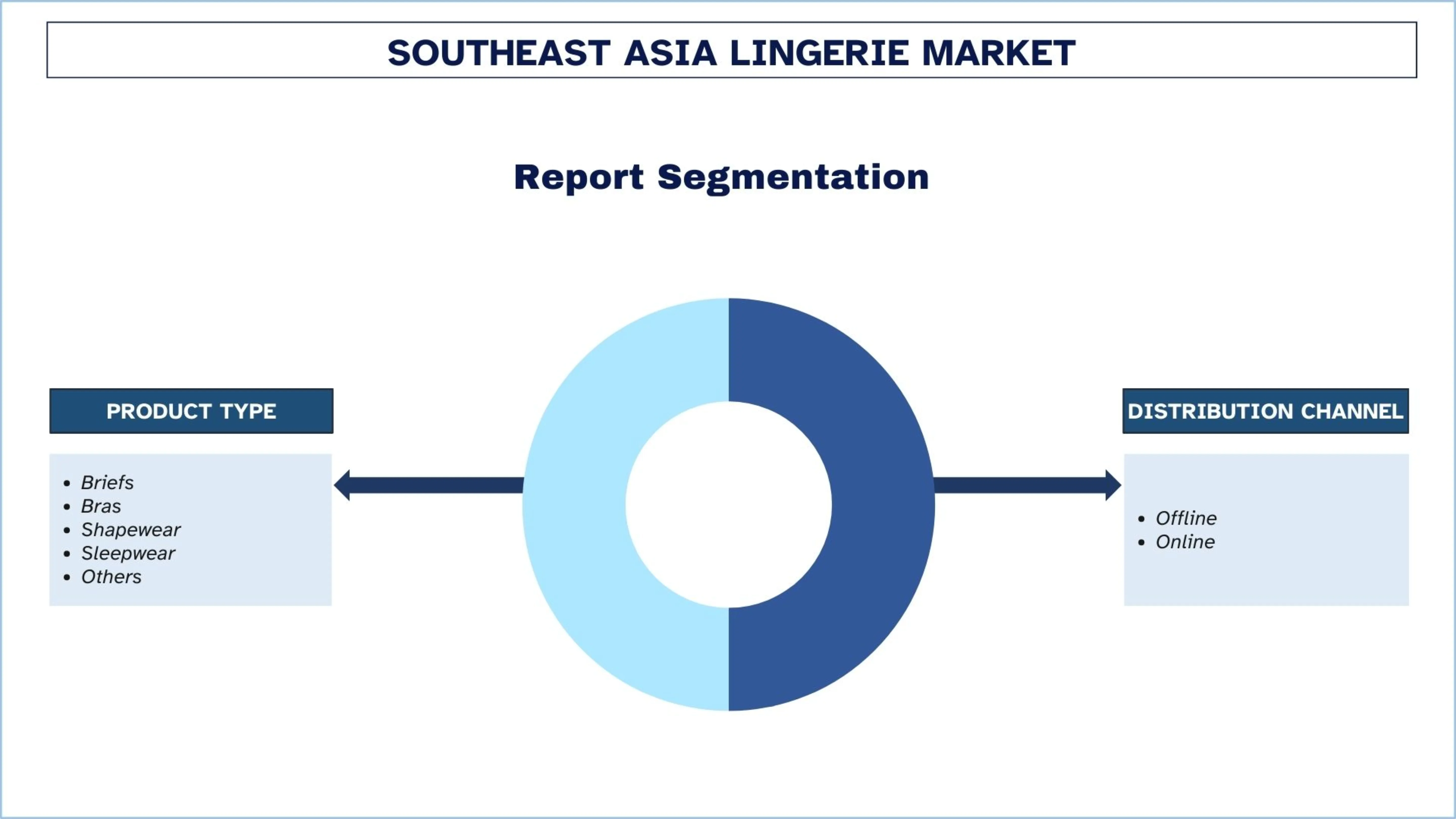
Emphasis on Product Type (Briefs, Bras, Shapewear, Sleepwear, Others); Distribution Channel (Offline, Online); and Country.
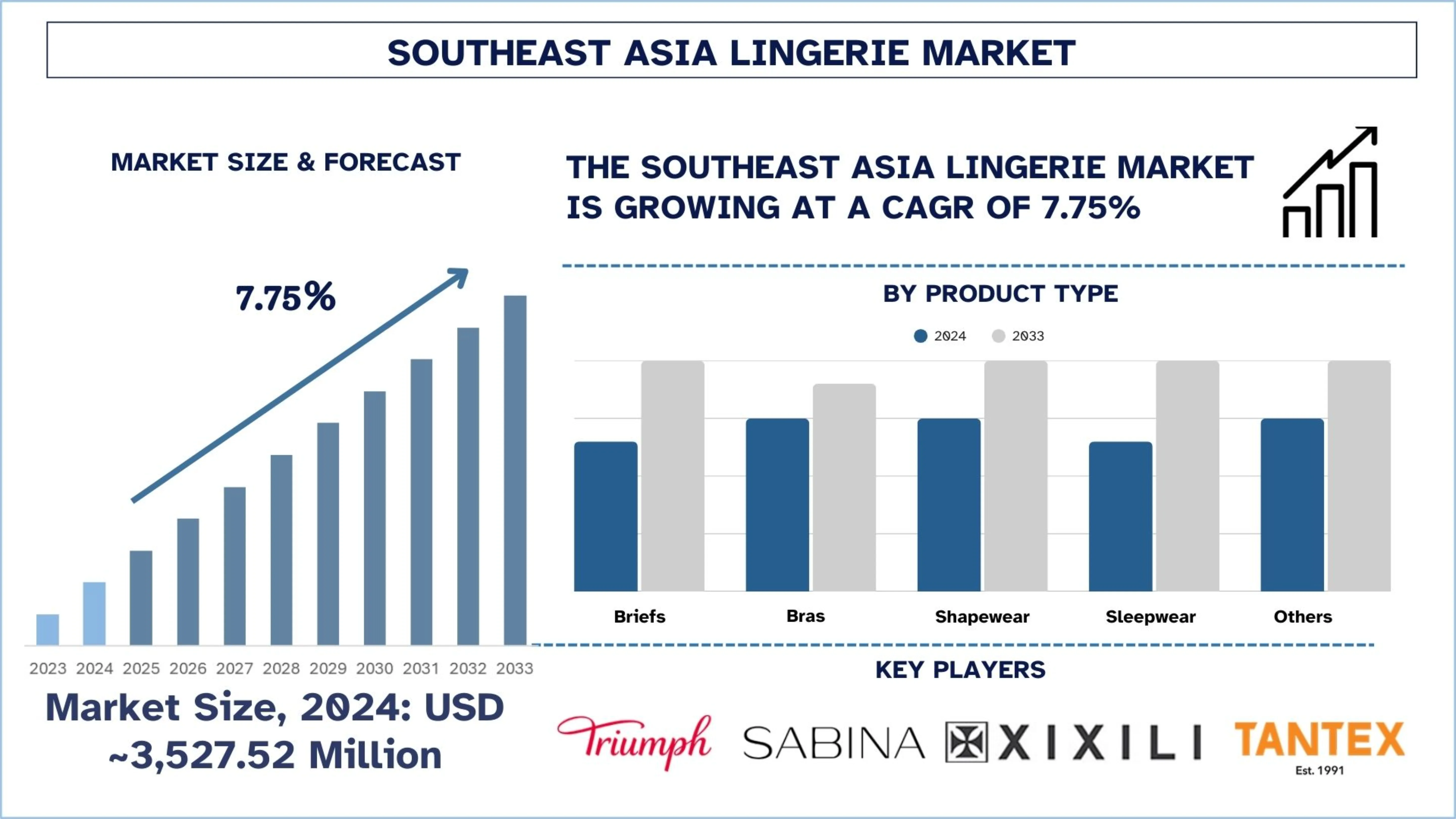
Southeast Asia Lingerie Market Size & Forecast
The Southeast Asia Lingerie Market was valued at USD 3,527.52 million in 2024 and is expected to grow at a strong CAGR of around 7.75% during the forecast period (2025-2033F), driven by rising urban middle-class populations and increasing female workforce participation.
Southeast Asia Lingerie Market Analysis
Lingerie refers to undergarments worn by women to support and enhance their appearance, including bras, briefs, shapewear, and sleepwear. These are usually made from soft, comfortable, and, in some cases, decorative fabrics to provide utility and style.
In Southeast Asia, luxury brands and manufacturers are increasingly turning to e-commerce platforms, omnichannel retail, and digital marketing to reach urban, digitally savvy customers. Also, companies are prioritizing product development, including shapewear, comfortable looks, and size-inclusive collections, and incorporating sustainability into their operations, involving sustainable materials and ethical manufacturing methods. Moreover, the rising adoption of customization, personalization, and data-driven sizing recommendations aims to increase consumer experience and reduce the rate of returns.
On 9 July 2025, XIXILI, the leading lingerie brand known for championing comfort and inclusivity, launched its latest collection in the Singapore market: the Jelly Padded Bra. Engineered to provide cloud-like softness and wireless support, this new collection is designed to be essential in every woman's daily wardrobe, combining thoughtful design with technology that prioritises real comfort and fit.
Southeast Asia Lingerie Market Trends
This section discusses the key market trends that are influencing the various segments of the Southeast Asia Lingerie market, as found by our team of research experts.
Increasing Demand for Sustainable and Eco-Friendly Fabrics
The lingerie market in Southeast Asia is shifting toward more sustainable, environmentally friendly fabrics, driven by growing consumer awareness of environmental impact and ethical production methods. Adding to this, the brands use organic cotton, recycled fabrics, and low-impact dyes, attracting environmentally conscious consumers. This is leading to innovation in manufacturing processes and materials sourcing, and it is also affecting branding and marketing strategies. Subsequently, more sustainable lingerie brands are developing a competitive advantage and capturing an increasing number of green-conscious buyers.
Southeast Asia Lingerie Industry Segmentation
This section provides an analysis of the key trends in each segment of the Southeast Asia Lingerie market, along with forecasts at the country level for 2025-2033.
The briefs lingerie market dominated the market share in 2024.
Based on product type, the market is segmented into briefs, bras, shapewear, sleepwear, and others. Among these, the briefs lingerie market held the dominant share in 2024. The Southeast Asian lingerie market continues to expand, with briefs being the most commonly purchased and used product line. The segment drives high repeat-purchase volumes across age groups and income levels, providing a stable income for producers and sellers. Also, the segment's affordability, design, and fabric diversification serve both mass-market and premium consumers, making it a strong asset for expansion. With increasing comfort, style, and sizing across brands, briefs are widely adopted, which drives the market.
The online segment is expected to grow with a significant CAGR during the forecast period (2025-2033).
Based on the distribution channel, the Southeast Asian Lingerie market is segmented into offline and online. Among these, the online segment is expected to grow at a significant CAGR during the forecast period (2025-2033). The digital distribution channel allows brands to reach digitally savvy consumers across regions that conventional retail stores do not serve. E-commerce sites offer convenience, a wide range of products, and customized size recommendations, which enhance the customer experience and reduce returns. The adoption is further being enhanced by rapid internet penetration, social media marketing, and influencer promotion. Online sales are increasing and represent one of the company's growth avenues, targeting urban, tech-oriented customers.
Indonesia held a dominant share of the Southeast Asian Lingerie market in 2024
Indonesia's large population and rising middle-income population are significant drivers of market growth. The growing disposable income, urbanization, and the increasing participation of women in the workforce are increasing the demand for both basic and high-quality lingerie products. Adding to this, the development of the retail infrastructure and e-commerce penetration will allow reaching a broader audience, especially in the tier-2 and tier-3 cities. Moreover, the increased fashion awareness and adoption of digital are the factors that make Indonesia an area of growth for lingerie companies operating within the region. For example, in September 2023, Hong Kong-based lingerie and fashion brand 6ixty8ight launched its first location in Indonesia after seeking a retail franchise partner in the country for a year. The store, a joint venture between 6ixty8ight and Indonesian retailer Erajaya Active Lifestyle, will be located on the ground floor of Mall of Indonesia in Jakarta. This month, 6ixty8ight plans to open its first location and open six more in cities including Makassar and Surabaya.
Southeast Asia Lingerie Industry Competitive Landscape
The Southeast Asia Lingerie market is competitive, with several global and international market players. The key players are adopting different growth strategies to enhance their market presence, such as partnerships, agreements, collaborations, new product launches, geographical expansions, and mergers and acquisitions.
Top Southeast Asia Lingerie Companies
Some of the major players in the market are Triumph Intertrade AG (Triumph Group), WACOAL HOLDINGS CORP., LOVELY-VN LINGERIE MANUFACTURING COMPANY LIMITED, Aímer, Tantex Pte Ltd, Phattaya Industrial Co., Ltd., SIAM CLOTIHING SUPPLIER CO.,LTD, XIXILI Intima Sdn Bhd, Hop Lun (Hong Kong) Limited, Sabina Public Company Limited.
Recent Developments in the Southeast Asia Lingerie Market
In August 2024, Victoria's Secret officially opened its first store at Lotte Mall West Lake, one of Hanoi's newest shopping destinations. The store features innovative designs that provide a unique layout as well as streamlined navigation to effortlessly guide shoppers throughout the space while creating a welcoming and seamless shopping experience. The store’s product offerings include Victoria’s Secret’s signature bras, panties and sleepwear across a multitude of collections including Very Sexy, Body by Victoria, T-Shirt and Dream Angels.
Southeast Asia Lingerie Market Report Coverage
Report Attribute | Details |
Base year | 2024 |
Forecast period | 2025-2033 |
Growth momentum | Accelerate at a CAGR of 7.75% |
Market size 2024 | USD 3,527.52 Million |
Country analysis | Indonesia, Thailand, Philippines, Vietnam, Malaysia, Singapore, Rest of Southeast Asia |
Major contributing Country | Singapore is expected to grow at the highest CAGR during the forecasted period. |
Companies profiled | Triumph Intertrade AG (Triumph Group), WACOAL HOLDINGS CORP., LOVELY-VN LINGERIE MANUFACTURING COMPANY LIMITED, Aímer, Tantex Pte Ltd, Phattaya Industrial Co., Ltd., SIAM CLOTIHING SUPPLIER CO.,LTD, XIXILI Intima Sdn Bhd, Hop Lun (Hong Kong) Limited, Sabina Public Company Limited |
Report Scope | Market Trends, Drivers, and Restraints; Revenue Estimation and Forecast; Segmentation Analysis; Demand and Supply Side Analysis; Competitive Landscape; Company Profiling |
Reasons to Buy the Southeast Asia Lingerie Market Report:
The study includes market sizing and forecasting analysis confirmed by authenticated key industry experts.
The report briefly reviews overall industry performance at a glance.
The report covers an in-depth analysis of prominent industry peers, primarily focusing on key business financials, product portfolios, expansion strategies, and recent developments.
Detailed examination of drivers, restraints, key trends, and opportunities prevailing in the industry.
The study comprehensively covers the market across different segments.
Customization Options:
The Southeast Asia Lingerie Market can further be customized as per requirements or any other market segment. Besides this, UnivDatos understands that you may have your own business needs; hence, feel free to contact us to get a report that completely suits your requirements.
Table of Content
Research Methodology for the Southeast Asia Lingerie Market Analysis (2023-2033)
We analyzed the historical market, estimated the current market, and forecasted the future market of the Southeast Asian Lingerie market to assess its application in major countries. We conducted exhaustive secondary research to gather historical market data and estimate the current market size. To validate these insights, we carefully reviewed numerous findings and assumptions. Additionally, we conducted in-depth primary interviews with industry experts across the Southeast Asian Lingerie value chain. After validating market figures through these interviews, we used both top-down and bottom-up approaches to forecast the overall market size. We then employed market breakdown and data triangulation methods to estimate and analyze the market size of industry segments and sub-segments.
Market Engineering
We employed the data triangulation technique to finalize the overall market estimation and derive precise statistical numbers for each segment and sub-segment of the Southeast Asia Lingerie market. We split the data into several segments and sub-segments by analyzing various parameters and trends, including product type, distribution channel, and country within the Southeast Asian Lingerie market.
The Main Objective of the Southeast Asia Lingerie Market Study
The study identifies current and future trends in the Southeast Asia Lingerie market, providing strategic insights for investors. It highlights market attractiveness, enabling industry participants to tap into untapped markets and gain a first-mover advantage. Other quantitative goals of the studies include:
Market Size Analysis: Assess the current and forecast market size of the Southeast Asia Lingerie market and its segments in terms of value (USD).
Southeast Asia Lingerie Market Segmentation: Segments in the study include areas of product type, distribution channel, and country.
Regulatory Framework & Value Chain Analysis: Examine the regulatory framework, value chain, customer behavior, and competitive landscape of the Southeast Asia Lingerie industry.
Country Analysis: Conduct a detailed country analysis for key areas such as Indonesia, Thailand, the Philippines, Vietnam, Malaysia, Singapore, and the Rest of Southeast Asia.
Company Profiles & Growth Strategies: Company profiles of the Southeast Asia Lingerie market and the growth strategies adopted by the market players to sustain in the fast-growing market.
Frequently Asked Questions FAQs
Q1: What is the Southeast Asia Lingerie market’s current market size and growth potential?
The Southeast Asia Lingerie market was valued at USD 3,527.52 Million in 2024 and is projected to expand at a CAGR of 7.75% from 2025 to 2033. Market expansion is supported by rising urban middle-class populations, increasing female workforce participation, growing fashion awareness, and rapid penetration of online retail platforms across key economies.
Q2: Which segment has the largest share of the Southeast Asia Lingerie market by product type?
Briefs account for the largest market share due to their high daily usage, affordability, wide demographic appeal, and strong repeat purchase behavior. Their demand is further supported by local manufacturing strength and broad availability across offline and online retail channels.
Q3: What are the driving factors for the growth of the Southeast Asia Lingerie market?
Major growth drivers include rising disposable incomes, increasing urbanization, growing demand for comfort-focused and functional innerwear, expanding e-commerce ecosystems, and shifting consumer preferences toward premium, sustainable, and lifestyle-oriented lingerie products.
Q4: What are the emerging technologies and trends in the Southeast Asia Lingerie market?
The market is witnessing strong adoption of sustainable and eco-friendly fabrics, digitally enabled supply chains, private-label expansion by retailers, body-positive product designs, and increased use of data analytics for demand forecasting and inventory optimization.
Q5: What are the key challenges in the Southeast Asia Lingerie market?
Key challenges include price sensitivity in emerging economies, high competition from unorganized local manufacturers, supply chain volatility, rising raw material costs, and increasing compliance requirements related to labor and sustainability standards.
Q6: Which country dominates the Southeast Asia Lingerie market?
Indonesia dominates the Southeast Asia Lingerie market due to its large population base, expanding middle-income segment, strong domestic consumption, growing retail infrastructure, and increasing acceptance of branded innerwear products across urban and semi-urban regions.
Q7: Who are the key players in the Southeast Asia Lingerie market?
Leading companies in the Southeast Asia Lingerie market include:
• Triumph Intertrade AG (Triumph Group)
• WACOAL HOLDINGS CORP.
• LOVELY-VN LINGERIE MANUFACTURING COMPANY LIMITED
• Aímer
• Tantex Pte Ltd
• Phattaya Industrial Co., Ltd.
• SIAM CLOTIHING SUPPLIER CO.,LTD
• XIXILI Intima Sdn Bhd
• Hop Lun (Hong Kong) Limited
• Sabina Public Company Limited
Q8: What opportunities exist for new entrants and investors in the Southeast Asia Lingerie market?
The market offers opportunities in affordable premium lingerie, sustainable fabric innovation, localized product design, private-label manufacturing, and expansion into underserved Tier-2 and Tier-3 cities where brand penetration remains relatively low.
Q9: How does sustainability impact purchasing decisions in the Southeast Asia Lingerie market?
Sustainability increasingly influences consumer purchasing decisions, especially among younger urban consumers. Demand for eco-friendly materials, ethical manufacturing practices, and transparent sourcing is encouraging brands to align sustainability with cost efficiency and brand differentiation.
Related Reports
Customers who bought this item also bought
Middle East & Africa Bath and Shower Product Market: Current Analysis and Forecast (2025-2033)
Emphasis By Product Type (Bath Soaps, Body Gels, Bath Additives, and Others), by Product Form (Solid, Gels and Jellies, Liquid, and Others), By End-Users ( Men and Women), by Distribution Channel (Online stores and Offline stores), By Country (Saudi Arabia, UAE, Egypt, South Africa, Turkey, Israel, and the Rest of Middle East & Africa)
Southeast Asia Online On-Demand Home Services Market: Current Analysis and Forecast (2025-2033)
Emphasis on Platform (Mobile Application, Web Portal); Service Type (Home Cleaning, Repair & Maintenance, Beauty & Wellness, Pest Control, Laundry & Dry Cleaning, Moving & Relocation, Others); End User (Residential Users, Commercial Users); and Country.
Sage Essential Oil Market: Current Analysis and Forecast (2025-2033)
Emphasis on Source (Organic and Inorganic); Application (Aromatherapy, Cosmetics & Personal Care, Pharmaceuticals, Food & Beverages, and Others); Distribution Channel (Online and Offline); and Region/Country
Middle East & Africa Cat Litter Product Market: Current Analysis and Forecast (2025-2033)
Emphasis By Product Type (Clumping and Conventional), By Raw Material (Clay, Silica, Wood/Bamboo/Sawdust, Paper, Soy, Corn/ Grain, and Others), by Distribution Channel (Offline (Supermarket/Hypermarkets, Specialty Retail Stores, Convenience Stores & Others), and Online), By Country (Saudi Arabia, UAE, Egypt, South Africa, Turkey, Israel, and the Rest of Middle East & Africa)