Middle East & Africa Sandstone Market: Current Analysis and Forecast (2025-2033)
Emphasis By Form (Tiles, Slabs, and Others), By Application (Building & Construction, Monument & Memorials, Paving, and Others), By Country (Saudi Arabia, UAE, Egypt, South Africa, Turkey, Israel, and the Rest of Middle East & Africa)
Geography:
Industry:
Last Updated:
Jan 2026
Middle East & Africa Sandstone Market Size & Forecast
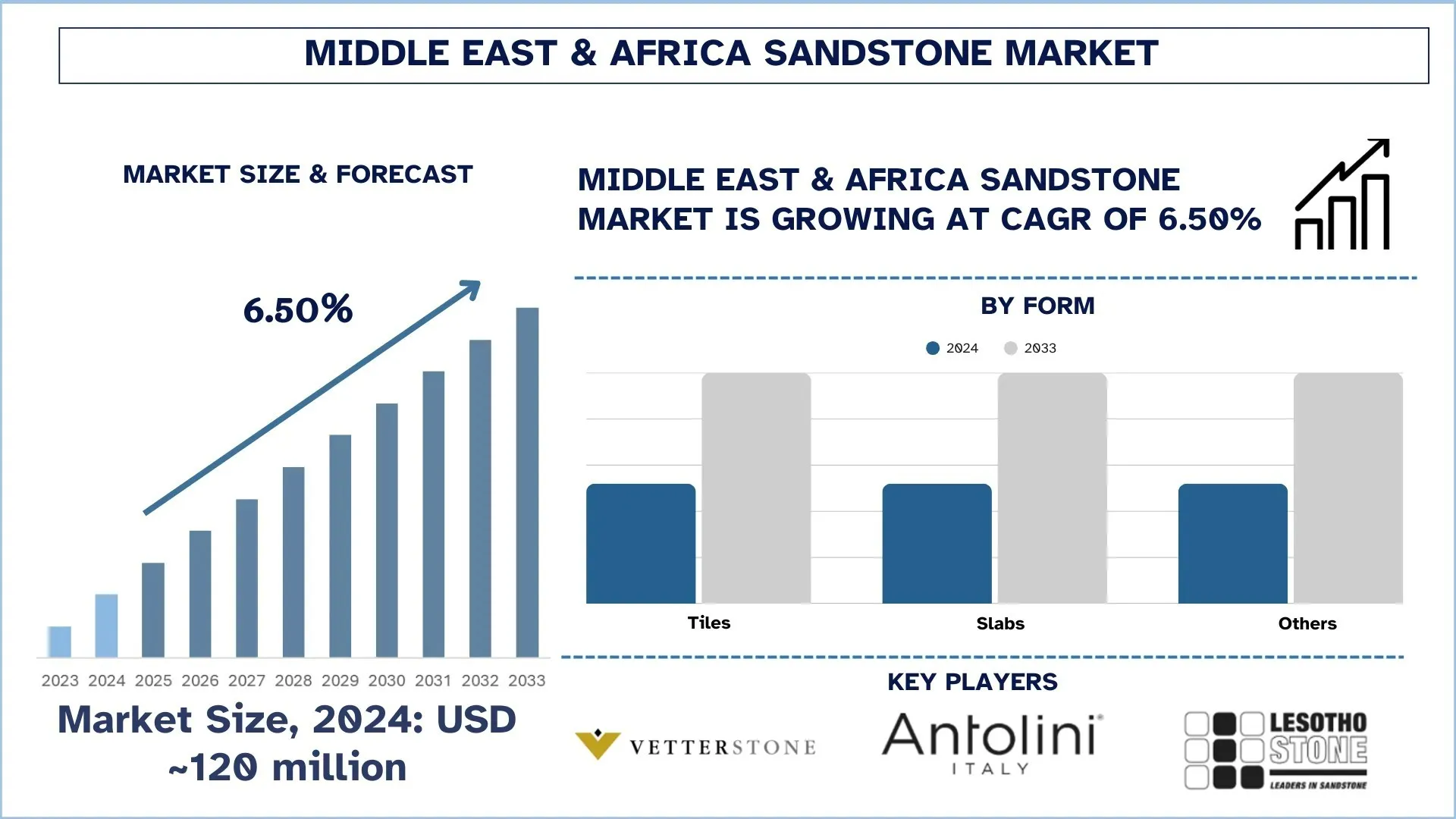
The Middle East & Africa Sandstone Market was valued at USD 120 million in 2024 and is expected to grow at a strong CAGR of around 6.50% during the forecast period (2025- 2033F). Construction & Infrastructure Projects in the Region, and the shift towards green building materials, are some of the key factors that have contributed to the market rise.
Middle East & Africa Sandstone Market Analysis
The market of the Middle East and Africa sandstone is steadily growing due to large-scale development programs, urban regeneration programs, and tourism-based development. Governments and private developers are spending money on transport terminals, cultural quarters, hospitality properties, and luxury residential developments in which natural stone is primary among the languages of design. Sandstone, specifically, is a material with the advantage of being suitable in hot and dry climates, its extensive color range, and connection with the local heritage architecture. The area of demand covers facades, streetscapes, landscaping, and interior accents, whereas quarrying and processing are enhancing the consistency of products, finish, and design flexibility. Simultaneously, the sustainability agenda and green-building requirements are pushing specifiers to more long-lived, low-impact materials, which also support the role of sandstone.
Middle East & Africa Sandstone Market Trends
This section discusses the key market trends that are influencing the various segments of the Middle East & Africa Sandstone market, as found by our team of research experts.
Gaining traction in outdoor and landscaping projects:
The use of sandstone in the Middle East and Africa is a response to an emerging preference in the design of the public realm towards rather durable and natural materials, in outdoor and landscaping, specifically sandstone. It has also been applied in plazas, walkways, pool decks, garden paths, and retaining walls to be used by urban planners and developers since sandstone does not heat up in hot climates and has good slip resistance and attractive wear over time. Its color spectrum nature enables designers to produce a warm, regionally resonant space that is in harmony with contemporary and traditional architecture.
This trend is also being strengthened by the types of municipal investments being made in waterfront developments, parks, promenades, and civic squares where municipal authorities are trying to provide long-life, low-maintenance surfaces that will be able to sustain high foot traffic and extreme weather conditions. Simultaneously, high-end residential estates, resorts, and golf courses are defining sandstone to augment the outdoor living space and a perceived project worth. This expansion of landscaping needs aid in spreading out the revenue of sandstone suppliers beyond the envelopes of structural buildings, so as to facilitate more dependable, repetitive volumes.
Key Market Segmentation:
This section provides an analysis of the key trends in each segment of the Middle East & Africa Sandstone market report, along with forecasts at the country and regional levels for 2025-2033.
The tiles segment has shown promising growth in the Sandstone Market.
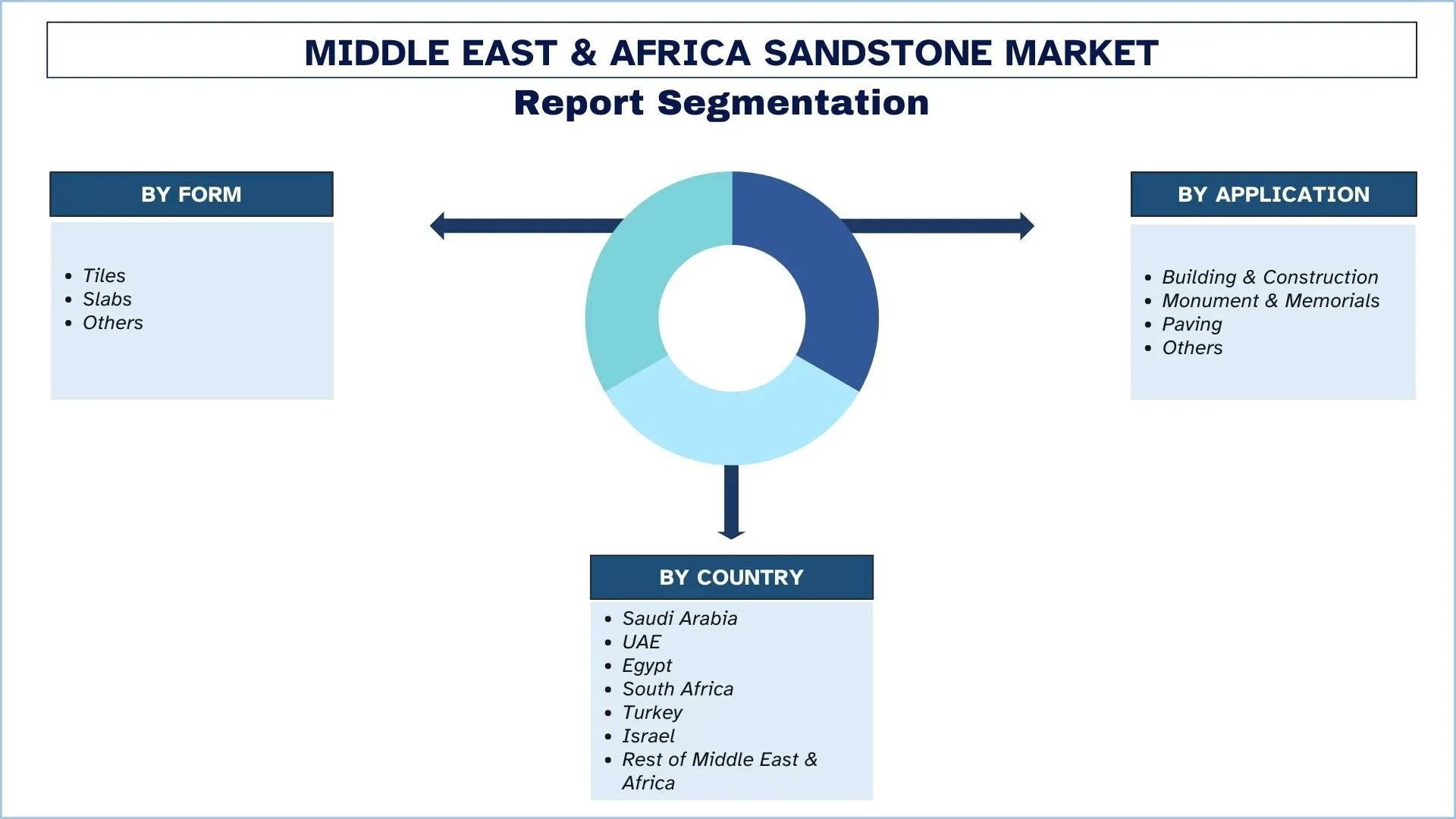
Based on the form, the Middle East & Africa sandstone market is subdivided into tiles, slabs, and others. Among them, Tiles have long held a significant market portion of the Middle East & Africa sandstone with their wide range of applications in home flooring, wall cladding, landscaping, and remodeling. The ease of installing and generalized sizes, which are applicable in mass housing and commercial buildings, has continued to create demand. The slabs also manage to draw a significant market share, especially in high-end villas, hotels, and government facilities, where massive-sized pieces and slabs have been favored due to their beauty and the ability to sustain the weight. The other segment is still niche as it is used in architectural and artistic applications.
The Building & Construction category held a significant share of the Middle East & Africa Sandstone Market.
Based on application, the Middle East & Africa Sandstone market is segmented into building & construction, monument & memorial, paving, and others. Of these, the building & construction category has held a major market share. Some of the key factors contributing to the high market share are growing construction activities in the regions. Furthermore, many of the large-scale smart city and new capital projects are also rising in line with the government and private sector efforts to improve infrastructure. Other segments, such as memorials and monuments, as well as paving, are other prominent categories that are experiencing rapid growth due to road and infrastructure projects.
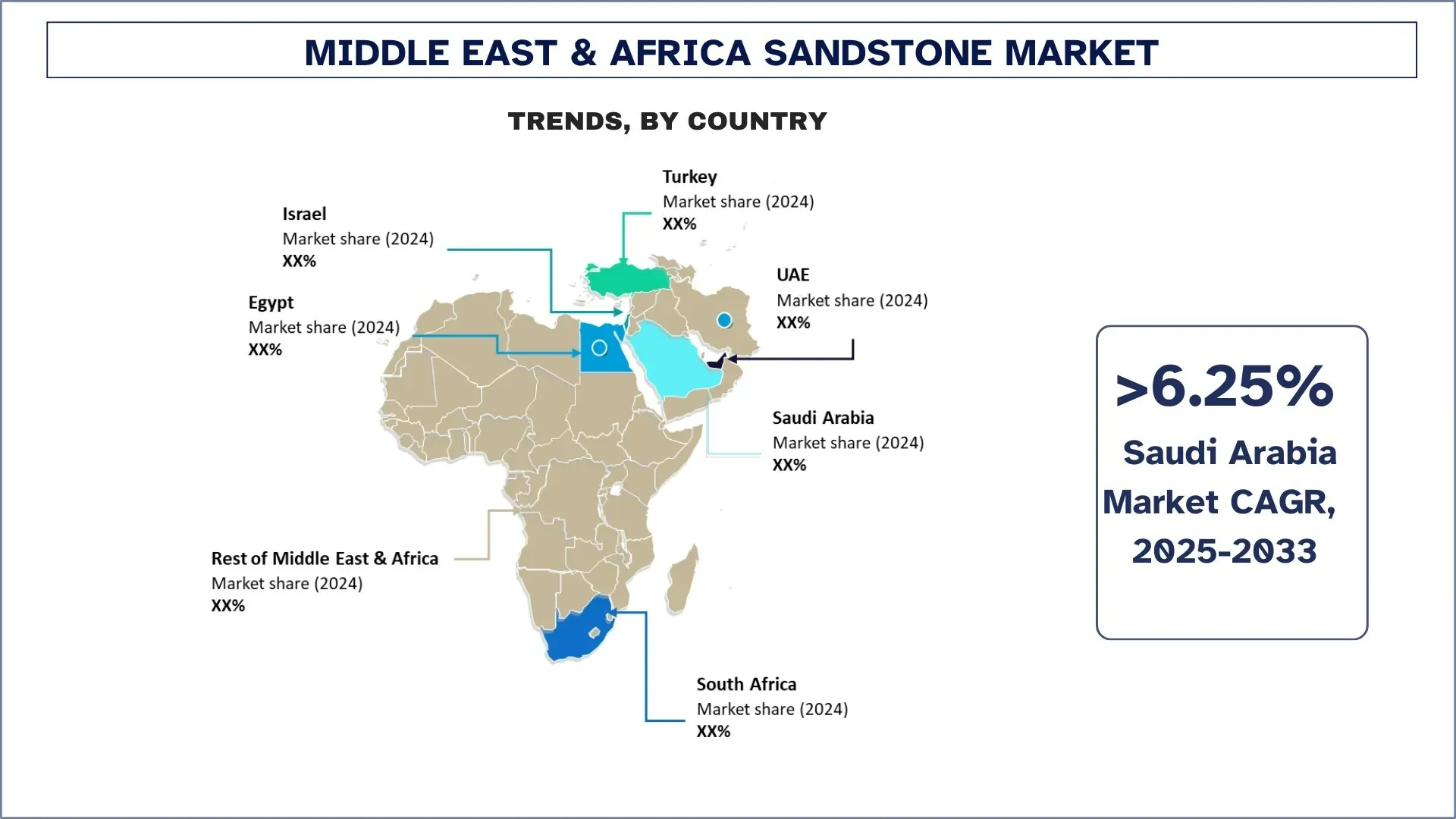
Saudi Arabia is expected to grow at a considerable rate during the forecast period.
The Saudi Arabia sandstone market is growing according to the active construction program and diversification agenda of the Kingdom in accordance with Vision 2030. The residential and commercial real estate, upscale hospitality, and civic landscaping are residential and commercial markets where sandstone is highly rated in regard to its durability, thermal performance, and local aesthetics. The market consists of both domestically quarried material and imports, especially premium colors and finishes. Facade and flooring tiles are the main products demanded, and slabs are the next product requested by prestige projects and architectural customization. The giga-projects and infrastructure improvements that are being supported by the government are providing a long-range visibility of volumes, as well as the tougher building standards that are driving up the processing and finishes to a higher quality. Among the most important ones are the volatility of prices in imported stone, logistics expenses, and the necessity of sophisticated cutting and surface-treatment technology. Another trend, which is growing in popularity, is sustainability in locally sourced sandstone.
Middle East & Africa Sandstone Industry Competitive Landscape:
The Middle East & Africa Sandstone market is competitive, with several global and international market players. The key players are adopting different growth strategies to enhance their market presence, such as partnerships, agreements, collaborations, new product launches, geographical expansions, and mergers and acquisitions.
Top Middle East & Africa Sandstone Companies
Some of the major players in the market are WANLI STONE, Vetter Stone, Kangli Stone Group, Antolini Luigi® & C. S.p.a., Vura Bau-Chemie LLP, Lesotho Stone, Africa Range, Afristone, The Sandstone Story, and The Creative Stone Company.
Middle East & Africa Sandstone Market Report Coverage
Report Attribute | Details |
Base year | 2024 |
Forecast period | 2025-2033 |
Growth momentum | Accelerate at a CAGR of 6.50% |
Market size 2024 | USD 120 Million |
Country analysis | Saudi Arabia, UAE, Egypt, South Africa, Turkey, Israel, and the Rest of the Middle East & Africa |
Major contributing Country | Saudi Arabia is expected to dominate the market during the forecast period. |
Companies profiled | WANLI STONE, Vetter Stone, Kangli Stone Group, Antolini Luigi® & C. S.p.a., Vura Bau-Chemie LLP, Lesotho Stone, Africa Range, Afristone, The Sandstone Story, and The Creative Stone Company. |
Report Scope | Market Trends, Drivers, and Restraints; Revenue Estimation and Forecast; Segmentation Analysis; Demand and Supply Side Analysis; Competitive Landscape; Company Profiling |
Segments Covered | By Form, By Application, by Country |
Reasons to Buy the Middle East & Africa Sandstone Market Report:
The study includes market sizing and forecasting analysis confirmed by authenticated key industry experts.
The report briefly reviews overall industry performance at a glance.
The report covers an in-depth analysis of prominent industry peers, primarily focusing on key business financials, type portfolios, expansion strategies, and recent developments.
Detailed examination of drivers, restraints, key trends, and opportunities prevailing in the industry.
The study comprehensively covers the market across different segments.
Deep dive Country-level analysis of the industry.
Customization Options:
The Middle East & Africa SANDSTONE market can further be customized as per requirements or any other market segment. Besides this, UnivDatos understands that you may have your own business needs; hence, feel free to contact us to get a report that completely suits your requirements.
Table of Content
Research Methodology for the Middle East & Africa Sandstone Market Analysis (2023-2033)
We analyzed the historical market, estimated the current market, and forecasted the future market of the Middle East & Africa Sandstone market to assess its application in major countries. We conducted exhaustive secondary research to gather historical market data and estimate the current market size. To validate these insights, we carefully reviewed numerous findings and assumptions. Additionally, we conducted in-depth primary interviews with industry experts across the Sandstone value chain. After validating market figures through these interviews, we used both top-down and bottom-up approaches to forecast the overall market size. We then employed market breakdown and data triangulation methods to estimate and analyze the market size of industry segments and sub-segments.
Market Engineering
We employed data triangulation techniques to finalize the overall market estimation and derive precise statistical numbers for each segment and sub-segment of the Middle East & Africa Sandstone market. We split the data into several segments and sub-segments by analyzing various parameters and trends, by Form, by Application, and by country within the Middle East & Africa Sandstone market.
The Main Objective of the Middle East & Africa Sandstone Market Study
The study identifies current and future trends in the Middle East & African Sandstone market, providing strategic insights for investors. It highlights Country-level market attractiveness, enabling industry participants to tap into untapped markets and gain a first-mover advantage. Other quantitative goals of the studies include:
Market Size Analysis: Assess the current forecast and market size of the Middle East & Africa Sandstone market and its segments in terms of value (USD).
Middle East & Africa Sandstone Market Segmentation: Segments in the study include areas by Form, by Application, and by
Regulatory Framework & Value Chain Analysis: Examine the regulatory framework, value chain, customer behavior, and competitive landscape of the Middle East & Africa Sandstone industry.
Country Analysis: Conduct a detailed Country analysis for key areas such as Saudi Arabia, UAE, Egypt, South Africa, Turkey, Israel, and the Rest of the Middle East & Africa.
Company Profiles & Growth Strategies: Company profiles of the Middle East & Africa Sandstone market and the growth strategies adopted by the market players to sustain the fast-growing market.
Frequently Asked Questions FAQs
Q1: What is the Middle East & Africa Sandstone market’s current market size and growth potential?
The Middle East & Africa Sandstone market was valued at 120 million in 2024 and is expected to grow at a CAGR of 6.50% during the forecast period (2025-2033).
Q2: Which segment has the largest share of the Middle East & Africa Sandstone market by Form?
Tiles have long held a significant market portion of the Middle East & Africa sandstone with their wide range of applications in home flooring, wall cladding, landscaping, and remodeling. The ease of installing and generalized sizes, which are applicable in mass housing and commercial buildings, has continued to create demand.
Q3: What are the driving factors for the growth of the Middle East & Africa Sandstone market?
• Construction & infrastructure projects in the region: Large-scale housing, transport, and civic infrastructure programs are fuelling steady demand for sandstone in façades, cladding, paving, and structural applications.
• Shift towards green building materials: Policymakers and developers are prioritising low-embodied-carbon, durable, and recyclable materials, positioning natural sandstone as a preferred alternative to many synthetic finishes.
Q4: What are the emerging technologies and trends in the Middle East & Africa Sandstone market?
• Gaining traction in outdoor and landscaping projects: Sandstone is increasingly specified for promenades, plazas, parks, pool decks, and upscale residential landscapes thanks to its slip resistance, thermal comfort in hot climates, and warm, natural color palette.
• Technology upgrading sandstone processing & design: Modern quarrying methods, CNC machining, waterjet cutting, and BIM-enabled design are improving yield, dimensional accuracy, and installation efficiency, while enabling modular façades and calibrated paving systems.
Q5: What are the key challenges in the Middle East & Africa Sandstone market?
• Competition from engineered and ceramic alternatives: Engineered stone, porcelain, and other manufactured materials compete aggressively on price, uniformity, and low maintenance, forcing sandstone suppliers to differentiate on design, provenance, and performance.
• Environmental, regulatory, and logistics pressure on quarrying: Stricter environmental regulations, permitting hurdles, land-use constraints, and rising transport costs are increasing the complexity and cost of quarry operations and cross-border supply.
Q6: Which country dominates the Middle East & Africa Sandstone market?
The South African Sandstone market has held a significant market share due to the increasing disposable incomes, a young population, and a gifting culture that is more than rooted in religious and family events.
Q7: Who are the key players in the Middle East & Africa Sandstone market?
Some of the top Sandstone companies in the Middle East & Africa include:
• WANLI STONE
• Vetter Stone
• Kangli Stone Group
• Antolini Luigi® & C. S.p.A.
• Vura Bau-Chemie LLP
• Lesotho Stone
• Africa Range
• Afristone
• The Sandstone Story
• The Creative Stone Company
Q8: What are the opportunities for companies within the Middle East & Africa Sandstone market?
• Positioning sandstone for green & certified projects: As governments and developers push for LEED, Estidama, and other green certifications, natural sandstone can be promoted as a low-embodied-carbon, durable, and locally sourced material. Clear documentation on quarry practices, life-cycle performance, and recyclability creates a strong platform to secure specifications in sustainable building programs.
• Riding the wave of Saudi & GCC giga-projects and tourism hubs: Mega-developments and tourism-led cities across Saudi Arabia and the wider GCC require large volumes of high-end façade, paving, and landscape materials. Establishing long-term supply partnerships, design collaboration, and just-in-time logistics with these flagship projects offers sandstone suppliers sizable, repeatable volumes at premium price points.
Q9: How are consumer preferences shaping product development in the Middle East & Africa Sandstone market?
Evolving preferences for natural, regionally authentic aesthetics, low-maintenance surfaces, and sustainability are steering sandstone producers toward calibrated, slip-resistant formats, lighter façades, and pre-finished landscaping modules, while color-consistent, custom-textured ranges are being developed to match hospitality, residential, and public-realm design briefs.
Related Reports
Customers who bought this item also bought

India Ultra High Performance Concrete (UHPC) Market: Current Analysis and Forecast (2026-2034)
Emphasis on Product Type (Reactive Powder Concrete (RPC), Slurry Infiltrated Fibrous Concrete (SIFCON), Compact Reinforced Composite (CRC), and Others); Application (Residential, Infrastructure, Commercial, and Others); and Region/States
Carbon-Negative Concrete Market: Current Analysis and Forecast (2025-2033)
Emphasis By Product Type (Precast Carbon-Negative Concrete, Ready-Mix Carbon-Negative Concrete, Concrete Blocks, Panels, and Others), By Application (Residential, Commercial, Industrial, and Others), by End-User (Carbon Capture & Utilization, Mineralization, Bio-based Method, and Others), Region/Country (North America, Europe, Asia-Pacific, and Rest of the World)
Porous Asphalt Market: Current Analysis and Forecast (2025-2033)
Emphasis on Product Type (Open-Graded Friction Course, Permeable Asphalt Pavement, Porous Asphalt Concrete, and Others); Additive Type (Polymers, Recycled Materials, Fibers, and Others); Application (Roadways, Parking Lots, Sidewalks, Driveways, and Others); and Region/Country
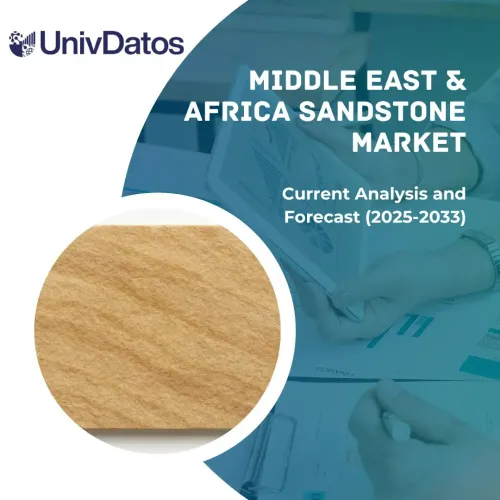
Middle East & Africa Sandstone Market: Current Analysis and Forecast (2025-2033)
Emphasis By Form (Tiles, Slabs, and Others), By Application (Building & Construction, Monument & Memorials, Paving, and Others), By Country (Saudi Arabia, UAE, Egypt, South Africa, Turkey, Israel, and the Rest of Middle East & Africa)