Nanofiber Membrane Market: Current Analysis and Forecast (2025-2033)
Emphasis on Product Type (Polymeric Nanofiber Membranes, Ceramic Nanofiber Membranes, Carbon Nanofiber Membranes, and Others); Application (Water & Wastewater Treatment, Air Filtration, Medical & Healthcare, Chemical Processing, and Others); End-User (Industrial, Commercial, Residential, and Others); and Region/Country
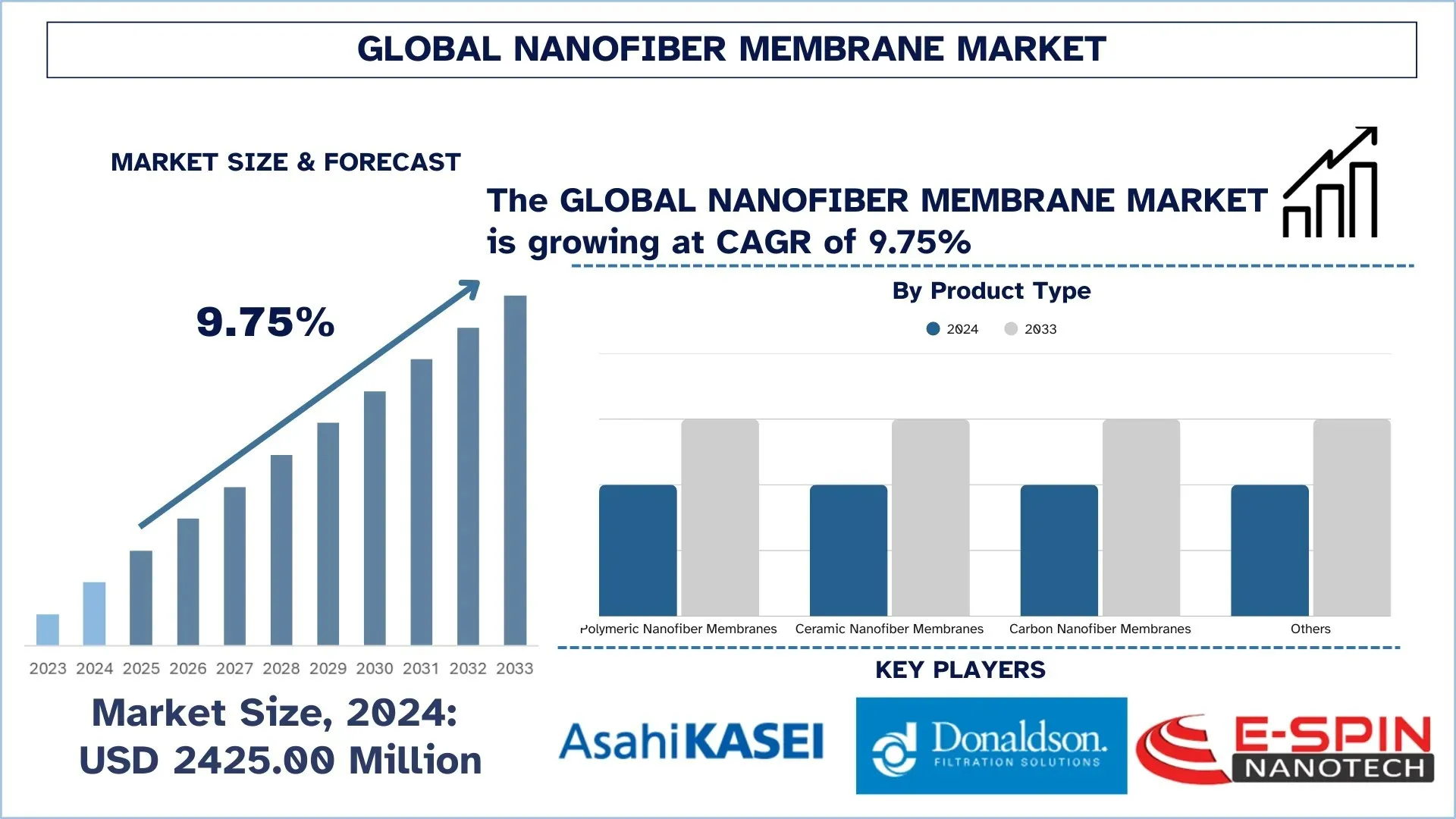
Global Nanofiber Membrane Market Size & Forecast
The Global Nanofiber Membrane Market was valued at USD 2,425.00 million in 2024 and is expected to grow at a CAGR of around 9.75% during the forecast period (2025–2033F), driven by tightening air- and water-quality requirements, rising demand for high-efficiency filtration, and the increasing adoption of advanced separation technologies across industrial, commercial, and healthcare applications.
Nanofiber Membrane Market Analysis
Filtration and separation requirements are increasing in intensity, with modern industrial and environmental practice requiring consistent, high efficiency performance over a wide range of flow conditions, contaminant profiles, and operating stress. In the global nanofiber membrane market, stringent air- and water-quality regulations are driving growth as industries and municipalities seek cleaner production, healthier workplaces, and improved public health outcomes. As a critical functional layer in data filtration assemblies, nanofiber membranes are considered essential by manufacturers and end users for high particle-capture efficiency, low pressure drop, and overall system reliability across applications ranging from HVAC and industrial dust collection to water treatment and medical filtration. This is further reinforced by the substitution of thicker, conventional media with high-performance and lightweight structures made of nanofibers, which improve permeability, reduce energy consumption and increase service intervals. Growing the market also means strategically incorporating advanced polymers, surface functionalization, and multilayer designs to address issues of fouling, improved chemical resistance, and more stable separation over time. Simultaneously, improvements in smart filtration and connected condition monitoring over the past year have placed pressure on membranes to integrate seamlessly with sensors and automated controls, making filtration platforms smarter, more responsive, and future-ready.
Global Nanofiber Membrane Market Trends
This section discusses the key market trends that are influencing the various segments of the global nanofiber membrane market, as found by our team of research experts.
Surface Functionalization for Performance
One of the most significant trends in the global nanofiber membrane market is the increasing use of surface functionalization to enhance membrane performance. Although nanofiber structures already have excellent surface area, and their porosity can be readily tuned, several end-use settings (wastewater streams, oily aerosols, bio-laden air, and chemically aggressive industrial processes) cause fouling, microbial proliferation, wetting problems, and selectivity constraints that can reduce flux and service life. However, manufacturers are now varying nanofiber surfaces through coating, grafting, plasma/UV treatments, and functional additives to impart hydrophilic, antimicrobial, oleophobic, or charged chemistries that reduce contaminant adhesion, enhance antifouling properties, and stabilize long-term filtration performance. This emerging trend is gaining momentum due to the ability of applications to incorporate application-specific membranes that operate reliably under realistic operating loads without causing excessive pressure drop. The American Membrane Technology Association (AMTA), as an example of such industry direction, indicates the use of anti-biofouling surface-coating strategies based on hydrophilic and zwitterionic chemistries produced via plasma treatment and dip coating, with promising results in anti-adhesion and anti-biofouling performance.
Nanofiber Membrane Industry Segmentation
This section provides an analysis of the key trends in each segment of the global nanofiber membrane market report, along with forecasts at the global, regional, and country levels for 2025-2033.
The Polymeric Nanofiber Membranes Segment Dominates the Nanofiber Membrane Market
Based on product type, the global nanofiber membrane market is segmented into Polymeric Nanofiber Membranes, Ceramic Nanofiber Membranes, Carbon Nanofiber Membranes, and Others. In 2024, the Polymeric Nanofiber Membranes segment is anticipated to hold the largest market share and continue its dominance throughout the forecast period. This is mainly due to the good balance of filtration efficiency, low pressure drop, scalability (e.g., electrospinning), and cost competitiveness offered by polymer-based nanofibers, which have been largely implemented for air filtration, HVAC, industrial dust collection, and medical and consumer filtration applications. These membranes can be designed with tunable porosity, surface functionality, and multilayer structures to optimize particle capture, breathability, and service life, thereby complementing performance and energy-efficiency priorities across end-use industries. The Ceramic Nanofiber Membranes segment, however, is expected to grow at the fastest pace due to the growing demand for high-temperature, chemically aggressive, and harsh environment filtration, where polymers can degrade.
The Air Filtration Segment held the Largest Market Share in the Nanofiber Membrane Market.
Based on application, the global nanofiber membrane market is segmented into Water & Wastewater Treatment, Air Filtration, Medical & Healthcare, Chemical Processing, and Others. In 2024, the Air Filtration segment is anticipated to hold the largest market share and continue its dominance throughout the forecast period. The major factors contributing to the segmental growth are the exceptional high power to capture particulate with low pressure drop, and can be used in HVAC, cleanroom filtration, industrial dust collection, cabin air filters, and respirators in areas where breathability and energy efficiency are of paramount importance. Such membranes offer better fine-particle collection, extended filter life, and steady operation in fluctuating airstreams, and are compatible with growing IAQ demands and occupational safety in commercial and industrial settings. However, the Water and Wastewater Treatment segment will experience the most rapid growth as water scarcity intensifies, discharge standards tighten, and investment in municipal and industrial treatment upgrades increases. The operators are requesting superior membrane solutions with higher flux, better antifouling characteristics, and greater chemical resistance to manage complex contaminants, reduce operating time and total operating costs, and achieve more demanding water-quality and water-reuse objectives.
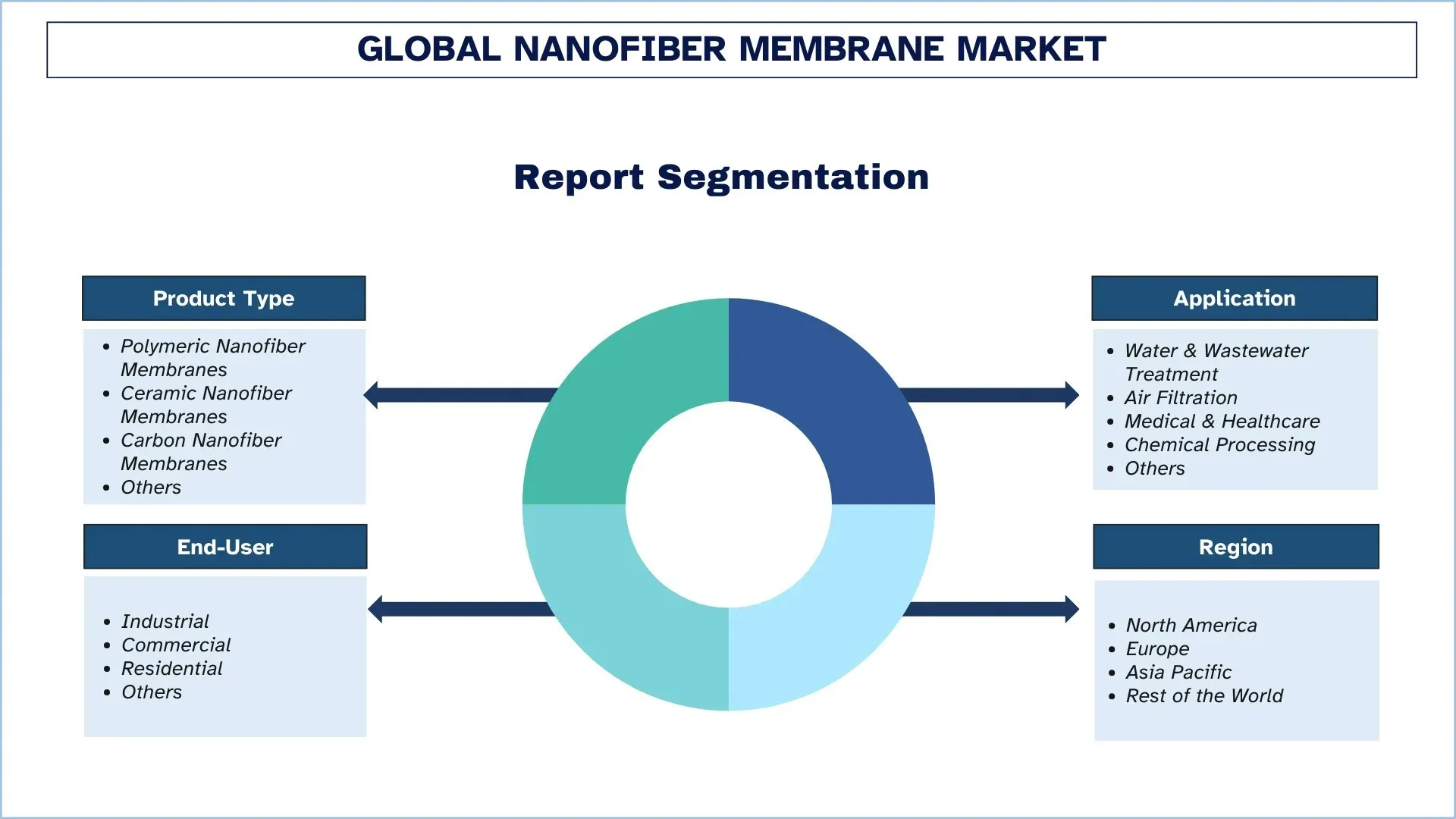
Asia Pacific Dominated the Global Nanofiber Membrane Market
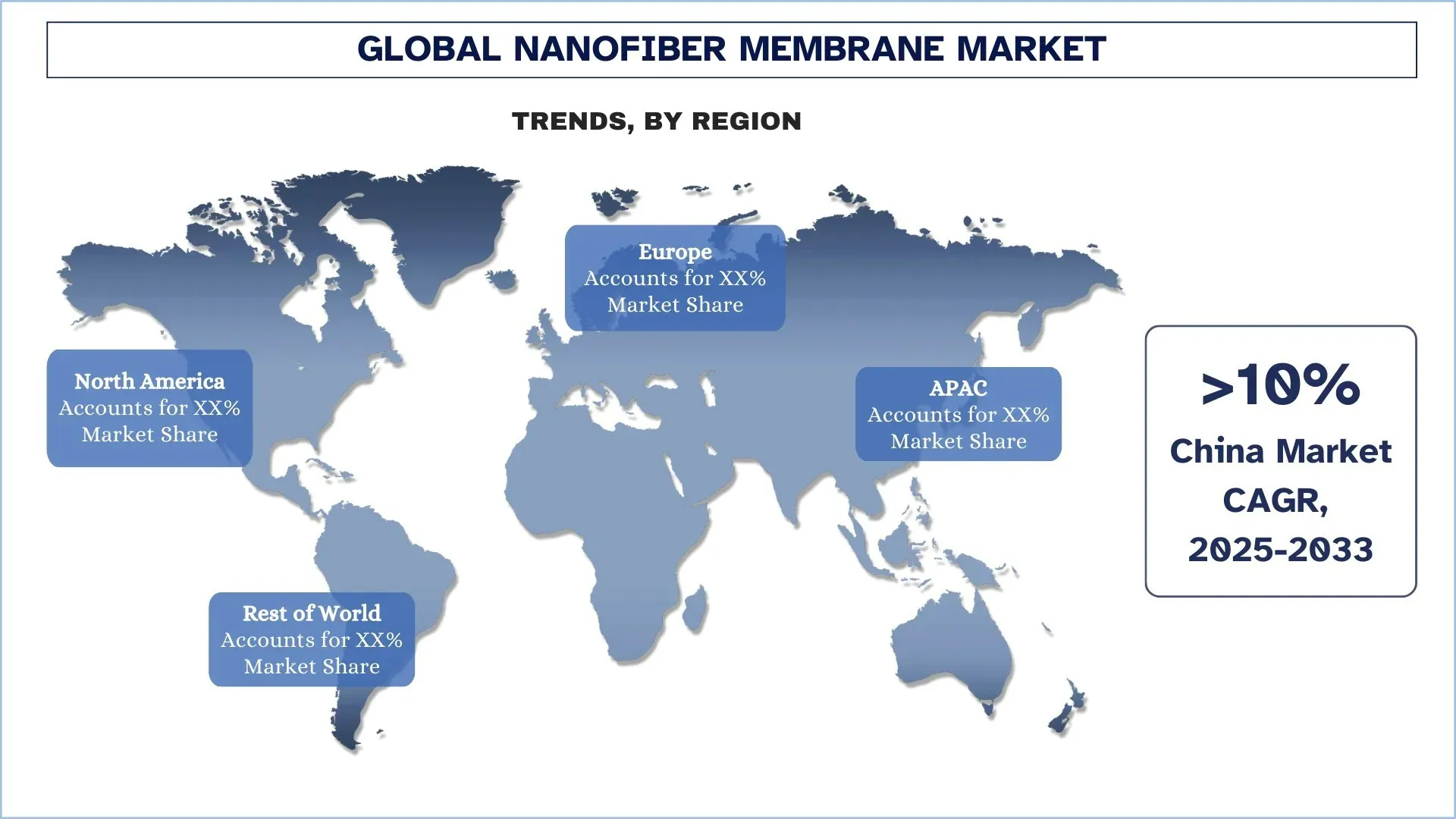
The Asia-Pacific region has had an advantage in the world nanofiber membrane market with the strong manufacturing bases in filtration media, textiles, and advanced materials, particularly in China, Japan, and India. This area has a large population of industrial manufacturers and end users in HVAC, industrial dust collection, chemicals, and water treatment, indicating high demand for high-efficiency membrane solutions. With the growing industrial production and the growth of the urban population, along with it, the development of infrastructure and the needs of the population in high-quality air and water filtration, i.e., lightweight and high-performance materials based on nanofiber membranes, are on the increase. The growing industrialization and urbanization of emerging markets in the region also facilitate market development by increasing demand for indoor air quality solutions and municipal wastewater upgrades. Additionally, the use of more sophisticated nanofiber technologies is further propelled by the region's interest in greater filtration efficiency, reduced energy consumption, and increased membrane service life.
China held a dominant Share of the Asia Pacific Nanofiber Membrane Market in 2024
The dominance of the nanofiber membrane market in China is attributable to the large-scale manufacturing facilities for high-tech materials, filtration media, and industrial processing, as well as the adoption of modern manufacturing technologies. The country has an extensive network of manufacturers and downstream industries (HVAC, industrial dust collection, electronics, chemicals, and municipal infrastructure), and demand for high-efficiency filtration solutions in both industrial and commercial settings is growing. This leadership is further supported by China's strong interest in improving air quality and expanding water and wastewater treatment capacity, which encourages the adoption of advanced membrane materials with high particle capture, low pressure drop, and long service life. Additionally, a high level of investment by the Chinese industry in research and development, electrospinning capacity, and scale-sensitive production ecosystems has contributed to the accelerated commercialization of functionalized nanofiber membranes for specialized applications.
Nanofiber Membrane Industry Competitive Landscape
The global nanofiber membrane market is competitive, with several global and international market players. The key players are adopting different growth strategies to enhance their market presence, such as partnerships, agreements, collaborations, new product launches, geographical expansions, and mergers and acquisitions.
Top Nanofiber Membrane Companies
Some of the major players in the market are Asahi Kasei Corporation, Donaldson Company, Inc., E-Spin NanoTech Pvt. Ltd., DuPont, TORAY INDUSTRIES, INC., TEIJIN LIMITED, SKE Research Equipment (Leonardino s.r.l.), Foshan MBRT Nanofiberlabs Technology Co., Ltd, Japan Vilene Company, Ltd., and Hollingsworth & Vose.
Global Nanofiber Membrane Market Report Coverage
Report Attribute | Details |
Base year | 2024 |
Forecast period | 2025-2033 |
Growth momentum | Accelerate at a CAGR of 9.75% |
Market size 2024 | USD 2,425.00 Million |
Regional analysis | North America, Europe, APAC, Rest of the World |
Major contributing region | Asia Pacific is expected to dominate the market during the forecast period. |
Key countries covered | U.S., Canada, Germany, U.K., Spain, Italy, France, China, Japan, and India |
Companies profiled | Asahi Kasei Corporation, Donaldson Company, Inc., E-Spin NanoTech Pvt. Ltd., DuPont, TORAY INDUSTRIES, INC., TEIJIN LIMITED, SKE Research Equipment (Leonardino s.r.l.), Foshan MBRT Nanofiberlabs Technology Co., Ltd, Japan Vilene Company, Ltd., and Hollingsworth & Vose |
Report Scope | Market Trends, Drivers, and Restraints; Revenue Estimation and Forecast; Segmentation Analysis; Demand and Supply Side Analysis; Competitive Landscape; Company Profiling |
Segments Covered | By Product Type; By Application, By End-User, and By Region/Country |
Reasons to Buy the Nanofiber Membrane Market Report:
The study includes market sizing and forecasting analysis confirmed by authenticated key industry experts.
The report briefly reviews overall industry performance at a glance.
The report covers an in-depth analysis of prominent industry peers, primarily focusing on key business financials, type portfolios, expansion strategies, and recent developments.
Detailed examination of drivers, restraints, key trends, and opportunities prevailing in the industry.
The study comprehensively covers the market across different segments.
Deep dive regional-level analysis of the industry.
Customization Options:
The global nanofiber membrane market can further be customized as per the requirements or any other market segment. Besides this, UnivDatos understands that you may have your own business needs; hence, feel free to contact us to get a report that completely suits your requirements.
Table of Content
Research Methodology for the Global Nanofiber Membrane Market Analysis (2023-2033)
We analyzed the historical market, estimated the current market, and forecasted the future market of the global nanofiber membrane market to assess its application in major regions worldwide. We conducted exhaustive secondary research to gather historical market data and estimate the current market size. To validate these insights, we carefully reviewed numerous findings and assumptions. Additionally, we conducted in-depth primary interviews with industry experts across the nanofiber membrane value chain. After validating market figures through these interviews, we used both top-down and bottom-up approaches to forecast the overall market size. We then employed market breakdown and data triangulation methods to estimate and analyze the market size of industry segments and sub-segments.
Market Engineering
We employed the data triangulation technique to finalize the overall market estimation and derive precise statistical numbers for each segment and sub-segment of the global nanofiber membrane market. We split the data into several segments and sub-segments by analyzing various parameters and trends, including product type, application, end-user, and regions within the global nanofiber membrane market.
The Main Objective of the Global Nanofiber Membrane Market Study
The study identifies current and future trends in the global nanofiber membrane market, providing strategic insights for investors. It highlights regional market attractiveness, enabling industry participants to tap into untapped markets and gain a first-mover advantage. Other quantitative goals of the studies include:
Market Size Analysis: Assess the current market size and forecast the market size of the global nanofiber membrane market and its segments in terms of value (USD).
Nanofiber Membrane Market Segmentation: Segments in the study include areas of product type, application, end-user, and regions.
Regulatory Framework & Value Chain Analysis: Examine the regulatory framework, value chain, customer behavior, and competitive landscape of the nanofiber membrane industry.
Regional Analysis: Conduct a detailed regional analysis for key areas such as Asia Pacific, Europe, North America, and the Rest of the World.
Company Profiles & Growth Strategies: Company profiles of the nanofiber membrane market and the growth strategies adopted by the market players to sustain the fast-growing market.
Frequently Asked Questions FAQs
Q1: What is the global nanofiber membrane current market size and its growth potential?
The global nanofiber membrane market was valued at USD 2,425.00 million in 2024 and is expected to grow at a CAGR of 9.75% during the forecast period (2025-2033).
Q2: Which segment has the largest share of the global nanofiber membrane market by Product Type?
The Polymeric Nanofiber Membranes segment is anticipated to hold the largest market share due to the good balance of filtration efficiency, low pressure drop, scalability (e.g., electrospinning), and cost competitiveness offered by polymer-based nanofibers, which have been implemented mainly for air filtration, HVAC, industrial dust collection, and medical and consumer filtration applications.
Q3: What are the driving factors for the growth of the global nanofiber membrane market?
• Tightening air and water quality regulations
• Rising demand for high-efficiency, low-pressure-drop filtration
• Growth in healthcare and protective filtration needs
Q4: What are the emerging technologies and trends in the global nanofiber membrane market?
• Surface functionalization for performance
• Hybrid and multilayer membrane architectures
Q5: What are the key challenges in the global nanofiber membrane market?
• Scaling and cost of production
• Durability and fouling management
Q6: Which region dominates the global nanofiber membrane market?
Asia-Pacific has dominated the nanofiber membrane market due to its strong manufacturing bases in filtration media, textiles, and advanced materials.
Q7: Who are the key players in the global nanofiber membrane market?
Some of the key companies include:
• Asahi Kasei Corporation
• Donaldson Company, Inc.
• E-Spin NanoTech Pvt. Ltd.
• DuPont
• TORAY INDUSTRIES, INC.
• TEIJIN LIMITED
• SKE Research Equipment (Leonardino s.r.l.)
• Foshan MBRT Nanofiberlabs Technology Co., Ltd
• Japan Vilene Company, Ltd.
• Hollingsworth & Vose
Q8: How do tightening air-quality regulations and indoor air standards influence the adoption of nanofiber membranes in air filtration?
• Higher Fine-Particle Capture Needs: Stricter limits on PM2.5/PM1 and workplace dust emissions increase demand for media that can trap finer particles efficiently.
• Energy & Airflow Requirements: HVAC and industrial systems require high efficiency without high pressure drop, encouraging adoption of nanofiber layers for better permeability.
• Compliance-Driven Upgrades: Facilities upgrade filters and dust-collection systems to meet evolving regulatory and certification expectations, accelerating premium filtration media use.
Q9: How does the push for sustainability and greener manufacturing impact innovation in nanofiber membrane materials?
• Eco-Friendly Materials: Demand is rising for recyclable polymers, bio-based options, and reduced-toxicity chemistries in membrane production.
• Lower Energy Filtration: Nanofiber designs that cut pressure drop help reduce energy use in HVAC and industrial filtration, supporting sustainability goals.
• Longer Service Life: Development focuses on membranes that last longer and foul less, reducing waste, replacements, and total environmental footprint.
Related Reports
Customers who bought this item also bought




India Anisole Market: Current Analysis and Forecast (2026-2034)
Emphasis on Grade Type (Up To 99.5% and Above 99.5%); Application (Pharmaceuticals, Agrochemicals, Perfumes & Fragrances, Dyes, and Others); and Region/States

Southeast Asia Waterproofing Chemicals Market: Current Analysis and Forecast (2025-2033)
Emphasis on Product Type (Bituminous Membrane, Cementitious Coatings, Acrylic Coatings, Polyurethane (PU) Coatings, Elastomeric Coatings, and Others); End Use Industry (Commercial Sector, Residential Sector, Infrastructure Sector, Industrial Sector, and Others); and Country.

Sodium Percarbonate Market: Current Analysis and Forecast (2025-2033)
Emphasis on Type (Coated, Uncoated, and Tablet); Application (Detergent Agents, Cleaning Agents, Bleaching Agents, Water Treatments, and Others); End-Use (Household Cleaning, Laundry, Industrial Cleaning, Textile Industry, Chemical Industry, Papermaking Industry, Food Industry, and Others); and Region/Country

Sodium Hexametaphosphate Market: Current Analysis and Forecast (2025-2033)
Emphasis on Grade (Food-Grade and Technical-Grade); Form (Granular, Powder, and Glass Plates); Application (Water Treatment, Food Additives, Detergents & Cleaning Agents, Ceramics & Construction, Oil & Gas, and Others); and Region/Country