Vacuum Insulation Panel Market: Current Analysis and Forecast (2025-2033)
Emphasis on Type (Flat Panel and Special Shape Panel); Raw Material (Plastics and Metal); Core Material (Silica, Fiberglass, and Others); Application (Construction, Cooling and Freezing Devices, Logistics, and Others); and Region/Country
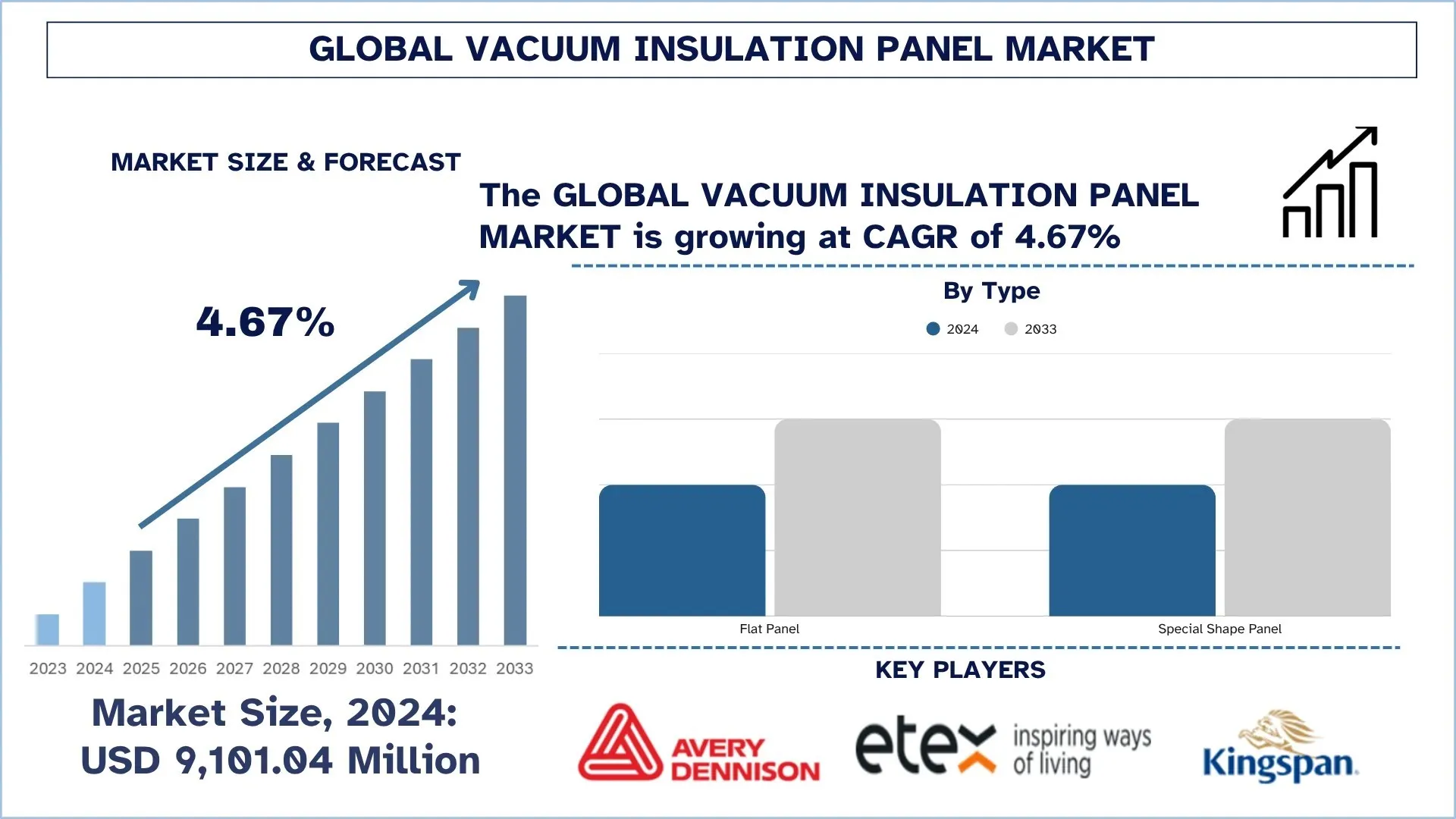
Global Vacuum Insulation Panel Market Size & Forecast
The Global Vacuum Insulation Panel Market was valued at USD 9,101.04 million in 2024 and is expected to grow at a CAGR of around 4.67% during the forecast period (2025–2033F), driven by the growing demand for energy-efficient building materials and advanced thermal management solutions, combined with increasingly strict environmental and energy-saving regulations.
Vacuum Insulation Panel Market Analysis
The Vacuum insulation panels market is gaining popularity in the global market due to the need to use high-performance insulation materials, and energy-efficient construction solutions are continuing to grow. VIPs are known to be high-tech and efficient insulation materials with better thermal resistance properties than traditional materials, so they can be appealing in building, refrigeration, and transportation. The vacuum insulation panel market is growing at an unprecedented rate as the world is making efforts to cut down on its energy consumption, lower its carbon footprint, and go net-zero with its efforts to counter the increasing demands by industries and infrastructure projects to find sustainable and compact insulation solutions. This trend is directly linked with an increase in the number of green buildings, urbanization, and the strict development of energy efficiency policies in developed and developing economies. Additionally, current technological innovations, including the development of tougher core materials, improved barrier films, and extended life cycles, are further enhancing the performance and cost-effectiveness of VIPs.
Global Vacuum Insulation Panel Market Trends
This section discusses the key market trends that are influencing the various segments of the global vacuum insulation panel market, as found by our team of research experts.
Integration with Hybrid Insulation Systems
The introduction of VIPs in hybrid insulation systems is one of the trends that are being experienced in the current market of Vacuum Insulation panels. This method involves the use of a combination of vacuum insulation panels with other standard materials like polyurethane foam, polystyrene, or fiberglass in order to get an ideal balance between performance, cost, and design flexibility. With VIPs incorporated into the hybrid systems, manufacturers and builders can achieve a high thermal conductivity of only a few microns in the high-energy-density regions, allowing more cost-effective materials, such as aluminum, to be used in other locations. This leads to greater energy efficiency and cost-effectiveness. The trend is especially on the rise within the construction and refrigeration industries, where there is a strong focus on maximizing insulation performance without the need to make the insulation thicker and more expensive. Notably, major companies in the appliances industry are integrating hybrid insulation models into high-efficiency refrigerators and freezers as a measure to comply with the increasing demands for high energy efficiency. On the same note, the construction industry is also developing hybrid wall and roof systems that meet the advanced standards of green building.
Vacuum Insulation Panel Industry Segmentation
This section provides an analysis of the key trends in each segment of the global vacuum insulation panel market report, along with forecasts at the global, regional, and country levels for 2025-2033.
The Flat Panel Segment Dominates the Vacuum Insulation Panel Market
Based on Type, the global vacuum insulation panel market is segmented into Flat Panel and Special Shape Panel. In 2024, the Flat Panel segment is anticipated to hold the largest market share and continue its dominance throughout the forecast period. This is mainly because it is mostly used in construction, refrigeration, and cold chain logistics, where standardized shapes and sizes are desired to facilitate easy installation and achieve cost efficiency. Flat panel has a high level of thermal insulation, has extended life, and can be used with all types of building materials, which makes the flat panel highly suitable in residential and commercial energy-saving efforts. Special Shape Panel, segment is also anticipated to record a sustained growth with the growing demand of tailored insulation designs when it comes to intricate architectural designs, electronic equipment, and transport systems. These panels are developed with special structural and geometrical demands and excellent insulation properties, and thus provide ideal performance and space optimization when specialized industrial and high-end requirements are demanded.
The Plastic Segment held the Largest Market Share in the Vacuum Insulation Panel Market.
Based on Raw Material, the global vacuum insulation panel market is segmented into Plastics and Metal. In 2024, the Plastics segment is anticipated to hold the largest market share and maintain its dominance throughout the forecast period. The major factors attributed to the growth of the segment include that plastic-based VIPs are lightweight, cheap to produce, and highly flexible, hence making them the perfect choice when it comes to usage in building insulation, household appliances, and cold chain logistics. Panel encapsulation and core support are commonly done with plastic materials (polyethylene and polyurethane) that have great thermal conductivity and can be easily fabricated. On the other hand, the metal segment is expected to record high growth rates in the next few years due to its high durability, good resistance to moisture and gases, as well as the ability to withstand heavy industrial and transportation-related tasks. VIPs made of metal are more protective and last longer, which is why they are usually the choice of applications that require high performance and high structural integrity, as well as long-term insulation efficiency.
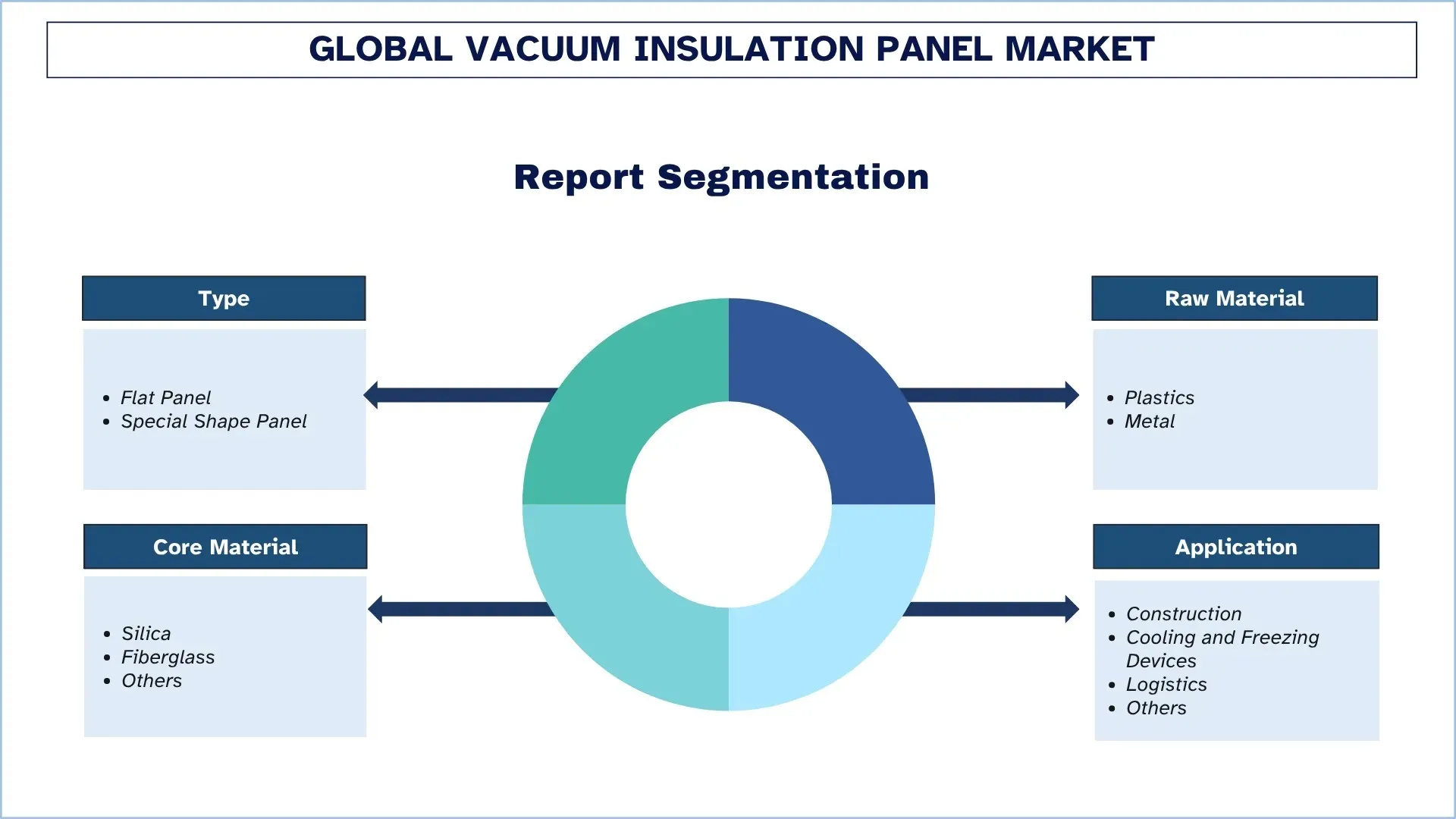
Asia Pacific Dominated the Global Vacuum Insulation Panel Market
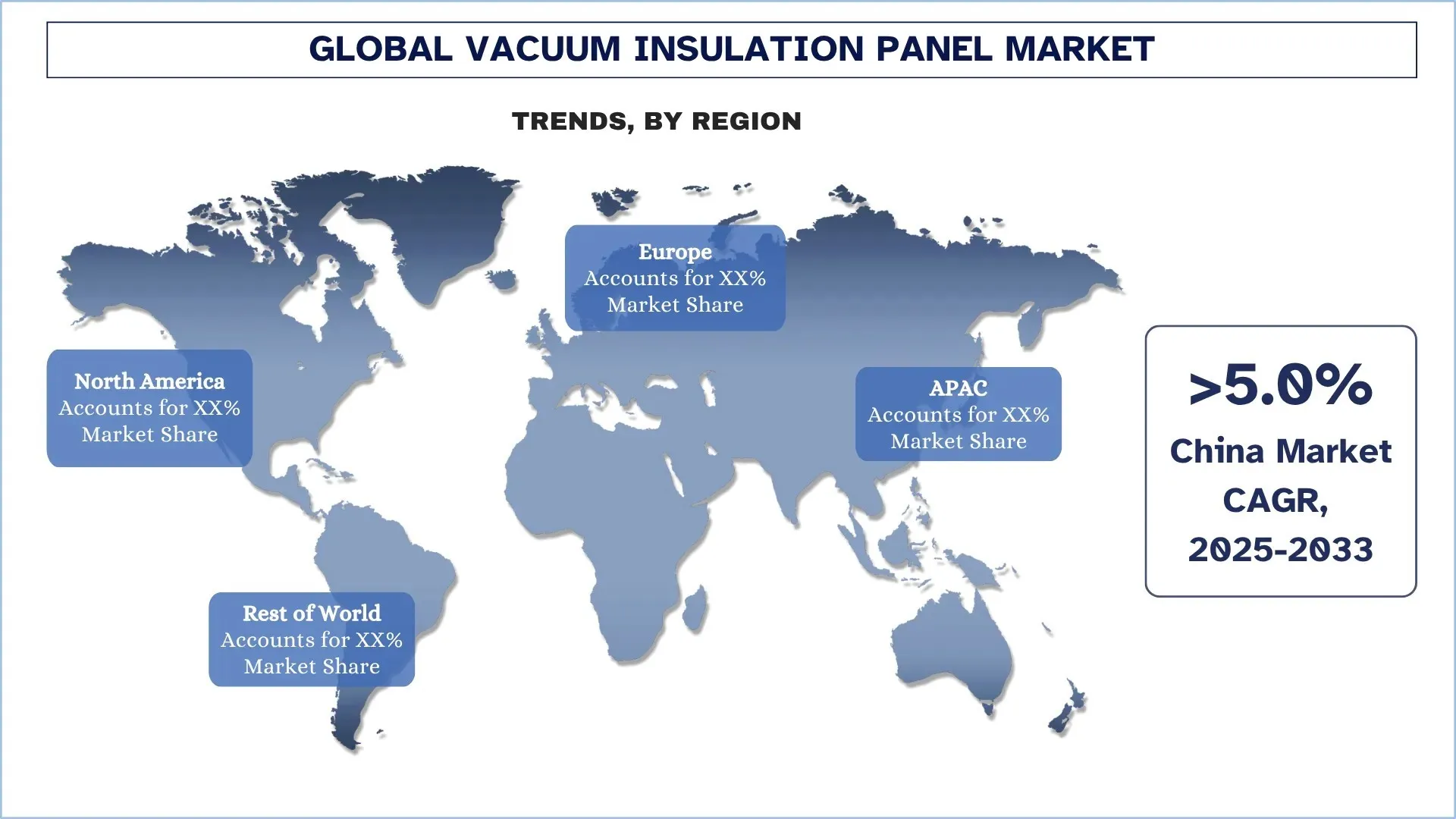
The Asia-Pacific region is expected to dominate the market with the largest market share and continue to dominate the entire forecast period. This has been mainly due to the high rate of urbanization, the growth of the building industry, and the growing interest in energy-efficient building solutions in major economies such as China, Japan, South Korea, and India. The high number of manufacturing industries in the region, combined with current government programs focused on sustainable infrastructure and carbon reduction, also contributes to its market dominance. Additionally, the growing demand for sophisticated insulation materials in commercial and residential projects, combined with the rise in cold chain management and refrigeration, has been driving the adoption of vacuum insulation panels throughout the region. China remains the most significant contributor to the market, thanks to its massive investments in green buildings and industrial energy-saving initiatives. As technological breakthroughs continue, as costs decrease, and with the government's favorable policies, it is projected that the Asia-Pacific region will continue to lead the global VIP market growth in the next few years.
China held a dominant Share of the Asia Pacific Vacuum Insulation Panel Market in 2024
The Chinese market of Vacuum Insulation Panel (VIP) is undergoing a vigorous growth process due to the high level of enthusiasm of the Chinese related to energy saving, environmentally-friendly infrastructure, and high-tech building technologies. Due to the stronger attempts of China to reach its carbon neutrality targets and enhance the energy performance of all industries, the need for high-performance insulation materials, including VIPs, is growing at a high rate. The growth in the market is also driven by government efforts to encourage green building, smart cities, and low-carbon manufacturing. Moreover, the massive construction projects of China, the growing cold chain communication, and the increase in demand for energy-saving appliances are also providing immense opportunities to the local manufacturers.
Vacuum Insulation Panel Industry Competitive Landscape
The global vacuum insulation panel market is competitive, with several global and international market players. The key players are adopting different growth strategies to enhance their market presence, such as partnerships, agreements, collaborations, new product launches, geographical expansions, and mergers and acquisitions.
Top Vacuum Insulation Panel Companies
Some of the major players in the market are Avery Dennison Corporation, Etex Group, Kingspan Group, Evonik Industries AG, Morgan Advanced Materials, Panasonic Corporation of North America, Recticel Insulation, Turvac Vacuum Insulation, va-Q-tec Thermal Solutions GmbH, and Archello.
Recent Developments in the Vacuum Insulation Panel Market
In 2023, Kingspan Group plc announced the launch of a new range of vacuum insulation panels (VIPs) designed specifically for the construction industry. These VIPs boast enhanced thermal performance and durability, catering to the increasing demand for sustainable building materials.
In March 2023, Hutchinson and va-Q-tec, pioneer of highly efficient vacuum insulation panels (VIPs), announced their partnership. The aim of this strategic partnership is to jointly develop high-performance, scalable insulation solutions to improve the thermal management of eMobility vehicles.
Global Vacuum Insulation Panel Market Report Coverage
Report Attribute | Details |
Base year | 2024 |
Forecast period | 2025-2033 |
Growth momentum | Accelerate at a CAGR of 4.67% |
Market size 2024 | USD 9,101.04 Million |
Regional analysis | North America, Europe, APAC, Rest of the World |
Major contributing region | Asia Pacific is expected to dominate the market during the forecast period. |
Key countries covered | U.S., Canada, Germany, U.K., Spain, Italy, France, China, Japan, and India |
Companies profiled | Avery Dennison Corporation, Etex Group, Kingspan Group, Evonik Industries AG, Morgan Advanced Materials, Panasonic Corporation of North America, Recticel Insulation, Turvac Vacuum Insulation, va-Q-tec Thermal Solutions GmbH, and Archello |
Report Scope | Market Trends, Drivers, and Restraints; Revenue Estimation and Forecast; Segmentation Analysis; Demand and Supply Side Analysis; Competitive Landscape; Company Profiling |
Segments Covered | By Type; By Raw Material; By Core Material, By Application; By Region/Country |
Reasons to Buy the Vacuum Insulation Panel Market Report:
The study includes market sizing and forecasting analysis confirmed by authenticated key industry experts.
The report briefly reviews overall industry performance at a glance.
The report covers an in-depth analysis of prominent industry peers, primarily focusing on key business financials, type portfolios, expansion strategies, and recent developments.
Detailed examination of drivers, restraints, key trends, and opportunities prevailing in the industry.
The study comprehensively covers the market across different segments.
Deep dive regional-level analysis of the industry.
Customization Options:
The global vacuum insulation panel market can further be customized as per the requirements or any other market segment. Besides this, UnivDatos understands that you may have your own business needs; hence, feel free to contact us to get a report that completely suits your requirements.
Table of Content
Research Methodology for the Global Vacuum Insulation Panel Market Analysis (2023-2033)
We analyzed the historical market, estimated the current market, and forecasted the future market of the global vacuum insulation panel market to assess its application in major regions worldwide. We conducted exhaustive secondary research to gather historical market data and estimate the current market size. To validate these insights, we carefully reviewed numerous findings and assumptions. Additionally, we conducted in-depth primary interviews with industry experts across the vacuum insulation panel value chain. After validating market figures through these interviews, we used both top-down and bottom-up approaches to forecast the overall market size. We then employed market breakdown and data triangulation methods to estimate and analyze the market size of industry segments and sub-segments.
Market Engineering
We employed the data triangulation technique to finalize the overall market estimation and derive precise statistical numbers for each segment and sub-segment of the global vacuum insulation panel market. We split the data into several segments and sub-segments by analyzing various parameters and trends, including type, raw material, core material, application, and regions within the global vacuum insulation panel market.
The Main Objective of the Global Vacuum Insulation Panel Market Study
The study identifies current and future trends in the global vacuum insulation panel market, providing strategic insights for investors. It highlights regional market attractiveness, enabling industry participants to tap into untapped markets and gain a first-mover advantage. Other quantitative goals of the studies include:
Market Size Analysis: Assess the current market size and forecast the market size of the global vacuum insulation panel market and its segments in terms of value (USD).
Vacuum Insulation Panel Market Segmentation: Segments in the study include areas of type, raw material, core material, application, and regions.
Regulatory Framework & Value Chain Analysis: Examine the regulatory framework, value chain, customer behavior, and competitive landscape of the vacuum insulation panel industry.
Regional Analysis: Conduct a detailed regional analysis for key areas such as Asia Pacific, Europe, North America, and the Rest of the World.
Company Profiles & Growth Strategies: Company profiles of the vacuum insulation panel market and the growth strategies adopted by the market players to sustain the fast-growing market.
Frequently Asked Questions FAQs
Q1: What is the global vacuum insulation panel current market size and its growth potential?
The global vacuum insulation panel market was valued at USD 9,101.04 million in 2024 and is expected to grow at a CAGR of 4.67% during the forecast period (2025-2033).
Q2: Which segment has the largest share of the global vacuum insulation panel market by type?
The Flat Panel segment is anticipated to hold the largest market share and continue its dominance throughout the forecast period. This is mainly because it is mostly used in construction, refrigeration, and cold chain logistics, where standardized shapes and sizes are desired to facilitate easy installation and achieve cost efficiency.
Q3: What are the driving factors for the growth of the global vacuum insulation panel market?
• Stringent Energy-Efficiency Regulations: Increasing government mandates and building codes for energy conservation, especially in Europe, North America, and Asia, are driving the demand for high-performance insulation materials like VIPs, which offer superior thermal efficiency.
• Growth in Cold Chain and Pharmaceutical Logistics: The expanding global cold chain industry, including temperature-sensitive food and pharmaceutical storage, is creating strong demand for VIPs in refrigerated transport and packaging applications.
• Space-Saving Insulation in Construction and Appliances: VIPs provide excellent insulation performance with minimal thickness, making them ideal for refrigerators, freezers, and compact or retrofitted buildings where space optimization is critical.
Q4: What are the emerging technologies and trends in the global vacuum insulation panel market?
• Integration with Hybrid Insulation Systems: The use of VIPs in combination with conventional insulation materials (e.g., for thermal bridges, window frames, or specific structural components) is becoming increasingly common to balance performance and cost.
• Product Innovations and Improved Durability: Advances in barrier films, core materials, and edge protection are enhancing VIP longevity and handling, while modular and prefabricated VIP systems are emerging to simplify installation.
• Adoption in High-Performance and Sustainable Buildings: VIPs are gaining traction in green building projects—such as passive houses, near-zero energy buildings, and LEED-certified developments where superior insulation and sustainability are prioritized.
Q5: What are the key challenges in the global vacuum insulation panel market?
• High Initial Cost Compared to Conventional Materials: The high production and material costs of VIPs make them less accessible for large-scale, cost-sensitive projects, limiting adoption in mainstream building applications.
• Mechanical Fragility and Risk of Vacuum Loss: VIPs are vulnerable to damage during transport or installation. A puncture or seal failure can lead to vacuum loss, drastically reducing insulation performance.
• Limited Standardization and Manufacturing Capacity: The global VIP market lacks standardization in panel dimensions, quality testing, and performance certification, while manufacturing capacity remains concentrated among a few specialized producers.
Q6: Which region dominates the global vacuum insulation panel market?
The Asia-Pacific region is expected to dominate the market with the largest market share and continue to dominate the entire forecast period. This has been primarily due to the high rate of urbanization, the expansion of the building industry, and the increasing interest in energy-efficient building solutions in major economies, such as China, Japan, South Korea, and India. The high number of manufacturing industries in the region, combined with current government programs focused on sustainable infrastructure and carbon reduction, also contributes to its market dominance.
Q7: Who are the key players in the global vacuum insulation panel market?
Some of the key companies include:
• Avery Dennison Corporation
• Etex Group
• Kingspan Group
• Evonik Industries AG
• Morgan Advanced Materials
• Panasonic Corporation of North America
• Recticel Insulation
• Turvac Vacuum Insulation
• va-Q-tec Thermal Solutions GmbH
• Archello
Q8: How are government policies and incentives shaping the global Vacuum Insulation Panel (VIP) market?
• Energy Efficiency Regulations: Governments are implementing stricter building energy codes and green certification programs that promote the use of high-performance insulation materials like VIPs.
• Financial Incentives: Subsidies, tax credits, and low-interest financing for energy-efficient construction and appliances are accelerating VIP adoption across residential, commercial, and industrial sectors.
• Sustainability Goals: National climate action plans and carbon reduction targets are driving demand for low-thermal-conductivity solutions, positioning VIPs as a key component in sustainable infrastructure development.
Q9: What role does digitalization play in enhancing Vacuum Insulation Panel manufacturing and performance?
• Smart Manufacturing: Integration of automation, robotics, and IoT technologies enables precision control in panel production, improving consistency and quality.
• Predictive Quality Control: AI and data analytics monitor material performance in real time, reducing defects and enhancing product reliability.
• Lifecycle Management: Digital twins and sensor-enabled monitoring systems track VIP performance over time, supporting better maintenance planning and optimizing thermal efficiency.
Related Reports
Customers who bought this item also bought





India Anisole Market: Current Analysis and Forecast (2026-2034)
Emphasis on Grade Type (Up To 99.5% and Above 99.5%); Application (Pharmaceuticals, Agrochemicals, Perfumes & Fragrances, Dyes, and Others); and Region/States

Southeast Asia Waterproofing Chemicals Market: Current Analysis and Forecast (2025-2033)
Emphasis on Product Type (Bituminous Membrane, Cementitious Coatings, Acrylic Coatings, Polyurethane (PU) Coatings, Elastomeric Coatings, and Others); End Use Industry (Commercial Sector, Residential Sector, Infrastructure Sector, Industrial Sector, and Others); and Country.
Sodium Percarbonate Market: Current Analysis and Forecast (2025-2033)
Emphasis on Type (Coated, Uncoated, and Tablet); Application (Detergent Agents, Cleaning Agents, Bleaching Agents, Water Treatments, and Others); End-Use (Household Cleaning, Laundry, Industrial Cleaning, Textile Industry, Chemical Industry, Papermaking Industry, Food Industry, and Others); and Region/Country

Sodium Hexametaphosphate Market: Current Analysis and Forecast (2025-2033)
Emphasis on Grade (Food-Grade and Technical-Grade); Form (Granular, Powder, and Glass Plates); Application (Water Treatment, Food Additives, Detergents & Cleaning Agents, Ceramics & Construction, Oil & Gas, and Others); and Region/Country