Biobanks Market: Current Analysis and Forecast (2025-2033)
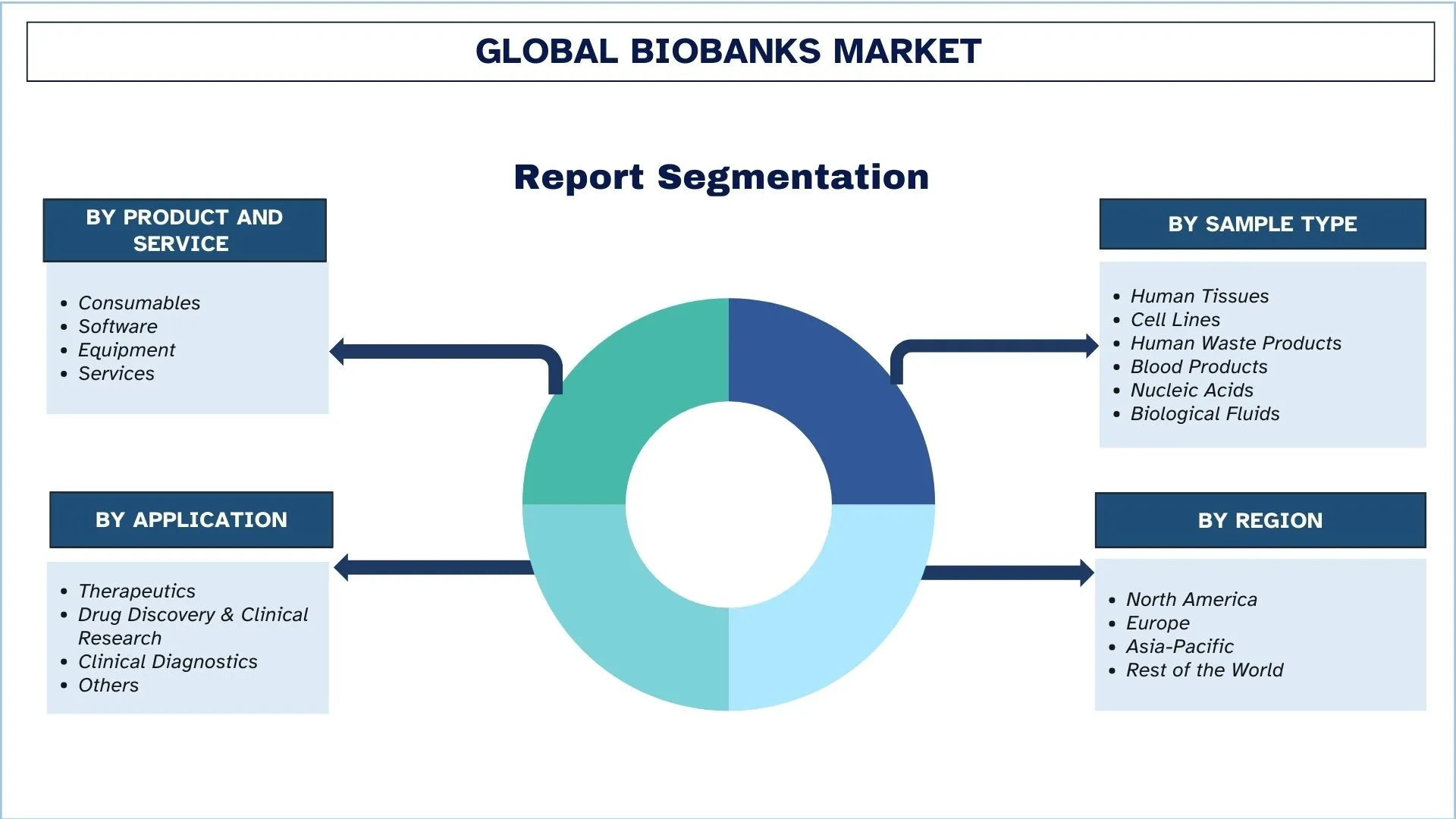
Emphasis on Product and Service (Consumables, Software, Equipment, and Services); Sample Type (Human Tissues, Cell Lines, Human Waste Products, Blood Products, Nucleic Acids, and Biological Fluids); Application (Therapeutics, Drug Discovery & Clinical Research, Clinical Diagnostics, and Others); and Region/Country
Global Biobanks Market Size & Forecast
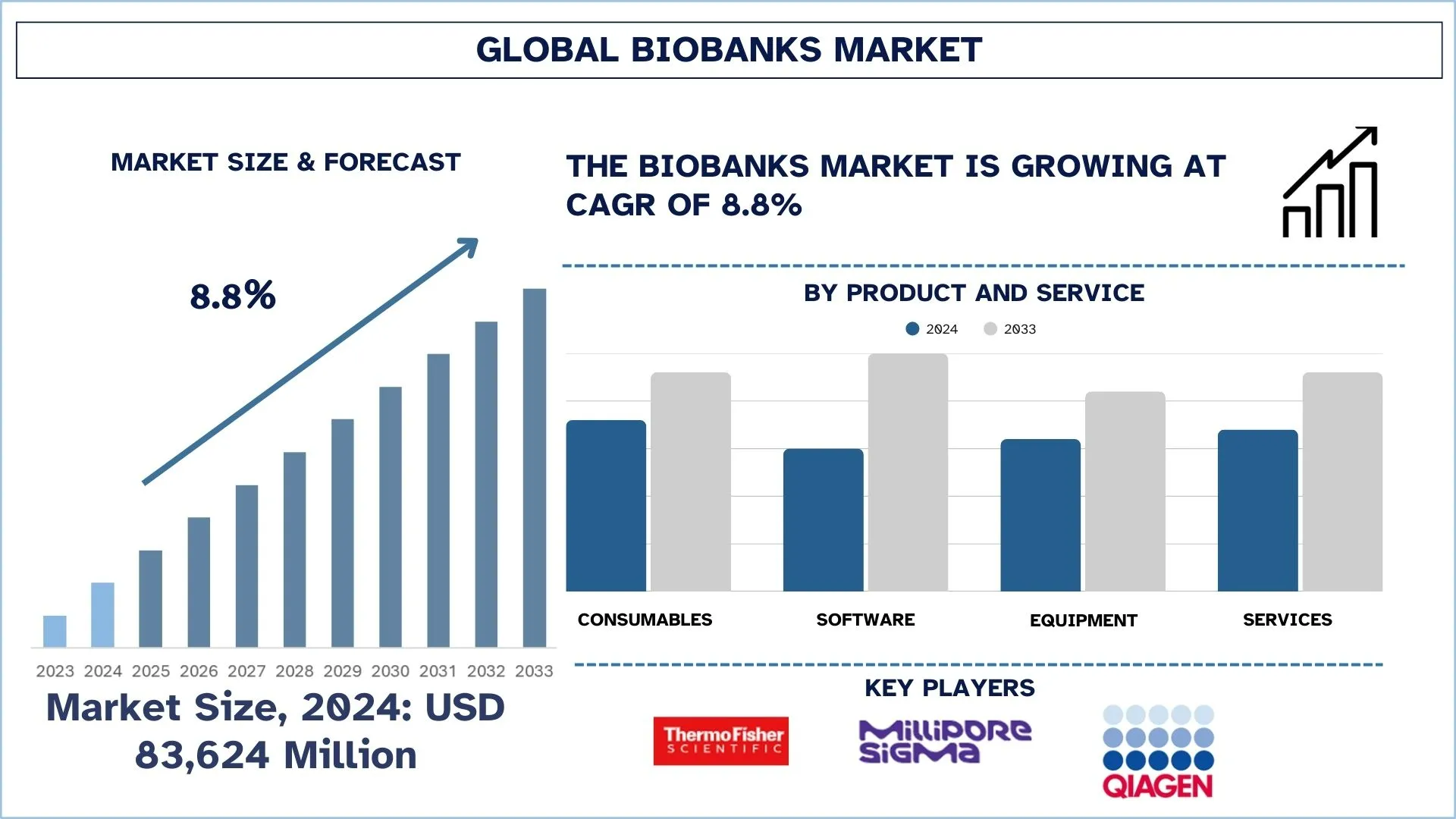
The Global Biobanks Market was valued at USD 83,624 million in 2024 and is expected to grow at a strong CAGR of around 8.8% during the forecast period (2025-2033F), driven by rising demand for biospecimens in research, diagnostics, and personalized medicine.
Biobanks Market Analysis
Biobanks are biological specimens in the form of tissues, blood, DNA, cells, and other biological and related health and demographic information that are collected, processed, stored, and managed. The global biobanks market is accelerating due to the growing demand for personalized medicine, improved diagnostic accuracy, and the development of therapeutic methods that require high-quality biological samples. Advances in sectors such as genomics, proteomics, and biotechnology have increased the need for proper organization and long-term storage of samples. Additionally, further increases in clinical research, drug discovery, and regenerative medicine investments contribute to the market growth.
Global Biobanks Market Trends
This section discusses the key market trends that are influencing the various segments of the global Biobanks market, as found by our team of research experts.
Focus on Sustainability and Green Biobanking
Emphasis on sustainability and green biobanking is becoming an emerging future market trend for the biobanking market, as biobanks seek to minimize environmental impact while ensuring sample integrity. To reduce energy use and operational expenses, biobank operators are increasingly adopting cold storage, environmentally friendly consumables, and streamlined sample-processing guidelines. Waste reduction and better use of resources are also being increasingly achieved through automation. Moreover, the increasing regulatory pressure, corporate sustainability objectives, and investor attention to environmental, social, and corporate responsibility are promoting more environmentally friendly practices in biobanks. Such initiatives have the effect not only of promoting a sustainable operation in the long term, but also of increasing the cost efficiency and brand value of biobank organizations.
Biobanks Industry Segmentation
This section provides an analysis of the key trends in each segment of the global biobanks market report, along with forecasts at the global, regional, and country levels for 2025-2033.
The Consumables Segment Dominates the Global Biobanks Market
Based on the product and service category, the market is categorized into consumables, software, equipment, and services. Among these, the consumables have the largest market share since they are consumed repeatedly in large amounts, replacement cycles are short, and are needed to perform routine diagnostics, procedures, and daily operations, which guarantees the same and continuous revenue. However, the software segment is expected to grow at the fastest rate, owing to the accelerated digitalization, increased use of AI-driven analytics, cloud computing, automation, and the use of data to make decisions.
The Clinical Diagnostics Segment Dominates the Global Biobanks Market.
Based on the application category, the market is segmented into therapeutics, drug discovery & clinical research, clinical diagnostics, and others. Among these, clinical diagnostics holds the largest market share because it is commonly applied to hospitals, diagnostic laboratories, and medical facilities in detecting, monitoring, and preventive screening of diseases, and consequently, the volume of tests is high and recurrent. Its hegemony is further supported by the rising number of chronic and infectious diseases in the world. However, drug discovery & clinical research will likely increase faster in the next few years due to the growth in clinical trial activity, and the recent surge in the interest of precision medicine, biologics, and advanced therapeutics, all of which increase the need for high-quality biological samples. For instance, in June 2025, BioAge Labs, Inc., which is a clinical-stage biotechnology company, announced the launch of an initiative to comprehensively profile and analyze samples from the HUNT Biobank in Norway, to enhance its drug-discovery platform.
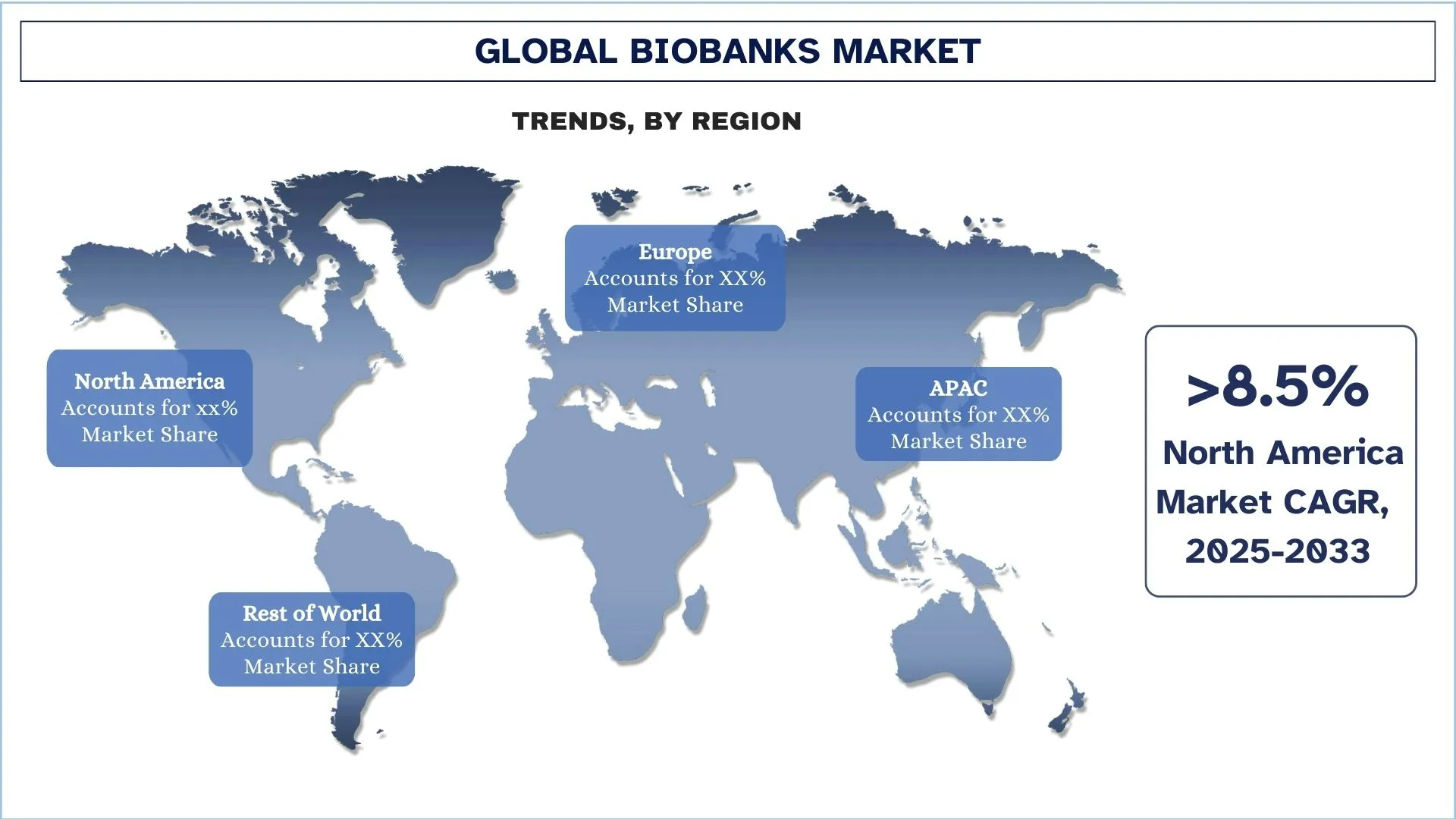
North America holds the largest market share in the global Biobanks market
The market share of the biobanks in North America was the largest in the year 2024, because of the well-developed healthcare and research systems, presence of pharmaceutical and biotechnology firms, high usage of precision medicine, and genomics-based research. The region enjoys high levels of government and non-government investments in biomedical research, high population genomics projects, and established regulatory frameworks to favor biobanking activities. Moreover, general publicity of biospecimen-based research, the growing level of clinical trials, and partnerships between educational organizations, healthcare facilities, and industry participants further enhanced the dominance of North America in the global biobanks market.
The United States held a Dominant share of the North America Biobanks Market in 2024
The United States dominates the North American biobank market due to its large clinical research ecosystem, academic medical centers, and ongoing clinical trials. The involvement of the best research institutions and national health programs has enhanced the speed at which biospecimen is collected and used. The early acceptance of the latest biobanking technologies, the high data integration efforts, and the effective industry-academia partnerships are also advantageous to the country. Moreover, translational research, oncology research, and rare disease research have also been in high demand, and this has greatly contributed to the growth and development of the biobank market in the United States.
Biobanks Industry Competitive Landscape
The global Biobanks market is competitive, with several global and international market players. The key players are adopting different growth strategies to enhance their market presence, such as partnerships, agreements, collaborations, geographical expansions, and mergers and acquisitions.
Top Biobanks Market Companies
Some of the major players in the market are Thermo Fisher Scientific Inc., Merck KGaA, Qiagen, Hamilton Company, Danaher Corporation, Becton, Dickinson, and Company (BD), Charles River Laboratories, Lonza, Stemcell Technologies, and Promocell GmbH.
Recent Developments in the Biobanks Market
In October 2025, BioIVT, a global research partner and biospecimen solutions provider for drug and diagnostic development, announced the acquisition of BeCytes Biotechnologies, which is a Barcelona, Spain-based company specializing in the coordination of the collection, processing, and distribution of high-quality human tissues and cells for biomedical research.
In December 2024, Merck signed a definitive agreement to acquire HUB Organoids Holding B.V., a Netherlands-based organoid technology pioneer, strengthening its next-generation biology and cell culture portfolio for faster drug development.
In May 2024, IK Partners invested in BIOBank, acquiring a majority stake alongside the company’s management and existing shareholders, Verto Growth and Capital Croissance. The investment was aimed at supporting BIOBank’s strategic growth, service expansion, and international development initiatives.
Global Biobanks Market Report Coverage
Report Attribute | Details |
Base year | 2024 |
Forecast period | 2025-2033 |
Growth momentum | Accelerate at a CAGR of 8.8% |
Market size 2024 | USD 83,624 million |
Regional analysis | North America, Europe, APAC, Rest of the World |
Major contributing region | The Asia-Pacific region is expected to dominate the market during the forecast period. |
Key countries covered | U.S., Canada, Germany, U.K., Spain, Italy, France, China, Japan, and India. |
Companies profiled | Thermo Fisher Scientific Inc., Merck KGaA, Qiagen, Hamilton Company, Danaher Corporation, Becton, Dickinson, and Company (BD), Charles River Laboratories, Lonza, Stemcell Technologies, and Promocell GmbH. |
Report Scope | Market Trends, Drivers, and Restraints; Revenue Estimation and Forecast; Segmentation Analysis; Demand and Supply Side Analysis; Competitive Landscape; Company Profiling |
Segments Covered | By Product and Service, By Sample Type, By Application, and By Region/Country |
Reasons to Buy the Biobanks Market Report:
The study includes market sizing and forecasting analysis confirmed by authenticated key industry experts.
The report briefly reviews overall industry performance at a glance.
The report covers an in-depth analysis of prominent industry peers, primarily focusing on key business financials, type portfolios, expansion strategies, and recent developments.
Detailed examination of drivers, restraints, key trends, and opportunities prevailing in the industry.
The study comprehensively covers the market across different segments.
Deep dive regional level analysis of the industry.
Customization Options:
The global Biobanks market can further be customized as per the requirements or any other market segment. Besides this, UnivDatos understands that you may have your own business needs; hence, feel free to contact us to get a report that completely suits your requirements.
Table of Content
Research Methodology for the Global Biobanks Market Analysis (2023-2033)
We analyzed the historical market, estimated the current market, and forecasted the future market of the global biobanks market to assess its application in major regions worldwide. We conducted exhaustive secondary research to gather historical market data and estimate the current market size. To validate these insights, we carefully reviewed numerous findings and assumptions. Additionally, we conducted in-depth primary interviews with industry experts across the biobanks value chain. After validating market figures through these interviews, we used both top-down and bottom-up approaches to forecast the overall market size. We then employed market breakdown and data triangulation methods to estimate and analyze the market size of industry segments and sub-segments.
Market Engineering
We employed the data triangulation technique to finalize the overall market estimation and derive precise statistical numbers for each segment and sub-segment of the global biobanks market. We split the data into several segments and sub-segments by analyzing various parameters and trends, including product and service, sample type, application, and regions within the global biobanks market.
The Main Objective of the Global Biobanks Market Study
The study identifies current and future trends in the global biobanks market, providing strategic insights for investors. It highlights regional market attractiveness, enabling industry participants to tap into untapped markets and gain a first-mover advantage. Other quantitative goals of the studies include:
Market Size Analysis: Assess the current and forecast market size of the global biobanks market and its segments in terms of value (USD).
Biobanks Market Segmentation: Segments in the study include areas of product and service, sample type, application, and region.
Regulatory Framework & Value Chain Analysis: Examine the regulatory framework, value chain, customer behavior, and competitive landscape of the biobanks industry.
Regional Analysis: Conduct a detailed regional analysis for key areas such as Asia Pacific, Europe, North America, and the Rest of the World.
Company Profiles & Growth Strategies: Company profiles of the biobanks market and the growth strategies adopted by the market players to sustain the fast-growing market.
Frequently Asked Questions FAQs
Q1: What is the global biobanks market’s current market size and growth potential?
As of 2024, the global biobanks market size is estimated at USD 83,624 million. The market is projected to grow at a robust CAGR of 8.8% from 2025 to 2033, driven by rising demand for biospecimens in research, diagnostics, and personalized medicine.
Q2: Which segment has the largest share of the global biobanks market by product and service category?
The consumables segment holds the largest market share due to high-volume, recurring demand for collection kits, reagents, and storage materials used in routine biobanking operations.
Q3: What are the driving factors for the growth of the global biobanks market?
Top growth drivers of the biobanks market include:
• Rising Demand for Personalized Medicine
• Advancements in Genomics and Biotechnology
• Government and Regulatory Support
Q4: What are the emerging technologies and trends in the global biobanks market?
Emerging trends in the biobanks market include:
• Adoption of Cloud-based Biobank Management Systems
• Focus on Sustainability and Green Biobanking
Q5: What are the key challenges in the global biobanks market?
Key challenges in the biobanks market include:
• High Operational and Maintenance Costs
• Ethical and Regulatory Complexities
Q6: Which region dominates the global biobanks market?
North America dominates the global biobanks market due to its advanced research infrastructure, strong presence of pharmaceutical and biotechnology companies, and high adoption of genomics and precision medicine initiatives.
Q7: Who are the key competitors in the global biobanks market?
Top players in the biobanks industry include:
• Thermo Fisher Scientific Inc.
• Merck KGaA
• Qiagen
• Hamilton Company
• Danaher Corporation
• Becton, Dickinson, and Company (BD)
• Charles River Laboratories
• Lonza
• Stemcell Technologies
• Promocell GmbH
Q8: What are the key investment opportunities in the global biobanks market?
Key investment opportunities in the biobanks market lie in population-scale biobanking projects, integration of AI and advanced data analytics, cloud-based sample management platforms, and partnerships supporting precision medicine and oncology research.
Q9: How is the biobanks market expected to evolve over the next decade?
Over the next decade, the biobanks market is expected to evolve toward greater digitalization, large-scale genomic integration, and increased demand for high-quality, well-annotated biospecimens. Growth will be driven by precision medicine, AI-enabled research, decentralized clinical trials, and increasing industry–academia collaborations.
Related Reports
Customers who bought this item also bought

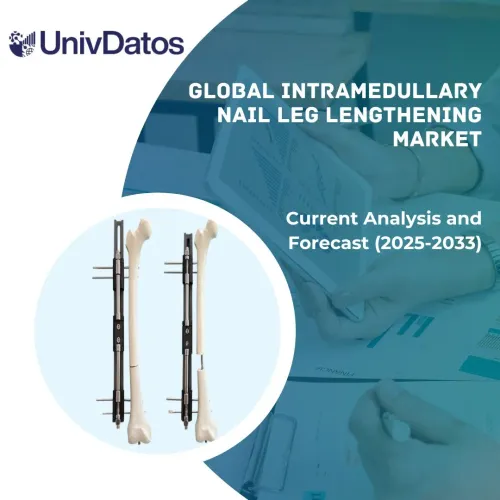
Intramedullary Nail Leg Lengthening Market: Current Analysis and Forecast (2025-2033)
Emphasis on Technology (Magnetically Controlled Intramedullary Lengthening Nails, Motorized Intramedullary Lengthening Nails, Mechanical Intramedullary Lengthening Nails); Indication (Medical/Reconstructive Indication, Cosmetic/Stature Lengthening); Bone Type (Femoral Lengthening Nails, Tibial Lengthening Nails); End-use (Hospitals, Specialty Orthopedic Clinics, Other); and Region/Country
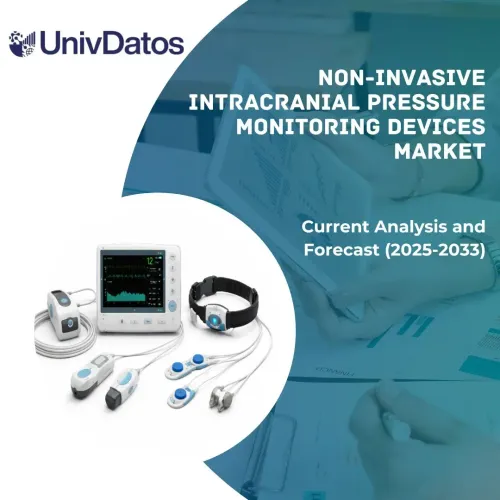
Non-Invasive Intracranial Pressure Monitoring Devices Market: Current Analysis and Forecast (2025-2033)
Emphasis on Technology (MRI/CT, Optic Nerve Sheath Diameter (ONSD) Ultrasound, Transcranial Doppler (TCD), Near-Infrared Spectroscopy (NIRS), and Others); Applications (Traumatic Brain Injury, Meningitis, Stroke, Intracerebral Hemorrhage, and Others); End-User (Hospitals & ICUs, Neurology Clinics, Ambulance & Emergency Services, Home Care Settings, and Others); and Region/Country
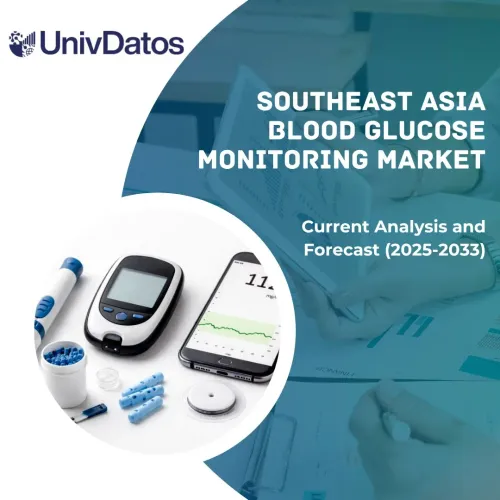
Southeast Asia Blood Glucose Monitoring Market: Current Analysis and Forecast (2025-2033)
Emphasis on Product Type (Self-Monitoring Blood Glucose (SMBG) Systems, {Glucometers, Testing Strips, Lancets & Lancing Devices}, Continuous Glucose Monitoring (CGM) Systems, {Sensors, Transmitters, Receivers}); Application (Diabetes Management, Health & Wellness Monitoring, Others); End-User (Hospitals & Clinics, Home-Care Settings, Diagnostic Centers, Others); and Country.

Middle East & Africa Laparoscopic Devices Market: Current Analysis and Forecast (2025-2033)
Emphasis By Product (Energy Systems, Robot-Assisted Systems, Laparoscopes, Insufflation Devices, Suction Devices and Access Devices), by Application (General Surgery, Colorectal Surgery, Bariatric Surgery, Gynaecological Surgery, Others), By End-User (Hospitals & Clinics and Ambulatory Surgical ), By Country (Saudi Arabia, UAE, Egypt, South Africa, Turkey, Israel, and the Rest of Middle East & Africa)