Urology Electrodes Market: Current Analysis and Forecast (2025-2033)
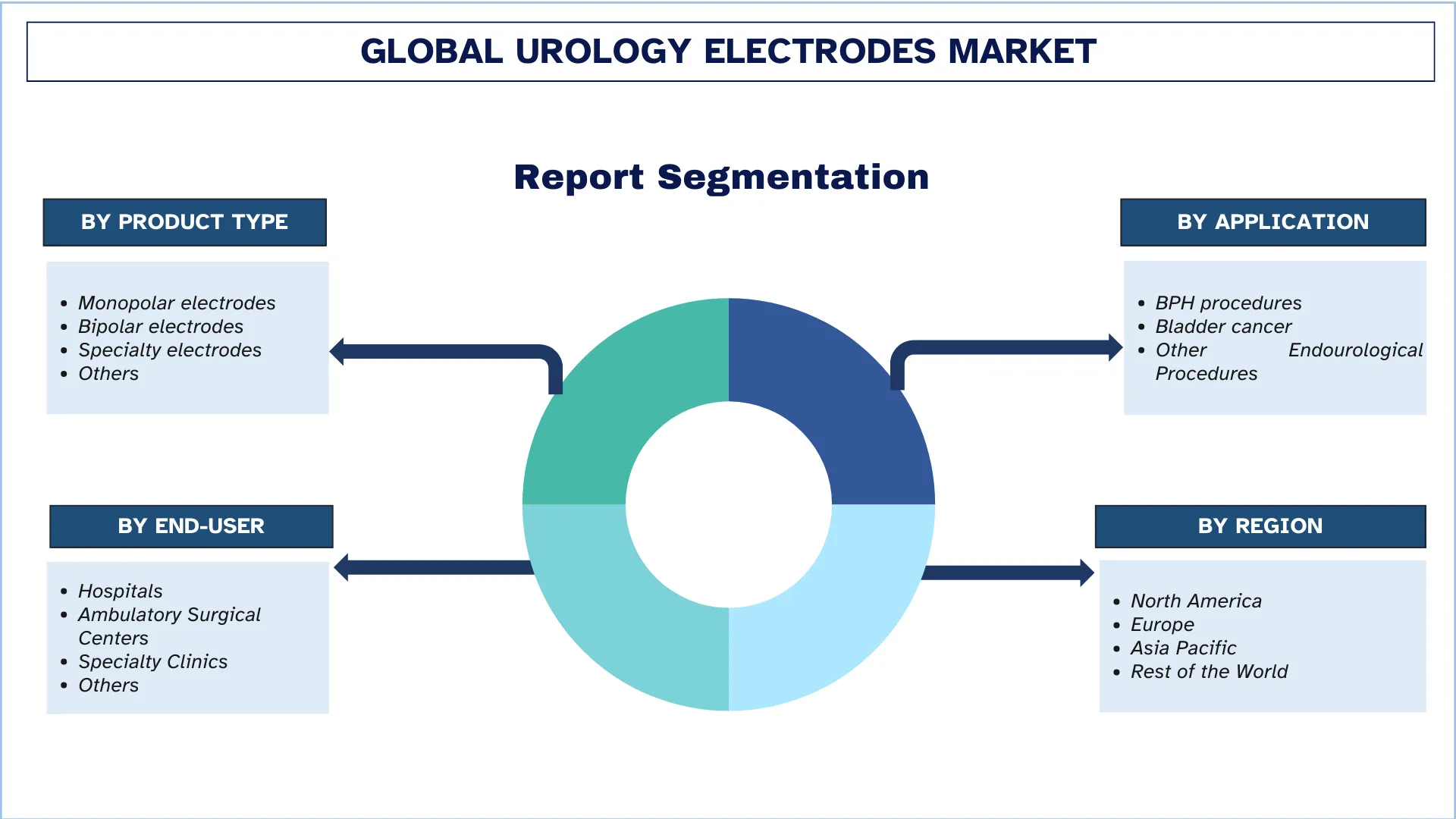
Emphasis on Product Type (Monopolar electrodes, Bipolar electrodes, Specialty electrodes, and Others); Application (BPH procedures, Bladder cancer, and Other Endourological Procedures); End-User (Hospitals, Ambulatory Surgical Centers, Specialty Clinics, and Others); and Region/Country
Global Urology Electrodes Market Size & Forecast
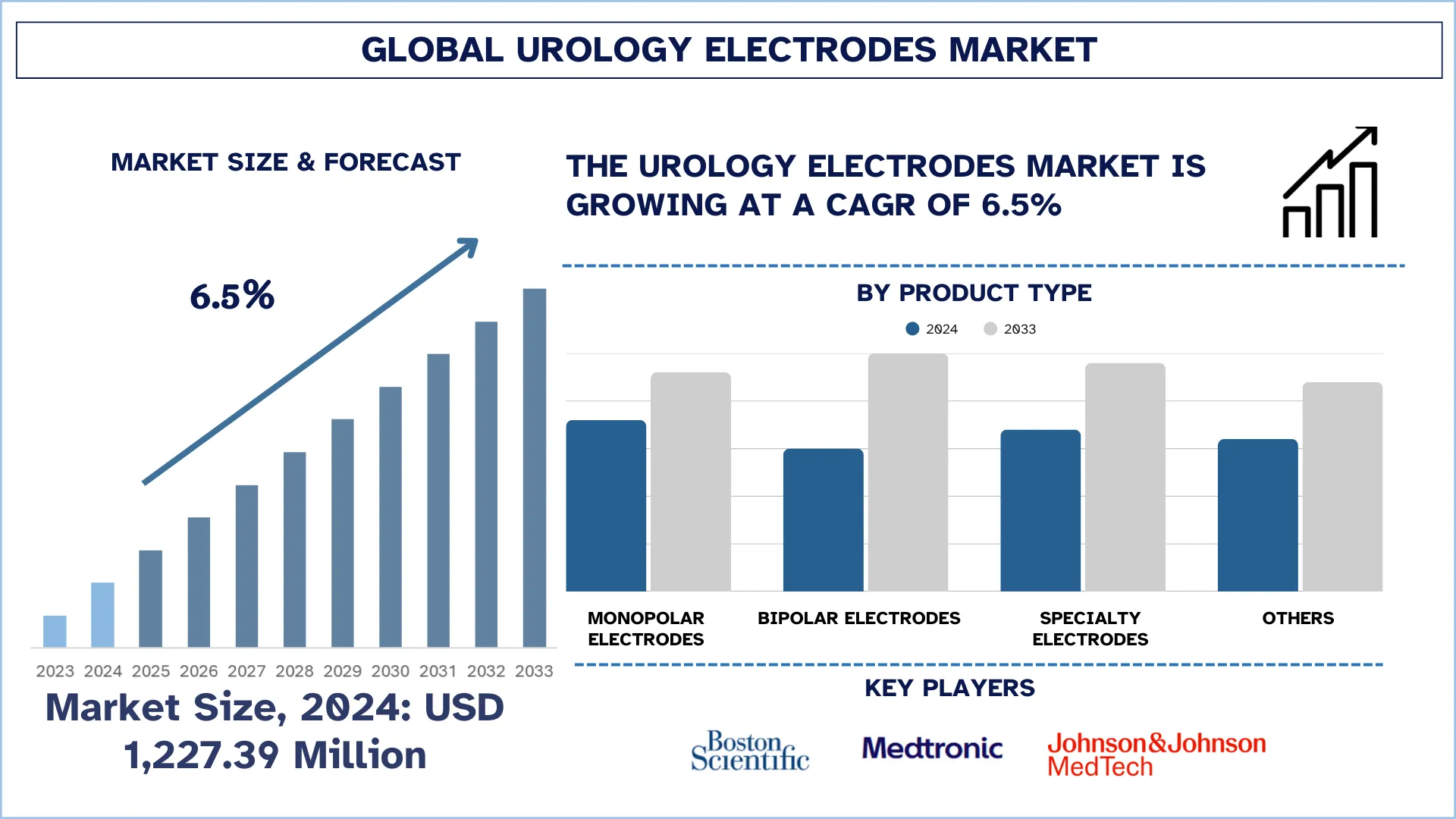
The global Urology Electrodes Market was valued at USD 1,227.39 million in 2024 and is expected to grow at a strong CAGR of around 6.5% during the forecast period (2025-2033F), driven by rising cardiovascular surgeries and increasing adoption of minimally invasive procedures worldwide.
Urology Electrodes Market Analysis
Urology electrodes are medical equipment that are specialized to administer electrical energy in a urological surgery to cut, coagulate, ablate, or resect tissue. These electrodes are usually applied during surgeries like transurethral resection of the prostate and removal of bladder tumors and endoscopic operations, as they permit a controlled handling of the tissue with a reduced amount of blood loss.
The urology electrodes market is expanding with the upsurge in the prevalence of urological disorders like benign prostatic hyperplasia, urinary incontinence, bladder cancer, and kidney stones, especially among the ageing population. The rise in the use of minimally invasive and endoscopic urological surgery is leading to a demand for enhanced electrosurgical devices with a high degree of accuracy, minimal bleeding, and quick healing. The technological progress in terms of bipolar and reusable electrode designs and the enhancement of healthcare infrastructure, as well as an increase in the number of procedures worldwide, is also contributing to the growth of the market.
Global Urology Electrodes Market Trends
This section discusses the key market trends that are influencing the various segments of the global Urology Electrodes market, as found by our team of research experts.
Growing Preference for Minimally Invasive and Same-Day Procedures
Minimally invasive and same-day surgery are emerging trends in the urology electrodes market, helping shorten hospital stays, reduce procedure costs, and shorten recovery time. The application of electrosurgical electrodes in urological procedures such as TURP, bladder tumor resections, and endoscopic management of kidney stones has become common due to their accuracy, excellent coagulation, and reduced tissue injury. This is a good change that is pushing medical personnel to use high-level bipolar and specialty electrodes in the outpatient and ambulatory surgery environments. High-performance urology electrodes will be in high demand due to the growing preference of patients and other healthcare providers towards faster recovery and enhanced clinical efficiency.
Urology Electrodes Industry Segmentation
This section provides an analysis of the key trends in each segment of the global Urology Electrodes market report, along with forecasts at the global, regional, and country levels for 2025-2033.
The Bipolar Electrodes Segment Dominates the Global Urology Electrodes Market
Based on the product type category, the market is categorized into monopolar electrodes, bipolar electrodes, specialty electrodes, and others. Among these, bipolar electrodes occupied the largest market share in the urology electrodes market because they are safer and have better coagulation effects and lower tendencies of tissue destruction as compared to monopolar electrodes. Their performance in minimally invasive urological surgeries, in particular, TURP surgeries and bladder surgeries, justified their dominance. The specialty electrodes are, however, predicted to show the greatest growth due to the growing complexity of the procedure, the growing need to use precision-based and procedure-specific equipment, and the ever-evolving technology.
The Hospital Segment Dominates the Global Urology Electrodes Market
Based on the end-user category, the market is segmented into hospitals, ambulatory surgical centers, and others. Among these, hospitals occupy the largest market share of the urology electrodes market as they receive the highest number of patients, they have a sophisticated surgical infrastructure, and can undertake sophisticated urological procedures. There are also well-trained urologists and complete post-operative care facilities in the hospitals. However, it is believed that the rate of growth of the ambulatory surgical centers (ASCs) will accelerate due to the rising trend toward outpatient minimal invasive operations, reduced cost of treatment, reduced healthcare stay, and rising patient utilization of efficient surgical treatment in a single day.
The North America region dominated the Global Urology Electrodes Market
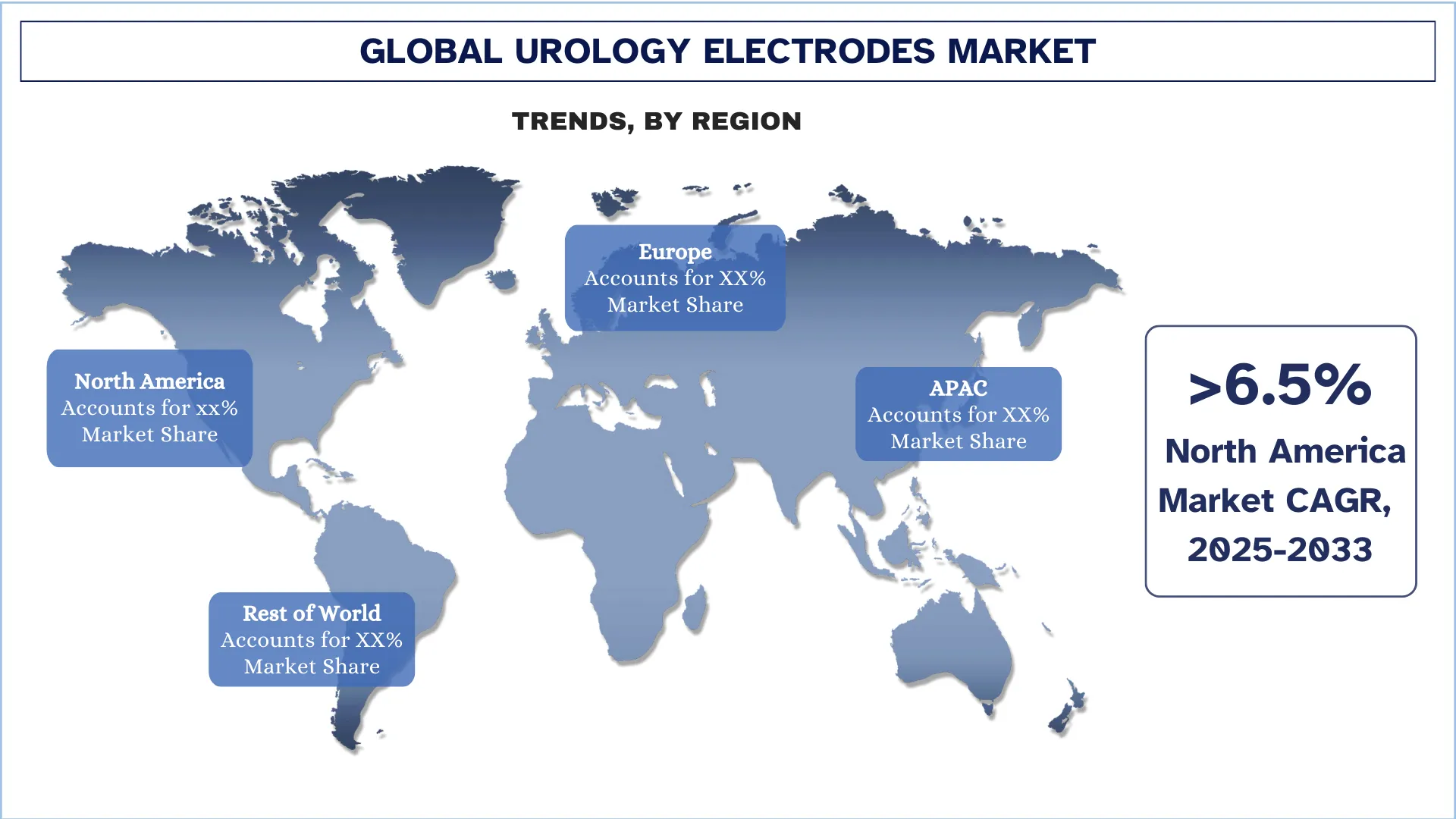
North America had the largest market share in the urology electrodes market because urological disorders are prevalent, and the healthcare system is well established, enabling insurance coverage for advanced surgical care. Minimally invasive and endoscopic urology surgery has become widespread in the area, with the presence of professional urologists and new medical equipment. Good access to key medical devices producers, positive reimbursement practices, and high healthcare expenditures are other factors that promoted the level of procedures, thus promoting the continued demand for urology electrodes in the region.
The United States held a Dominant share of the North America Urology Electrodes Market in 2024
The United States dominated the North America urology electrodes market, due to the large population of patients and the number of urology procedures done on a yearly basis. Early introduction of new high-end electrosurgical technologies and their focus on innovations in surgical methods are beneficial to the country. Besides, the existence of large urology centers, a strong level of clinical research, and a good level of awareness about urological health among the patients also contributed to the increased use of urology electrodes. The U.S. dominance was further reinforced by consistent investment in medical technologies and positive rates of procedure adoption.
Urology Electrodes Industry Competitive Landscape
The global urology electrodes market is competitive, with several global and international market players. The key players are adopting different growth strategies to enhance their market presence, such as partnerships, agreements, collaborations, geographical expansions, and mergers and acquisitions.
Top Urology Electrodes Market Companies
Some of the major players in the market are Boston Scientific Corporation, Medtronic Plc, Ethicon (Johnson & Johnson), Olympus Corporation, CONMED Corporation, B. Braun Melsungen AG, Richard Wolf GmbH, Stryker Corporation, Cook Medical, and PSS Urology Inc.
Recent Developments in the Urology Electrodes Market
In January 2024, Boston Scientific announced a definitive agreement to acquire Axonics, Inc., which is a prominent urology and bowel dysfunction device maker, in a deal valued at approximately USD 3.7 billion, significantly expanding its urology portfolio and reinforcing competitive positioning in advanced therapeutic technologies.
In August 2025, Cardinal Health announced that it had entered into a definitive agreement to add Solaris Health, the country’s leading urology management services organization, to its multi-specialty MSO platform. The acquisition is expected to strengthen The Specialty Alliance’s leadership in urology care and to extend its reach to approximately 3,000 providers across 32 states.
Global Urology Electrodes Market Report Coverage
Report Attribute | Details |
Base year | 2024 |
Forecast period | 2025-2033 |
Growth momentum | Accelerate at a CAGR of 6.5% |
Market size 2024 | USD 1,227.39 million |
Regional analysis | North America, Europe, APAC, Rest of the World |
Major contributing region | The North America region is expected to dominate the market during the forecast period. |
Key countries covered | U.S., Canada, Germany, U.K., Spain, Italy, France, China, Japan, and India. |
Companies profiled | Boston Scientific Corporation, Medtronic Plc, Ethicon (Johnson & Johnson), Olympus Corporation, CONMED Corporation, B. Braun Melsungen AG, Richard Wolf GmbH, Stryker Corporation, Cook Medical, and PSS Urology Inc. |
Report Scope | Market Trends, Drivers, and Restraints; Revenue Estimation and Forecast; Segmentation Analysis; Demand and Supply Side Analysis; Competitive Landscape; Company Profiling |
Segments Covered | By Product Type, By Application, By End-User, and By Region/Country |
Reasons to Buy the Urology Electrodes Market Report:
The study includes market sizing and forecasting analysis confirmed by authenticated key industry experts.
The report briefly reviews overall industry performance at a glance.
The report covers an in-depth analysis of prominent industry peers, primarily focusing on key business financials, type portfolios, expansion strategies, and recent developments.
Detailed examination of drivers, restraints, key trends, and opportunities prevailing in the industry.
The study comprehensively covers the market across different segments.
Deep dive regional level analysis of the industry.
Customization Options:
The global Urology Electrodes market can further be customized as per the requirements or any other market segment. Besides this, UnivDatos understands that you may have your own business needs; hence, feel free to contact us to get a report that completely suits your requirements.
Table of Content
Research Methodology for the Global Urology Electrodes Market Analysis (2023-2033)
We analyzed the historical market, estimated the current market, and forecasted the future market of the global urology electrodes market to assess its application in major regions worldwide. We conducted exhaustive secondary research to gather historical market data and estimate the current market size. To validate these insights, we carefully reviewed numerous findings and assumptions. Additionally, we conducted in-depth primary interviews with industry experts across the urology electrodes value chain. After validating market figures through these interviews, we used both top-down and bottom-up approaches to forecast the overall market size. We then employed market breakdown and data triangulation methods to estimate and analyze the market size of industry segments and sub-segments.
Market Engineering
We employed the data triangulation technique to finalize the overall market estimation and derive precise statistical numbers for each segment and sub-segment of the global urology electrodes market. We split the data into several segments and sub-segments by analyzing various parameters and trends, including product type, application, end-user, and regions within the global urology electrodes market.
The Main Objective of the Global Urology Electrodes Market Study
The study identifies current and future trends in the global urology electrodes market, providing strategic insights for investors. It highlights regional market attractiveness, enabling industry participants to tap into untapped markets and gain a first-mover advantage. Other quantitative goals of the studies include:
Market Size Analysis: Assess the current and forecast market size of the global urology electrodes market and its segments in terms of value (USD).
Urology Electrodes Market Segmentation: Segments in the study include areas of product type, application, end-user, and region.
Regulatory Framework & Value Chain Analysis: Examine the regulatory framework, value chain, customer behavior, and competitive landscape of the urology electrodes industry.
Regional Analysis: Conduct a detailed regional analysis for key areas such as Asia Pacific, Europe, North America, and the Rest of the World.
Company Profiles & Growth Strategies: Company profiles of the urology electrodes market and the growth strategies adopted by the market players to sustain the fast-growing market.
Frequently Asked Questions FAQs
Q1: What is the global urology electrodes market’s current market size and growth potential?
As of 2024, the global urology electrodes market size is estimated at USD 1,227.39 million. The market is projected to grow at a robust CAGR of 6.5% from 2025 to 2033, driven by rising urological procedures and increasing adoption of minimally invasive surgical technologies.
Q2: Which segment has the largest share of the global urology electrodes market by product category?
The bipolar electrodes segment holds the largest market share due to its enhanced safety profile, better coagulation control, and widespread use in minimally invasive urological procedures.
Q3: What are the driving factors for the growth of the global urology electrodes market?
Top growth drivers of the urology electrodes market include:
• Rising prevalence of urological disorders such as BPH, bladder cancer, and kidney stones
• A growing aging population is increasing the demand for urological interventions
• Technological advancements in bipolar and specialty electrode designs
Q4: What are the emerging technologies and trends in the global urology electrodes market?
Emerging trends in the urology electrodes market include:
• Growing preference for minimally invasive and same-day procedures
• Focus on ergonomic and surgeon-friendly electrode designs
Q5: What are the key challenges in the global urology electrodes market?
Key challenges in the urology electrodes market include:
• High cost of advanced electrosurgical equipment
• Stringent regulatory approval processes for medical devices
Q6: Which region dominates the global urology electrodes market?
North America leads the global urology electrodes market due to high procedure volumes, advanced healthcare infrastructure, strong adoption of minimally invasive surgeries, and the presence of major medical device manufacturers.
Q7: Who are the key competitors in the global urology electrodes market?
Top players in the urology electrodes industry include:
• Boston Scientific Corporation
• Medtronic Plc
• Ethicon (Johnson & Johnson)
• Olympus Corporation
• CONMED Corporation
• B. Braun Melsungen AG
• Richard Wolf GmbH
• Stryker Corporation
• Cook Medical
• PSS Urology Inc.
Q8: What are the key investment opportunities in the global urology electrodes market?
Key investment opportunities lie in specialty and bipolar electrodes, outpatient urology settings, and high-growth emerging markets where procedure volumes and healthcare infrastructure are rapidly expanding.
Q9: How is innovation influencing competitive differentiation in the urology electrodes market?
Innovation enables differentiation by improving safety, precision, and ergonomics, allowing manufacturers to offer procedure-specific, value-added solutions that enhance surgical outcomes and operational efficiency.
Related Reports
Customers who bought this item also bought

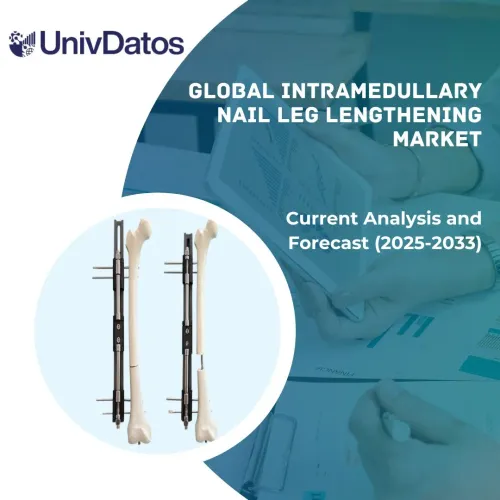
Intramedullary Nail Leg Lengthening Market: Current Analysis and Forecast (2025-2033)
Emphasis on Technology (Magnetically Controlled Intramedullary Lengthening Nails, Motorized Intramedullary Lengthening Nails, Mechanical Intramedullary Lengthening Nails); Indication (Medical/Reconstructive Indication, Cosmetic/Stature Lengthening); Bone Type (Femoral Lengthening Nails, Tibial Lengthening Nails); End-use (Hospitals, Specialty Orthopedic Clinics, Other); and Region/Country
Non-Invasive Intracranial Pressure Monitoring Devices Market: Current Analysis and Forecast (2025-2033)
Emphasis on Technology (MRI/CT, Optic Nerve Sheath Diameter (ONSD) Ultrasound, Transcranial Doppler (TCD), Near-Infrared Spectroscopy (NIRS), and Others); Applications (Traumatic Brain Injury, Meningitis, Stroke, Intracerebral Hemorrhage, and Others); End-User (Hospitals & ICUs, Neurology Clinics, Ambulance & Emergency Services, Home Care Settings, and Others); and Region/Country

Southeast Asia Blood Glucose Monitoring Market: Current Analysis and Forecast (2025-2033)
Emphasis on Product Type (Self-Monitoring Blood Glucose (SMBG) Systems, {Glucometers, Testing Strips, Lancets & Lancing Devices}, Continuous Glucose Monitoring (CGM) Systems, {Sensors, Transmitters, Receivers}); Application (Diabetes Management, Health & Wellness Monitoring, Others); End-User (Hospitals & Clinics, Home-Care Settings, Diagnostic Centers, Others); and Country.
Middle East & Africa Laparoscopic Devices Market: Current Analysis and Forecast (2025-2033)
Emphasis By Product (Energy Systems, Robot-Assisted Systems, Laparoscopes, Insufflation Devices, Suction Devices and Access Devices), by Application (General Surgery, Colorectal Surgery, Bariatric Surgery, Gynaecological Surgery, Others), By End-User (Hospitals & Clinics and Ambulatory Surgical ), By Country (Saudi Arabia, UAE, Egypt, South Africa, Turkey, Israel, and the Rest of Middle East & Africa)