Southeast Asia Thoracolumbar Spinal Fusion Implant Market: Current Analysis and Forecast (2025-2033)
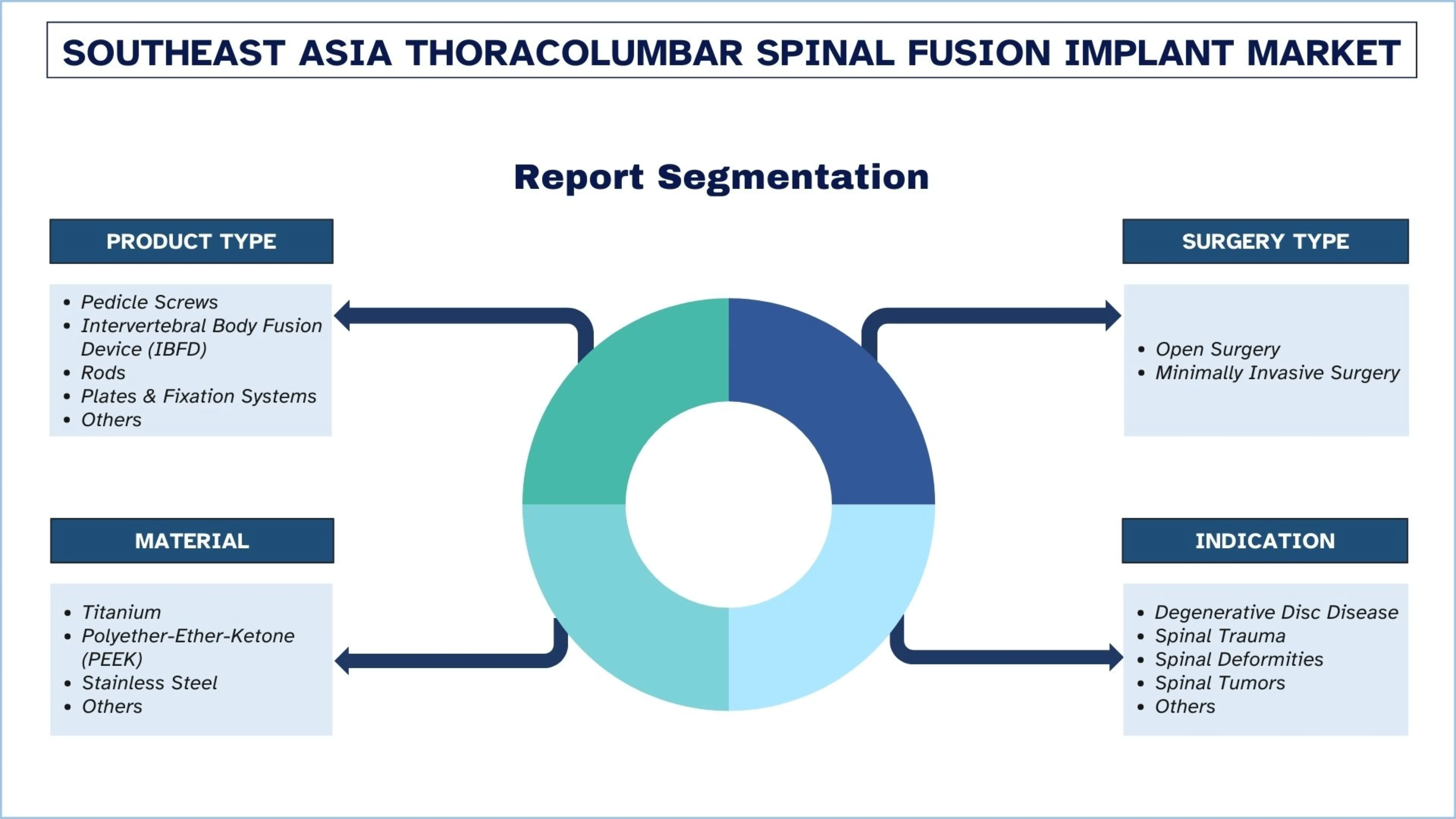
Emphasis on Product Type (Pedicle Screws, Intervertebral Body Fusion Device (IBFD), Rods, Plates & Fixation Systems, Others); Surgery Type (Open Surgery, Minimally Invasive Surgery); Material (Titanium, Polyether-Ether-Ketone (PEEK), Stainless Steel, Others); Indication (Degenerative Disc Disease, Spinal Trauma, Spinal Deformities, Spinal Tumors, Others); End Use (Hospitals, Ambulatory Surgical Centers, Orthopedic Clinics); and Country.
Southeast Asia Thoracolumbar Spinal Fusion Implant Market Size & Forecast
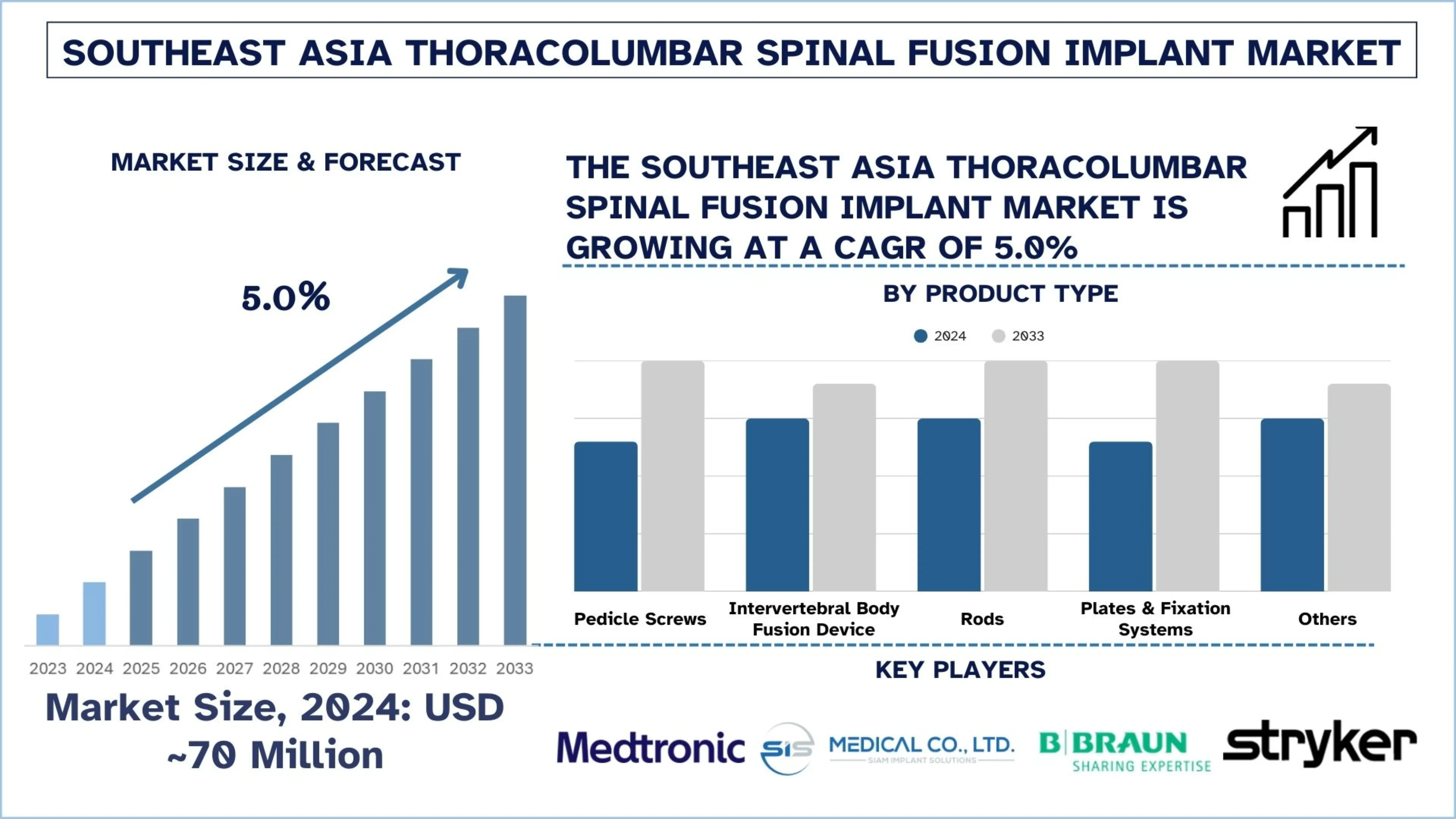
The Southeast Asia Thoracolumbar Spinal Fusion Implant Market was valued at ~USD 70 million in 2024 and is expected to grow at a strong CAGR of approximately 5.0% during the forecast period (2025-2033F), driven by a rising middle-income population expanding demand for affordable mobility.
Southeast Asia Thoracolumbar Spinal Fusion Implant Market Analysis
A thoracolumbar spinal fusion implant is a medical device contraindicated to stabilize and fuse both the thoracic and lumbar spines after some trauma, deformity, or degenerative disorders. It usually has screws, rods, cages, or plates that help in bone fusion and restore the balance of the spine.
The Southeast Asian manufacturers are focusing on increasing the use of minimally invasive implant systems, introducing 3D-printed cages, advancing titanium-based designs, and integrating navigation-capable instrumentation to meet the requirements of surgeons. Also, major players are forming OEM alliances, reinforcing regional distribution, and providing surgeon training programs to speed up adoption in emerging surgical centers in major cities. Moreover, companies are forming strategic alliances and developing product portfolios that are specific to trauma-intensive areas and price-sensitive markets, enabling them to expand their product penetration in public and private hospitals.
On July 24, 2025, Straits Orthopaedics (Mfg) Sdn Bhd, a leading Malaysia-based contract manufacturer specializing in the precision machining of orthopaedic implants and surgical instruments, announced the successful acquisition of Medin Technologies, Inc. (“Medin”), a U.S.-based manufacturer of sterilization cases and trays for the orthopaedic sector operating two facilities in Totowa, New Jersey, and Manchester, New Hampshire. This strategic acquisition represents a pivotal step in Straits’ growth trajectory, reinforcing its commitment to broadening both its product offerings and global manufacturing capabilities.
Southeast Asia Thoracolumbar Spinal Fusion Implant Market Trends
This section discusses the key market trends that are influencing the various segments of the Southeast Asia Thoracolumbar Spinal Fusion Implant market, as found by our team of research experts.
Increasing Use of Expandable and 3D-Printed Cages
The use of expandable and 3D-printed cages is growing rapidly, as surgeons want implants that provide better anatomical fit, controlled expansion, and enhanced fusion results. They restore height with accuracy and improve load-sharing, particularly in traumatic, deformity, and MIS procedures, enabling 3D printing to produce porous, bone-like structures with enhanced long-term stability. With the surge capability of hospitals being enhanced, there is a steep increase in the use of implants that can minimize the time spent operating as well as enhance the success of the fusion process. This is driving the market toward more advanced, high-end implant solutions and is prompting manufacturers to broaden their design portfolios.
On September 12, 2025, B. Braun SE, a leading medical technology company, announced the full acquisition of True Digital Surgery (TDS), a company based in Goleta, California, specializing in digital robotic-assisted 3D surgical microscopy. This acquisition highlights B. Braun's commitment to investing in the future of digital microsurgery and to expanding its market share in this growing segment.
Southeast Asia Thoracolumbar Spinal Fusion Implant Industry Segmentation
This section provides an analysis of the key trends in each segment of the Southeast Asia Thoracolumbar Spinal Fusion Implant market, along with forecasts at the country level for 2025-2033.
The pedicle screws thoracolumbar spinal fusion implant market held the dominant share of the Thoracolumbar Spinal Fusion Implant market in 2024.
Based on product type, the market is segmented into pedicle screws, intervertebral body fusion device (IBFD), rods, plates & fixation systems, and others. Among these, the pedicle screws thoracolumbar spinal fusion implant market held the largest share in 2024. Pedicle screws contribute to market growth because they are the primary fixation element used in thoracolumbar fusion surgeries and provide stability and a predictable clinical outcome. Their high utilization rate in trauma, deformity, and degenerative cases still provides a base for maintaining demand for the core implant systems. Moreover, surgeons and hospitals are moving towards newer systems at an accelerated rate as companies become more innovative in biomechanics and design to make them MIS-compatible.
The minimally invasive surgery segment is expected to grow at a significant CAGR during the forecast period (2025-2033).
Based on surgery type, the Southeast Asian thoracolumbar spinal fusion implant market is segmented into open surgery and minimally invasive surgery. Among these, the minimally invasive surgery segment is expected to grow at a significant CAGR during the forecast period (2025-2033). Minimally invasive surgery hastens the adoption because Southeast Asian hospitals are moving towards shorter recovery rates and lower rates of surgical morbidity. This drives demand for low-profile screws, expandable cages, and navigation-ready implants designed to suit the MIS workflow. Also, companies with simplified MIS systems, instrumentation packages, and training programs achieve accelerated acceptance among surgeons and individual healthcare systems. On June 29, 2022, NuVasive, Inc., the leader in spine technology innovation, focused on transforming spine surgery with minimally disruptive, procedurally integrated solutions, announced the grand opening of its Singapore Experience Center for the Asia-Pacific region, supporting the Company’s growth strategy to globalize its business.
Indonesia held a dominant share of the Southeast Asian Thoracolumbar Spinal Fusion Implant market in 2024
Indonesia holds a dominant share of the market due to its major population, rising cases of spinal disorders, and increasing middle-income expenditure on healthcare services, driving demand for thoracolumbar fusion surgical procedures. Spine surgery units are being upgraded in both public and private hospitals, with the implementation of improved fixation systems and an increasing number of MIS procedures. Also, the rising number of road traffic injuries is causing the use of urgent trauma-related implants. Moreover, the government's regulation and investment in national health insurance and hospital infrastructure enhance access to advanced spine care. With increased procurement volume, companies that provide titanium implants, modular screw rods, and inexpensive trauma kits enjoy high acceptance in large urban centers.
In November 2025, Indonesia’s Ministry of Health introduced revised evaluation timelines for medical devices, IVDs, and household health product registration under Permenkes No. 11 of 2025. These updates replace the earlier framework defined in Permenkes No. 62 of 2017 and align the approval process with the country’s risk-based business licensing system (OSS-RBA).
The revised structure reflects the government’s ongoing efforts to improve data integrity, enhance traceability, and strengthen regulatory harmonization across the healthcare sector.
Southeast Asia Thoracolumbar Spinal Fusion Implant Industry Competitive Landscape
The Southeast Asia Thoracolumbar Spinal Fusion Implant market is competitive, with several global and international market players. The key players are adopting different growth strategies to enhance their market presence, such as partnerships, agreements, collaborations, new product launches, geographical expansions, and mergers and acquisitions.
Top Southeast Asia Thoracolumbar Spinal Fusion Implant Companies
Some of the major players in the market are Medtronic, SiS medical Co., Ltd., B. Braun SE, DePuy Synthes (Johnson & Johnson), Stryker, Globus Medical, Double Medical Technology Inc., A-SPINE Asia Co., Ltd., Siora Surgical Pvt. Ltd., MEDYSSEY USA, INC.
Recent Developments in the Southeast Asia Thoracolumbar Spinal Fusion Implant Market
In February 2025, Globus Medical, a leader in medical device technology for the spine, launched the new HILINE™ system, an innovative posterior band fixation system for the cervical and thoracolumbar spine. Designed with robust implants and advanced instrumentation, HILINE™ aims to optimize reduction in scoliosis correction, provide reliable stabilization in compromised anatomy, and facilitate ligament augmentation.
In September 2024, Medtronic plc announced at the North American Spine Society (NASS) 39thAnnual Meeting in Chicago the commercial launch of several software, hardware, and imaging innovations. These enhancements are designed to advance AiBLE™, the Medtronic smart ecosystem of innovative navigation, robotics, data and AI, imaging, software, and implants that enable more predictable outcomes in spine and cranial procedures. In line with its commitment to increasing the quality of care for patients with spinal conditions, Medtronic also announced a partnership with Siemens Healthineers to explore opportunities to further expand access to advanced pre- and post-operative imaging technologies for spine care.
Southeast Asia Thoracolumbar Spinal Fusion Implant Market Report Coverage
Report Attribute | Details |
Base year | 2024 |
Forecast period | 2025-2033 |
Growth momentum | Accelerate at a CAGR of 5.0% |
Market size 2024 | ~USD 70 million |
Country analysis | Indonesia, Thailand, Philippines, Vietnam, Malaysia, Singapore, Rest of Southeast Asia |
Major contributing Country | Vietnam is expected to grow at the highest CAGR during the forecasted period. |
Companies profiled | Medtronic, SiS medical Co., Ltd., B. Braun SE, DePuy Synthes (Johnson & Johnson), Stryker, Globus Medical, Double Medical Technology Inc., A-SPINE Asia Co., Ltd., Siora Surgical Pvt. Ltd., MEDYSSEY USA, INC. |
Report Scope | Market Trends, Drivers, and Restraints; Revenue Estimation and Forecast; Segmentation Analysis; Demand and Supply Side Analysis; Competitive Landscape; Company Profiling |
Segments Covered | By Product Type, By Surgery Type, By Material, By Indication, By End Use, By Country |
Reasons to Buy the Southeast Asia Thoracolumbar Spinal Fusion Implant Market Report:
The study includes market sizing and forecasting analysis confirmed by authenticated key industry experts.
The report briefly reviews overall industry performance at a glance.
The report covers an in-depth analysis of prominent industry peers, primarily focusing on key business financials, product portfolios, expansion strategies, and recent developments.
Detailed examination of drivers, restraints, key trends, and opportunities prevailing in the industry.
The study comprehensively covers the market across different segments.
Customization Options:
The Southeast Asia Thoracolumbar Spinal Fusion Implant market can further be customized as per requirements or any other market segment. Besides this, UnivDatos understands that you may have your own business needs; hence, feel free to contact us to get a report that completely suits your requirements.
Table of Content
Research Methodology for the Southeast Asia Thoracolumbar Spinal Fusion Implant Market Analysis (2023-2033)
We analyzed the historical market, estimated the current market, and forecasted the future market of the Southeast Asian Thoracolumbar Spinal Fusion Implant market to assess its application in major countries. We conducted exhaustive secondary research to gather historical market data and estimate the current market size. To validate these insights, we carefully reviewed numerous findings and assumptions. Additionally, we conducted in-depth primary interviews with industry experts across the Southeast Asian Thoracolumbar Spinal Fusion Implant value chain. After validating market figures through these interviews, we used both top-down and bottom-up approaches to forecast the overall market size. We then employed market breakdown and data triangulation methods to estimate and analyze the market size of industry segments and sub-segments.
Market Engineering
We employed the data triangulation technique to finalize the overall market estimation and derive precise statistical numbers for each segment and sub-segment of the Southeast Asia Thoracolumbar Spinal Fusion Implant market. We split the data into several segments and sub-segments by analyzing various parameters and trends, including product type, surgery type, material, indication, end use, and country within the Southeast Asian Thoracolumbar Spinal Fusion Implant market.
The Main Objective of the Southeast Asia Thoracolumbar Spinal Fusion Implant Market Study
The study identifies current and future trends in the Southeast Asia Thoracolumbar Spinal Fusion Implant market, providing strategic insights for investors. It highlights market attractiveness, enabling industry participants to tap into untapped markets and gain a first-mover advantage. Other quantitative goals of the studies include:
Market Size Analysis: Assess the current and forecast market size of the Southeast Asia Thoracolumbar Spinal Fusion Implant market and its segments in terms of value (USD).
Southeast Asia Thoracolumbar Spinal Fusion Implant Market Segmentation: Segments in the study include areas of product type, surgery type, material, indication, end use, and country.
Regulatory Framework & Value Chain Analysis: Examine the regulatory framework, value chain, customer behavior, and competitive landscape of the Southeast Asia Thoracolumbar Spinal Fusion Implant industry.
Country Analysis: Conduct a detailed country analysis for key areas such as Indonesia, Thailand, the Philippines, Vietnam, Malaysia, Singapore, and the Rest of Southeast Asia.
Company Profiles & Growth Strategies: Company profiles of the Southeast Asia Thoracolumbar Spinal Fusion Implant market and the growth strategies adopted by the market players to sustain in the fast-growing market.
Frequently Asked Questions FAQs
Q1: What is the Southeast Asia Thoracolumbar Spinal Fusion Implant market’s current market size and growth potential?
The Southeast Asia Thoracolumbar Spinal Fusion Implant market was valued at ~USD 70 million in 2024 and is projected to expand at a CAGR of 5.0% from 2025 to 2033. This growth is supported by rising spinal trauma cases, increasing MIS adoption, and rapid healthcare modernization across Indonesia, Vietnam, and Thailand.
Q2: Which segment has the largest share of the Southeast Asia Thoracolumbar Spinal Fusion Implant market by product type?
The Pedicle Screws segment holds the largest market due to their critical role in stabilization across trauma, deformity, and degenerative procedures.
Q3: What are the driving factors for the growth of the Southeast Asia Thoracolumbar Spinal Fusion Implant market?
Major drivers include increasing road-traffic injuries, growing prevalence of degenerative spine disorders, rapid adoption of minimally invasive surgeries, advanced hospital infrastructure, and rising demand for titanium and 3D-printed implants.
Q4: What are the emerging technologies and trends in the Southeast Asia Thoracolumbar Spinal Fusion Implant market?
Key trends include the use of expandable and 3D-printed cages, integration of navigation and robotics, MIS-focused instrumentation, porous-surface implants, and improved titanium and PEEK-based designs that enhance fusion outcomes.
Q5: What are the key challenges in the Southeast Asia Thoracolumbar Spinal Fusion Implant market?
Challenges include the high cost of advanced implants, limited availability of trained spine surgeons, slow reimbursement processes, price sensitivity in public hospitals, and uneven access to advanced surgical technologies across rural regions.
Q6: Which country dominates the Southeast Asia Thoracolumbar Spinal Fusion Implant market?
Indonesia leads the regional market, supported by its large population base, high incidence of trauma cases, and strong investment in hospital and trauma-care infrastructure.
Q7: Who are the key players in the Southeast Asia Thoracolumbar Spinal Fusion Implant market?
Leading companies in the Southeast Asia Thoracolumbar Spinal Fusion Implant market include:
• Medtronic
• SiS medical Co., Ltd.
• B. Braun SE
• DePuy Synthes (Johnson & Johnson)
• Stryker
• Globus Medical
• Double Medical Technology Inc.
• A-SPINE Asia Co., Ltd.
• Siora Surgical Pvt. Ltd.
• MEDYSSEY USA, INC.
Q8: What investment or expansion opportunities exist for companies entering the Southeast Asia Thoracolumbar Spinal Fusion Implant market?
Companies can tap into high-growth opportunities in MIS instrumentation, 3D-printed cages, trauma-focused implants, OEM manufacturing partnerships, and training collaborations with regional hospitals. Countries like Vietnam and Indonesia are especially attractive due to strong infrastructure upgrades and rising surgical volumes.
Q9: How is the shift toward minimally invasive spine surgeries influencing market demand?
The growing preference for minimally invasive surgeries is pushing demand for low-profile screws, expandable cages, navigation-compatible implants, and surgeon-friendly MIS toolkits. This transition not only increases procedure volumes but also opens the door for premium implant solutions across private hospitals.
Related Reports
Customers who bought this item also bought

Intramedullary Nail Leg Lengthening Market: Current Analysis and Forecast (2025-2033)
Emphasis on Technology (Magnetically Controlled Intramedullary Lengthening Nails, Motorized Intramedullary Lengthening Nails, Mechanical Intramedullary Lengthening Nails); Indication (Medical/Reconstructive Indication, Cosmetic/Stature Lengthening); Bone Type (Femoral Lengthening Nails, Tibial Lengthening Nails); End-use (Hospitals, Specialty Orthopedic Clinics, Other); and Region/Country
Non-Invasive Intracranial Pressure Monitoring Devices Market: Current Analysis and Forecast (2025-2033)
Emphasis on Technology (MRI/CT, Optic Nerve Sheath Diameter (ONSD) Ultrasound, Transcranial Doppler (TCD), Near-Infrared Spectroscopy (NIRS), and Others); Applications (Traumatic Brain Injury, Meningitis, Stroke, Intracerebral Hemorrhage, and Others); End-User (Hospitals & ICUs, Neurology Clinics, Ambulance & Emergency Services, Home Care Settings, and Others); and Region/Country
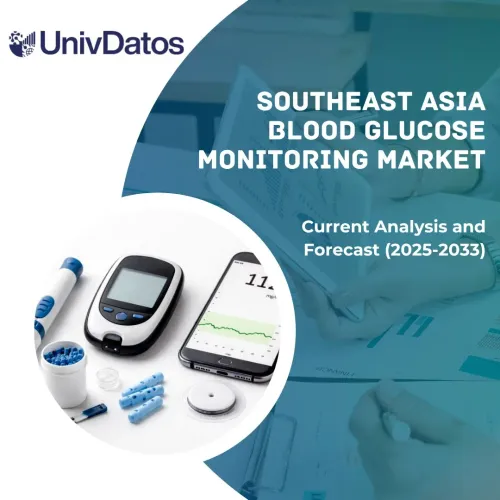
Southeast Asia Blood Glucose Monitoring Market: Current Analysis and Forecast (2025-2033)
Emphasis on Product Type (Self-Monitoring Blood Glucose (SMBG) Systems, {Glucometers, Testing Strips, Lancets & Lancing Devices}, Continuous Glucose Monitoring (CGM) Systems, {Sensors, Transmitters, Receivers}); Application (Diabetes Management, Health & Wellness Monitoring, Others); End-User (Hospitals & Clinics, Home-Care Settings, Diagnostic Centers, Others); and Country.
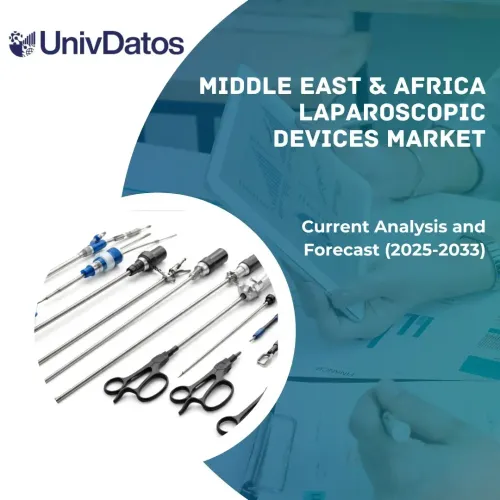
Middle East & Africa Laparoscopic Devices Market: Current Analysis and Forecast (2025-2033)
Emphasis By Product (Energy Systems, Robot-Assisted Systems, Laparoscopes, Insufflation Devices, Suction Devices and Access Devices), by Application (General Surgery, Colorectal Surgery, Bariatric Surgery, Gynaecological Surgery, Others), By End-User (Hospitals & Clinics and Ambulatory Surgical ), By Country (Saudi Arabia, UAE, Egypt, South Africa, Turkey, Israel, and the Rest of Middle East & Africa)