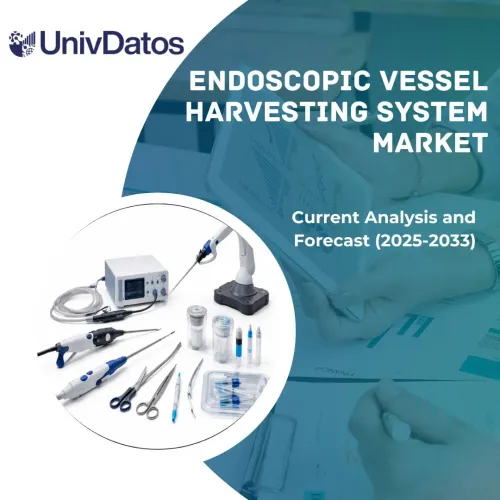
Endoscopic Vessel Harvesting System Market: Current Analysis and Forecast (2025-2033)
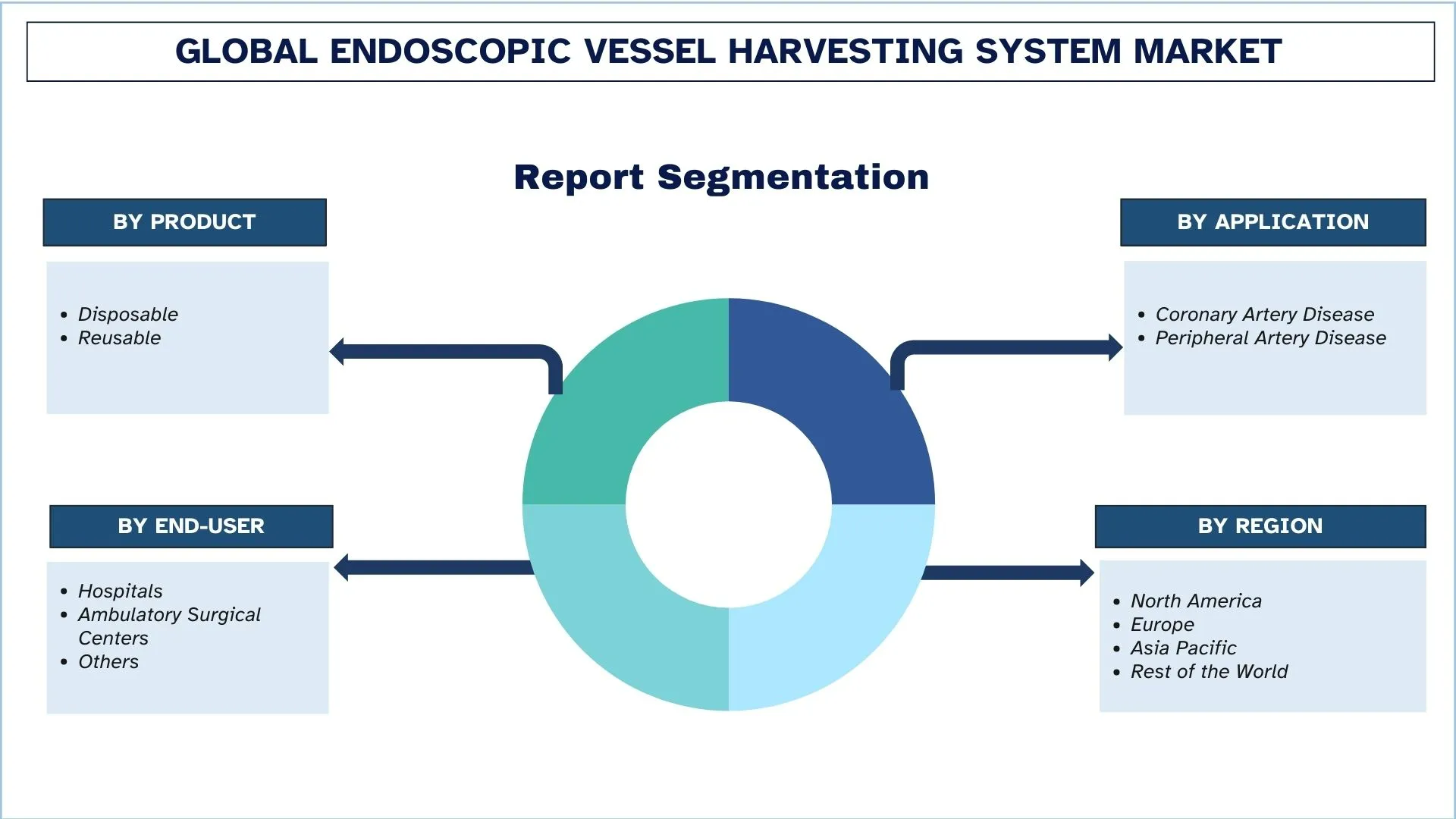
Emphasis on Product (Disposable and Reusable); Application (Coronary Artery Disease and Peripheral Artery Disease); End-User (Hospitals, Ambulatory Surgical Centers, and Others); and Region/Country
Global Endoscopic Vessel Harvesting System Market Size & Forecast
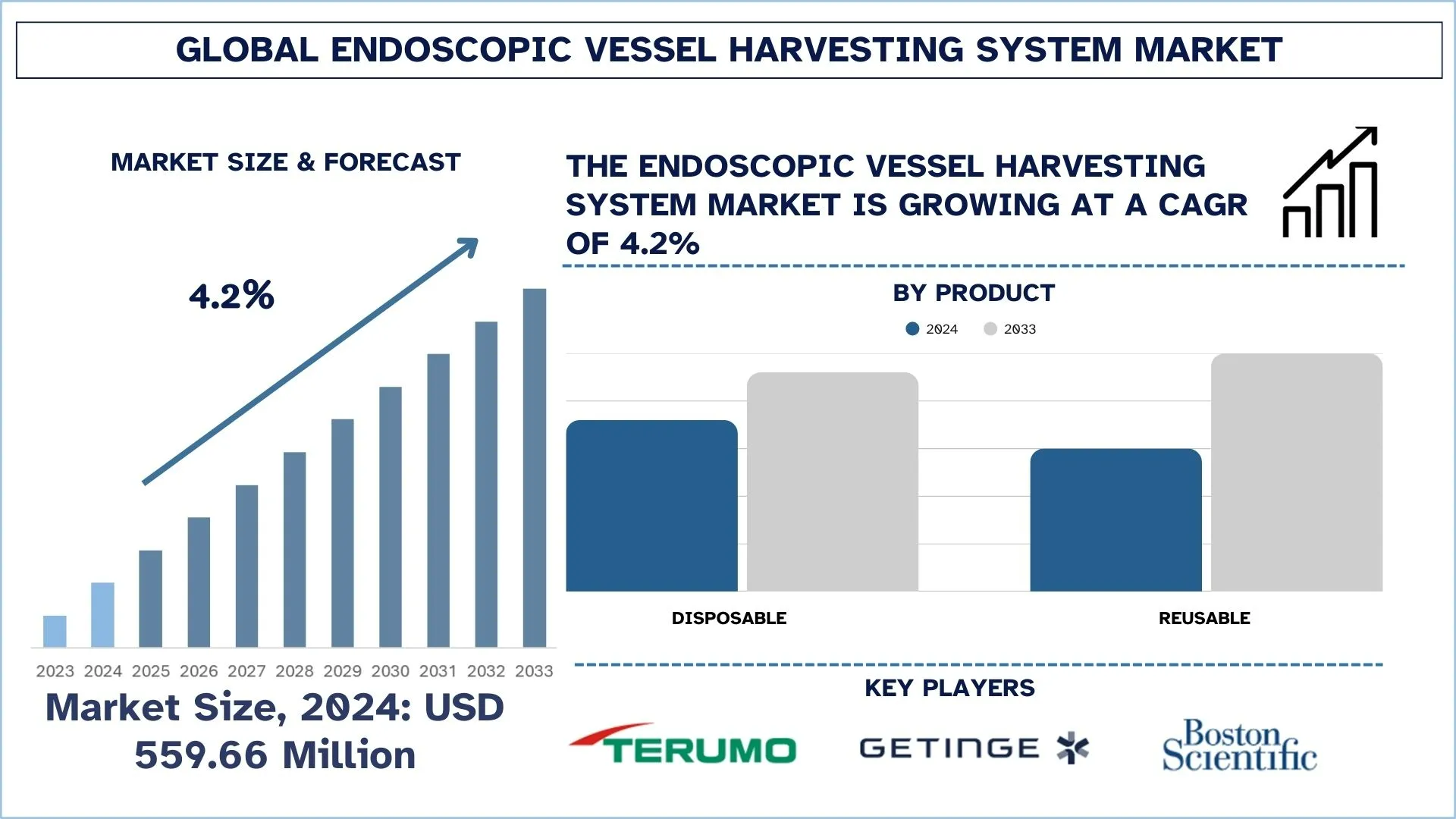
The global endoscopic vessel harvesting system market was valued at USD 559.66 million in 2024 and is expected to grow at a strong CAGR of around 4.2% during the forecast period (2025-2033F), driven by rising cardiovascular surgeries and increasing adoption of minimally invasive procedures worldwide.
Endoscopic Vessel Harvesting System Market Analysis
An Endoscopic Vessel Harvesting (EVH) System is a surgical system of minimal invasiveness that is employed to harvest blood vessels (generally the saphenous vein or radial artery) to be utilized in coronary artery bypass graft (CABG) and other vascular surgeries. This system is done using the small incision, endoscope, and special instruments in order to dissect and remove the vessel, leaving the surrounding tissue intact.
The Endoscopic Vessel Harvesting System market is on the rise because of the increase in cardiovascular diseases and the number of coronary artery bypass graft surgeries in the world. Minimally invasive procedures are becoming increasingly popular within the surgery and hospital sector to minimize patient complications, postoperative pain, and infection. EVH systems have reduced recovery times, provide better cosmetic results, and reduce total healthcare expenses, which are appealing to healthcare providers. Technological advancements, such as improved visualization, ergonomic design, and enhanced vessel integrity, further encourage adoption.
Global Endoscopic Vessel Harvesting System Market Trends
This section discusses the key market trends that are influencing the various segments of the global endoscopic vessel harvesting system market, as found by our team of research experts.
Focus on Sustainability and Waste Reduction in Surgical Devices
Sustainability and waste minimization are emerging as significant future trends in the endoscopic vessel harvesting system market, with healthcare providers seeking to reduce their environmental footprint and control operating expenses. There is growing interest in eco-friendly practices in hospitals due to the large volume of medical waste generated by single-use surgical devices. For instance, according to the WHO, of the total amount of waste generated by health-care activities, about 85% is general, non-hazardous waste comparable to domestic waste. The remaining 15% is considered hazardous material that may be infectious, chemical, or radioactive. This healthcare waste contains potentially harmful microorganisms that can infect hospital patients, health workers, and the public. This has encouraged manufacturers to develop reusable EVH components, recyclable materials, and systems that last longer without sacrificing safety and performance. Moreover, procurement decisions are being influenced by regulatory pressure, as well as by hospital sustainability objectives, and towards products that are environmentally responsible. With increased green healthcare awareness, EVH solutions that consider sustainability are likely to be accepted more in various healthcare systems around the world.
Endoscopic Vessel Harvesting System Industry Segmentation
This section provides an analysis of the key trends in each segment of the global Endoscopic Vessel Harvesting System market report, along with forecasts at the global, regional, and country levels for 2025-2033.
The Disposable Segment Dominates the Global Endoscopic Vessel Harvesting System Market
Based on the product category, the market is categorized into disposable and reusable. Among these, the largest market share in the endoscopic vessel harvesting system market is occupied by the disposable segment since it is widely used in preventing cross-contamination and hospital-acquired infections. Compared to alternative products, disposable products save more time in the process of sterilization, maintain consistent performance, and adhere to high regulatory and infection-control measures, which are valued in hospitals and surgical centers. However, the reusable segment is expected to witness the fastest growth in the coming years due to the cost-effectiveness in the long run and the sustainability program that will help to decrease the amount of medical waste. The introduction of more durable materials and advanced technologies is also contributing to greater adoption of reusable EVH systems, particularly in larger healthcare settings.
The Hospital Segment Dominates the Global Endoscopic Vessel Harvesting System Market.
Based on the end-user category, the market is segmented into hospitals, ambulatory surgical centers, and others. Among these, hospitals occupy the largest market share of the endoscopic vessel harvesting system market because of the large number of coronary artery bypasses and complicated cardiovascular surgeries done in hospitals. They have more advanced infrastructure, cardiac surgeons, and a higher patient inflow, and this favorable environment contributes to greater EVH system adoption. However, ambulatory surgery centers will expand at a high rate in the future due to the trend of minimally invasive surgery, reduction of treatment expenses, reduced hospitalization, and ever-increasing patients who are seeking outpatient surgery.
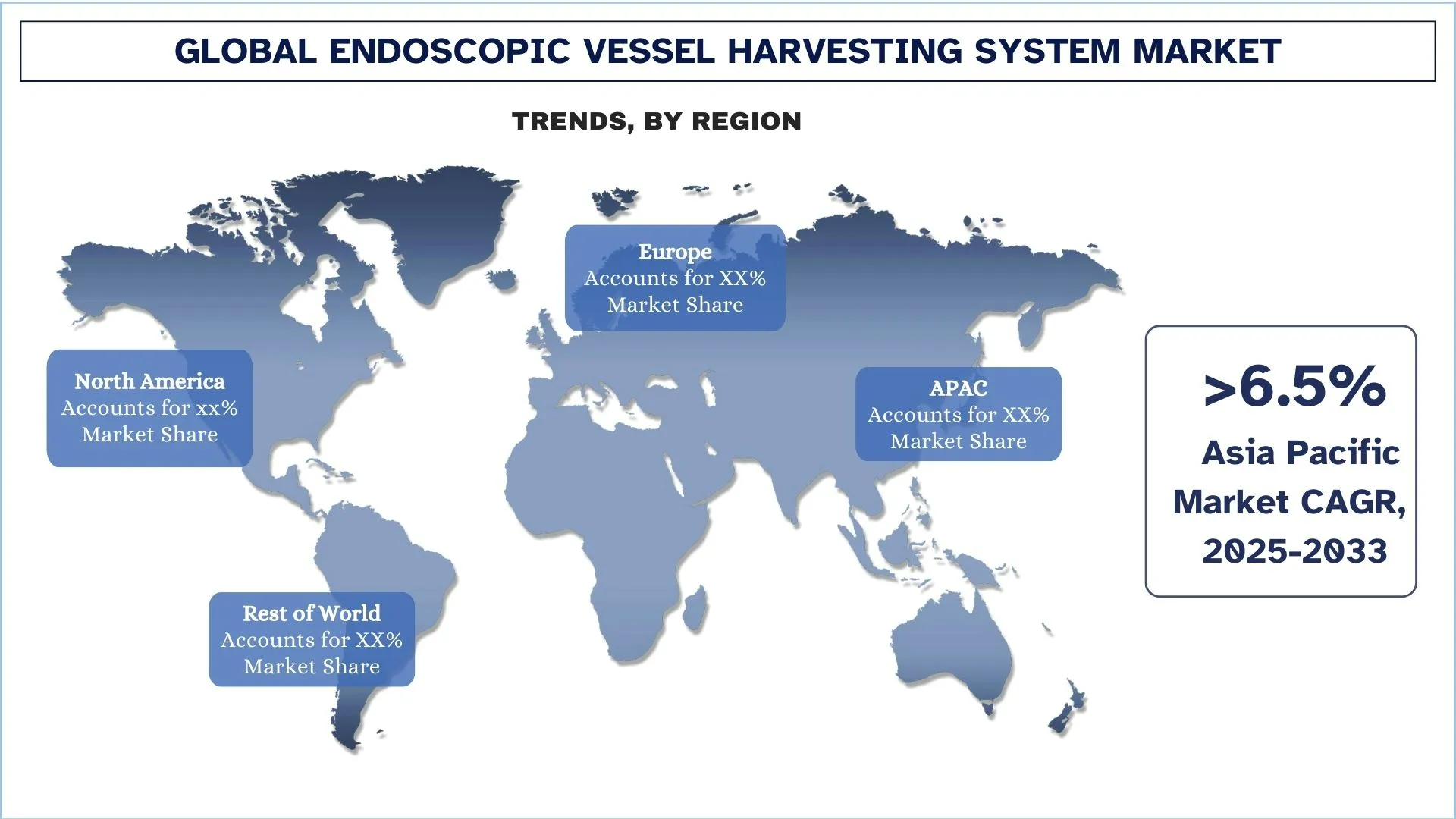
The Asia-Pacific region is expected to show the Fastest Growth in the Global Endoscopic Vessel Harvesting System Market
Asia-Pacific is expected to show the fastest growth in the endoscopic vessel harvesting system market owing to the swift rise in the prevalence of cardiovascular diseases as the populations grow old, urbanize, and change their lifestyles. The demand is increasing due to increasing healthcare spending, enhanced hospital facilities, and increasing use of minimally invasive surgery. Governments and non-governmental players are spending a lot on sophisticated medical technologies, as well as improving access to cardiac care in emerging economies like China, India, and Southeast Asian states. Moreover, a growing number of medical tourists, a high number of untreated patients, and the growing awareness of surgeons regarding the advantages of endoscopic vessel harvesting are also contributing to the market growth.
China held a Dominant share of the Asia-Pacific Endoscopic Vessel Harvesting System Market in 2024
China dominated the Asia-Pacific endoscopic vessel harvesting system market because of the large population base and high incidence of cardiovascular diseases due to factors such as rapid urbanization, aging population, and lifestyle modification. Coronary artery bypass graft surgeries are increasingly being done in the country, and this is backed by the increasing heart care facilities. The EVH system uptake has been accelerated by massive government funding in the healthcare infrastructure, hospital modernization, and implementation of the latest minimally invasive surgical technologies. Moreover, the availability of healthcare settings, increased healthcare spending, and the awareness of surgeons regarding the clinical value of using endoscopic vessel harvesting also contributed to the dominance of China in the Asia-Pacific region.
Endoscopic Vessel Harvesting System Industry Competitive Landscape
The global endoscopic vessel harvesting system market is competitive, with several global and international market players. The key players are adopting different growth strategies to enhance their market presence, such as partnerships, agreements, collaborations, geographical expansions, and mergers and acquisitions.
Top Endoscopic Vessel Harvesting System Market Companies
Some of the major players in the market are Terumo Corporation, Getinge, Boston Scientific Corporation, Zimmer Biomet, Inc., AVOMA GROUP, CardioPrecision Ltd., Olympus Corporation, KARL STORZ, Medtronic Plc, and B. Braun Melsungen AG.
Recent Developments in the Endoscopic Vessel Harvesting System Market
In April 2024, the COMBINE-CT public-private partnership received a USD 7.28 million Innovative Health Initiative grant to improve the diagnosis and treatment of patients with coronary artery disease. This is expected to bring innovation and greater adoption of EVH systems in healthcare settings.
In September 2021, CardioPrecision Ltd, a technology company developing medical devices for the treatment of structural heart disease and cardiothoracic interventions, launched its suite of CoreVista® devices for use in Endoscopic Vessel Harvesting (EVH) during coronary artery bypass grafting (CABG) surgery.
Global Endoscopic Vessel Harvesting System Market Report Coverage
Report Attribute | Details |
Base year | 2024 |
Forecast period | 2025-2033 |
Growth momentum | Accelerate at a CAGR of 4.2% |
Market size 2024 | USD 559.66 million |
Regional analysis | North America, Europe, APAC, Rest of the World |
Major contributing region | The North America region is expected to dominate the market during the forecast period. |
Key countries covered | U.S., Canada, Germany, U.K., Spain, Italy, France, China, Japan, and India. |
Companies profiled | Terumo Corporation, Getinge, Boston Scientific Corporation, Zimmer Biomet, Inc., AVOMA GROUP, CardioPrecision Ltd., Olympus Corporation, KARL STORZ, Medtronic Plc, and B. Braun Melsungen AG. |
Report Scope | Market Trends, Drivers, and Restraints; Revenue Estimation and Forecast; Segmentation Analysis; Demand and Supply Side Analysis; Competitive Landscape; Company Profiling |
Segments Covered | By Product, By Application, By End-User, and By Region/Country |
Reasons to Buy the Endoscopic Vessel Harvesting System Market Report:
The study includes market sizing and forecasting analysis confirmed by authenticated key industry experts.
The report briefly reviews overall industry performance at a glance.
The report covers an in-depth analysis of prominent industry peers, primarily focusing on key business financials, type portfolios, expansion strategies, and recent developments.
Detailed examination of drivers, restraints, key trends, and opportunities prevailing in the industry.
The study comprehensively covers the market across different segments.
Deep dive regional level analysis of the industry.
Customization Options:
The global Endoscopic Vessel Harvesting System market can further be customized as per the requirements or any other market segment. Besides this, UnivDatos understands that you may have your own business needs; hence, feel free to contact us to get a report that completely suits your requirements.
Table of Content
Research Methodology for the Global Endoscopic Vessel Harvesting System Market Analysis (2023-2033)
We analyzed the historical market, estimated the current market, and forecasted the future market of the global endoscopic vessel harvesting system market to assess its application in major regions worldwide. We conducted exhaustive secondary research to gather historical market data and estimate the current market size. To validate these insights, we carefully reviewed numerous findings and assumptions. Additionally, we conducted in-depth primary interviews with industry experts across the endoscopic vessel harvesting system value chain. After validating market figures through these interviews, we used both top-down and bottom-up approaches to forecast the overall market size. We then employed market breakdown and data triangulation methods to estimate and analyze the market size of industry segments and sub-segments.
Market Engineering
We employed the data triangulation technique to finalize the overall market estimation and derive precise statistical numbers for each segment and sub-segment of the global endoscopic vessel harvesting system market. We split the data into several segments and sub-segments by analyzing various parameters and trends, including product, application, end-user, and regions within the global endoscopic vessel harvesting system market.
The Main Objective of the Global Endoscopic Vessel Harvesting System Market Study
The study identifies current and future trends in the global endoscopic vessel harvesting system market, providing strategic insights for investors. It highlights regional market attractiveness, enabling industry participants to tap into untapped markets and gain a first-mover advantage. Other quantitative goals of the studies include:
Market Size Analysis: Assess the current and forecast market size of the global Endoscopic Vessel Harvesting System market and its segments in terms of value (USD).
Endoscopic Vessel Harvesting System Market Segmentation: Segments in the study include areas of product, application, end-user, and region.
Regulatory Framework & Value Chain Analysis: Examine the regulatory framework, value chain, customer behavior, and competitive landscape of the Endoscopic Vessel Harvesting System industry.
Regional Analysis: Conduct a detailed regional analysis for key areas such as Asia Pacific, Europe, North America, and the Rest of the World.
Company Profiles & Growth Strategies: Company profiles of the Endoscopic Vessel Harvesting System market and the growth strategies adopted by the market players to sustain the fast-growing market.
Frequently Asked Questions FAQs
Q1: What is the global endoscopic vessel harvesting system market’s current market size and growth potential?
As of 2024, the global endoscopic vessel harvesting system market size is estimated at USD 559.66 million. The market is projected to grow at a robust CAGR of 4.2% from 2025 to 2033, driven by rising cardiovascular surgeries and increasing adoption of minimally invasive procedures worldwide.
Q2: Which segment has the largest share of the global endoscopic vessel harvesting system market by product category?
The disposable segment accounts for the largest market share due to its widespread use in hospitals to minimize infection risks, eliminate reprocessing requirements, and comply with strict surgical safety and hygiene standards.
Q3: What are the driving factors for the growth of the global endoscopic vessel harvesting system market?
Top growth drivers of the endoscopic vessel harvesting system market include:
• Rising global prevalence of cardiovascular diseases
• Growing preference for minimally invasive surgical techniques
• Reduced postoperative complications and faster patient recovery
Q4: What are the emerging technologies and trends in the global endoscopic vessel harvesting system market?
Emerging trends in the endoscopic vessel harvesting system market include:
• Shift from open vessel harvesting to endoscopic techniques
• Focus on sustainability and waste reduction in surgical devices
Q5: What are the key challenges in the global endoscopic vessel harvesting system market?
Key challenges in the endoscopic vessel harvesting system market include:
• High initial cost of EVH systems and accessories
• Stringent regulatory approval processes for new devices
Q6: Which region dominates the global endoscopic vessel harvesting system market?
North America dominates the global endoscopic vessel harvesting system market due to its advanced healthcare infrastructure, high volume of cardiac surgeries, early adoption of minimally invasive technologies, and favorable reimbursement policies.
Q7: Who are the key competitors in the global endoscopic vessel harvesting system market?
Top players in the endoscopic vessel harvesting system industry include:
• Terumo Corporation
• Getinge
• Boston Scientific Corporation
• Zimmer Biomet, Inc.
• AVOMA GROUP
• CardioPrecision Ltd.
• Olympus Corporation
• KARL STORZ
• Medtronic Plc
• B. Braun Melsungen AG
Q8: What are the major investment opportunities in the global Endoscopic Vessel Harvesting System market?
Opportunities lie in emerging regions, cost-effective and reusable EVH systems, and next-generation minimally invasive technologies with scalable growth potential.
Q9: How do regulations and reimbursement impact the market?
Favorable reimbursement and streamlined approvals in developed regions support adoption, while regulatory complexity in emerging markets can slow commercialization.
Related Reports
Customers who bought this item also bought

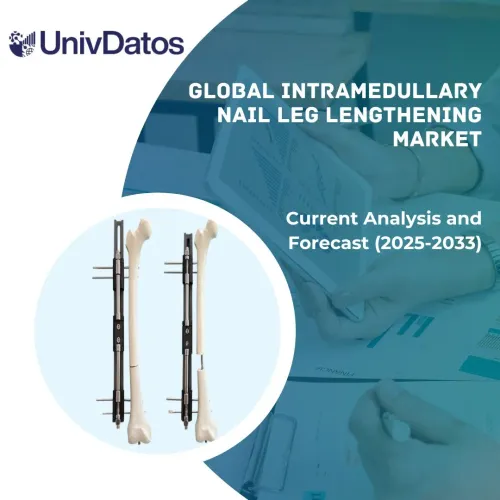
Intramedullary Nail Leg Lengthening Market: Current Analysis and Forecast (2025-2033)
Emphasis on Technology (Magnetically Controlled Intramedullary Lengthening Nails, Motorized Intramedullary Lengthening Nails, Mechanical Intramedullary Lengthening Nails); Indication (Medical/Reconstructive Indication, Cosmetic/Stature Lengthening); Bone Type (Femoral Lengthening Nails, Tibial Lengthening Nails); End-use (Hospitals, Specialty Orthopedic Clinics, Other); and Region/Country
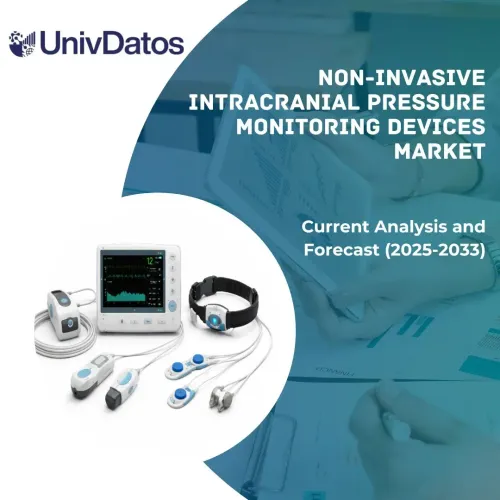
Non-Invasive Intracranial Pressure Monitoring Devices Market: Current Analysis and Forecast (2025-2033)
Emphasis on Technology (MRI/CT, Optic Nerve Sheath Diameter (ONSD) Ultrasound, Transcranial Doppler (TCD), Near-Infrared Spectroscopy (NIRS), and Others); Applications (Traumatic Brain Injury, Meningitis, Stroke, Intracerebral Hemorrhage, and Others); End-User (Hospitals & ICUs, Neurology Clinics, Ambulance & Emergency Services, Home Care Settings, and Others); and Region/Country
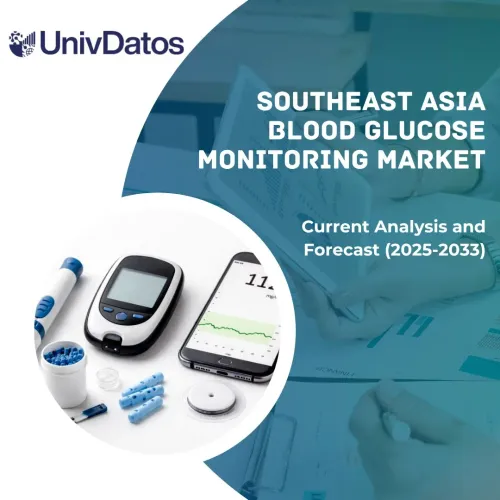
Southeast Asia Blood Glucose Monitoring Market: Current Analysis and Forecast (2025-2033)
Emphasis on Product Type (Self-Monitoring Blood Glucose (SMBG) Systems, {Glucometers, Testing Strips, Lancets & Lancing Devices}, Continuous Glucose Monitoring (CGM) Systems, {Sensors, Transmitters, Receivers}); Application (Diabetes Management, Health & Wellness Monitoring, Others); End-User (Hospitals & Clinics, Home-Care Settings, Diagnostic Centers, Others); and Country.
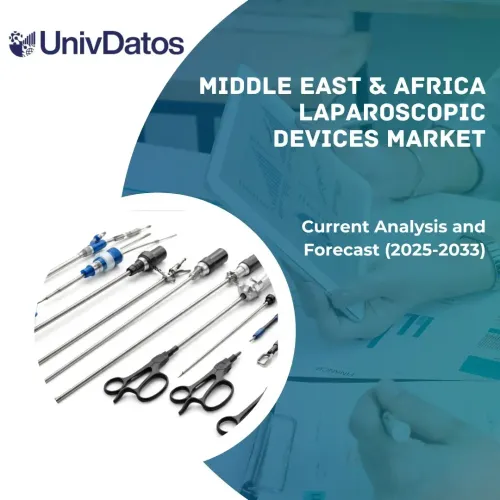
Middle East & Africa Laparoscopic Devices Market: Current Analysis and Forecast (2025-2033)
Emphasis By Product (Energy Systems, Robot-Assisted Systems, Laparoscopes, Insufflation Devices, Suction Devices and Access Devices), by Application (General Surgery, Colorectal Surgery, Bariatric Surgery, Gynaecological Surgery, Others), By End-User (Hospitals & Clinics and Ambulatory Surgical ), By Country (Saudi Arabia, UAE, Egypt, South Africa, Turkey, Israel, and the Rest of Middle East & Africa)