Premenstrual Syndrome Treatment Market: Current Analysis and Forecast (2025-2033)
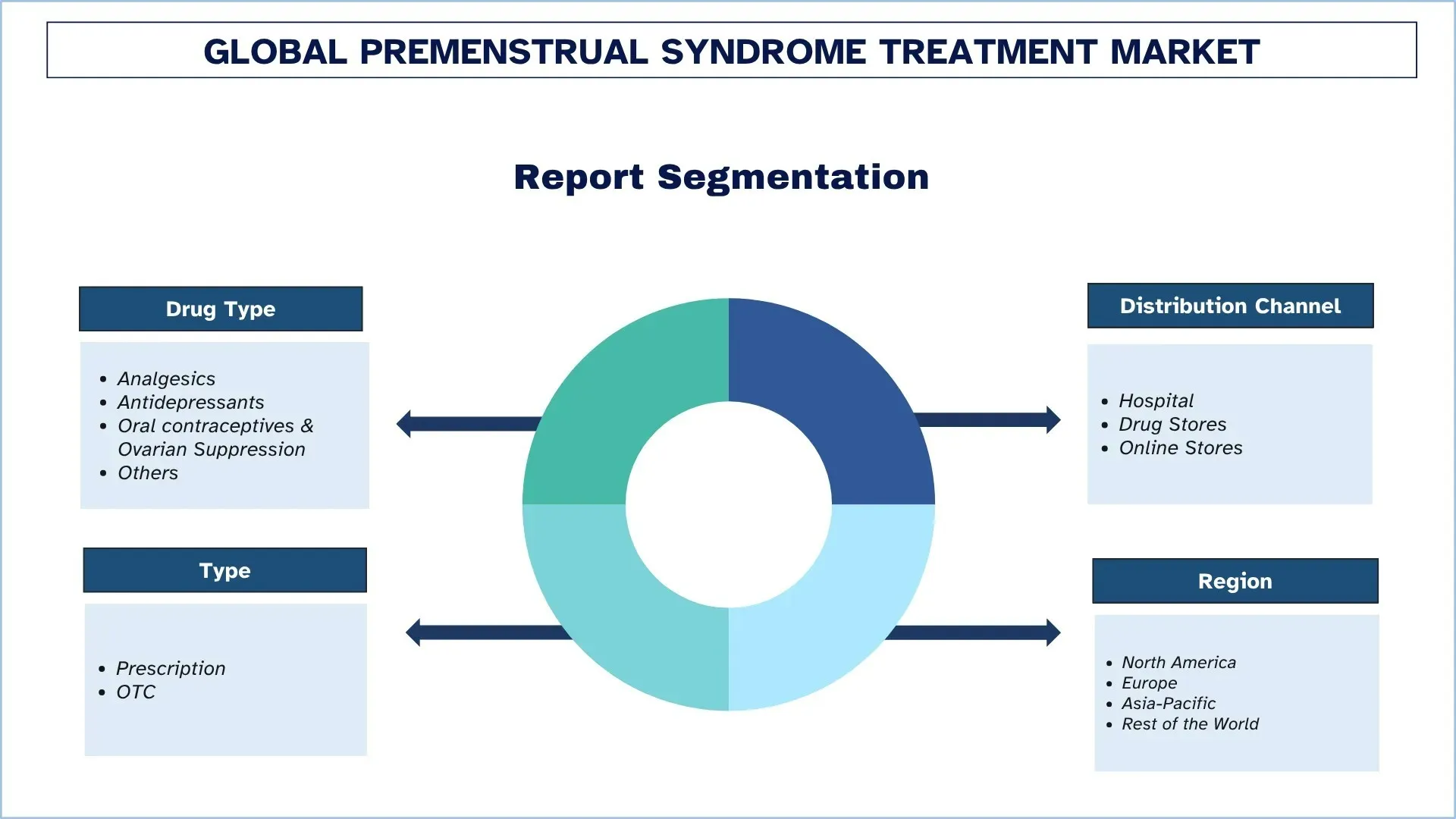
Emphasis on Drug Type (Analgesics, Antidepressants, Oral contraceptives & Ovarian Suppression, and Others); Type (Prescription and OTC); Distribution Channel (Hospital, Drug Stores, and Online Stores); and Region/Country
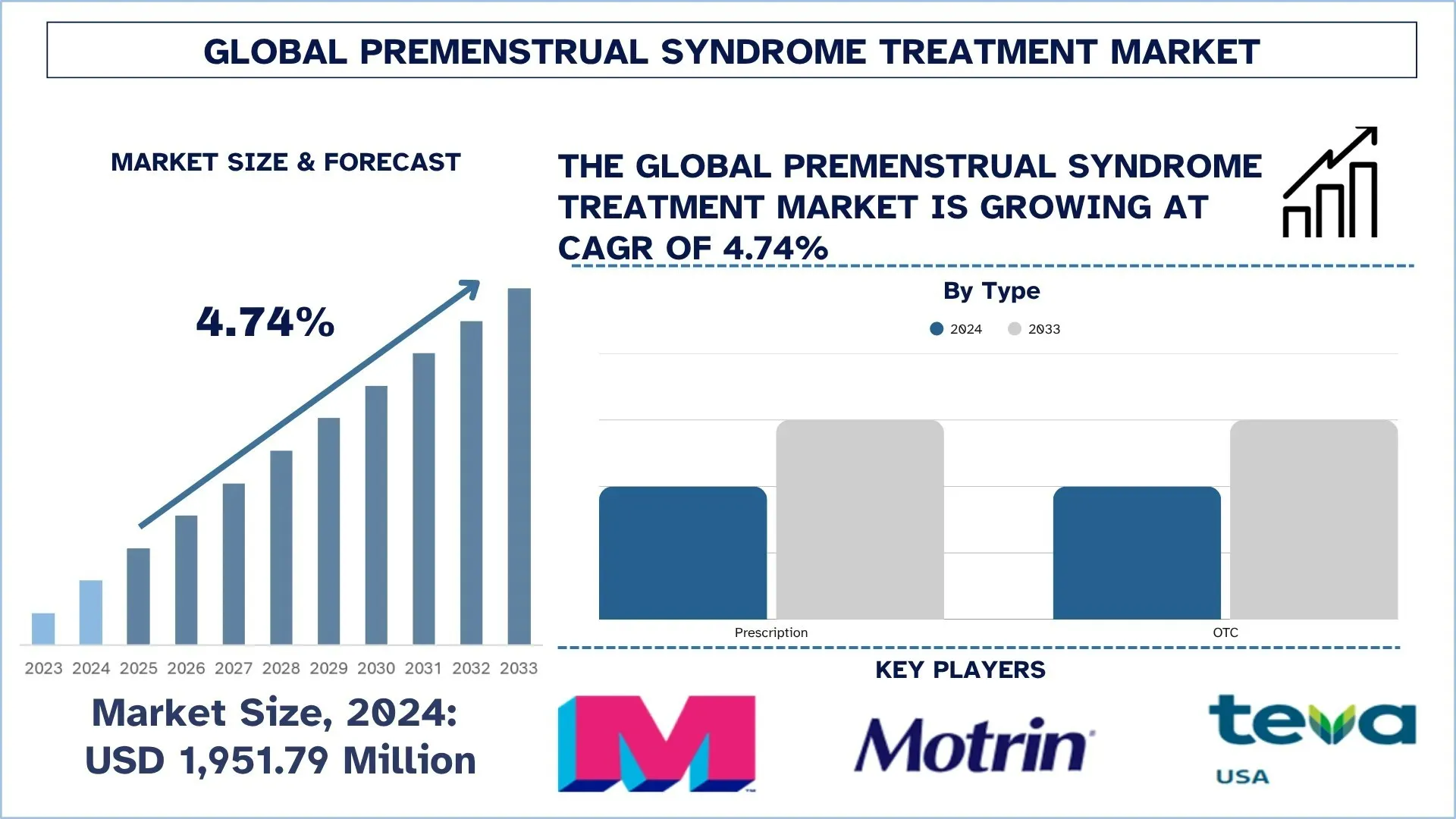
Global Premenstrual Syndrome Treatment Market Size & Forecast
The Global Premenstrual Syndrome Treatment Market was valued at USD 1,951.79 million in 2024 and is expected to grow at a strong CAGR of around 4.74% during the forecast period (2025-2033F), driven by the increasing awareness, rising prevalence of PMS, growing demand for effective symptom relief, and advancements in hormonal and non-hormonal therapies.
Premenstrual Syndrome Treatment Market Analysis
Premenstrual syndrome (PMS) is a health issue that involves physical and psychological symptoms occurring about five days before menstruation and ending a few days after it begins. The most common symptoms are appetite changes, breast tenderness, abdominal pain, back pain, headache, fatigue, insomnia, depressive affect, irritability, angry outbursts, and anxiety. Some women encounter mild discomfort, whereas others experience major disruptions in their daily routines. The condition is related to hormonal changes, serotonin levels, and lifestyle changes such as stress and diet.
The PMS treatment market is growing steadily due to rising investments in research and development (R&D) focused on creating more effective and safer therapies. Traditional PMS therapies have mainly relied on analgesics, antidepressants, and oral contraceptives, but these treatments often target only specific symptoms. To address this issue, pharmaceutical and biotech companies are developing targeted hormonal and non-hormonal therapies that attack the underlying causes of PMS and PMDD, resulting in positive outcomes. Moreover, collaborations between pharmaceutical companies and women’s health startups are also speeding up clinical progress. The increased R&D focus on PMS shows a wider recognition of women’s health as an underfunded treatment area. These innovations are likely to grow product pipelines, boost effectiveness, and lessen side effects, creating strong potential for future market growth.
Global Premenstrual Syndrome Treatment Market Trends
This section discusses the key market trends that are influencing the various segments of the global premenstrual syndrome treatment market, as found by our team of research experts.
Increasing Adoption of Digital Health Platforms for Symptom Tracking and Personalized Care
The increasing adoption of digital health platforms for symptom tracking and personalized care is a significant trend in the PMS market. The rising advancement in women’s health technology, such as mobile apps, wearable devices, and AI-driven platforms, allows women to monitor, understand, and manage their menstrual health. In addition, these AI platforms collect data, analyze it, and produce tailored reports and recommendations, facilitating more precise treatments and strengthening communication between doctors and patients. Such an approach not only increases adherence to treatment plans but also promotes preventive care by detecting early signs of hormonal imbalances or PMS-related issues. Digital health tools are especially popular among younger, tech-savvy users due to their convenience. Furthermore, different apps now connect with telehealth services, allowing women to directly consult gynecologists, nutritionists, or mental health experts via their smartphones. For instance, in 2024, Flo Health added an AI-based PMS management feature to its menstrual tracking app. The platform employs machine learning to forecast PMS onset, suggest lifestyle adjustments, and connect users with tailored supplements or medication plans.
Premenstrual Syndrome Treatment Industry Segmentation
This section provides an analysis of the key trends in each segment of the global premenstrual syndrome treatment market report, along with forecasts at the global, regional, and country levels for 2025-2033.
The Analgesics Segment Dominates the Global Premenstrual Syndrome Treatment Market
Based on the drug type, the market is categorized into analgesics, antidepressants, oral contraceptives & ovarian suppression, and others. Among these, the analgesics segment holds the largest market share in the premenstrual syndrome (PMS) treatment market because of their proven effectiveness, affordability, and broad availability. Analgesics, especially nonsteroidal anti-inflammatory drugs (NSAIDs) like ibuprofen, naproxen, and aspirin, offer quick relief by inhibiting prostaglandin synthesis, making them the first choice for most women experiencing PMS-related discomfort. Their over-the-counter (OTC) availability greatly contributes to their market dominance, enabling women to manage symptoms on their own without medical consultation. However, antidepressants are showing the fastest growth due to the increasing recognition of their effectiveness in treating PMS-related mood issues such as irritability, anxiety, and depression.
The OTC Segment Dominates the Global Premenstrual Syndrome Treatment Market.
Based on the type category, the market is categorized into prescription and OTC. Among these, the OTC segment leads the premenstrual syndrome treatment market due to its accessibility and cost-effectiveness. The availability of analgesics, supplements, and herbal remedies that offer quick relief from PMS symptoms like cramps, bloating, and headaches has increased consumer preference for self-care solutions. Since these products are easily available in pharmacies and online stores, women can conveniently manage their symptoms on their own, which boosts the appeal of OTC options. However, the prescription segment is showing the fastest growth due to the increasing diagnosis of severe PMS and premenstrual dysphoric disorder (PMDD). Physicians are prescribing targeted treatments such as antidepressants (SSRIs), hormonal therapies, and ovarian suppression drugs to address mood-related and hormonal symptoms more effectively, thereby driving the growth of the market.
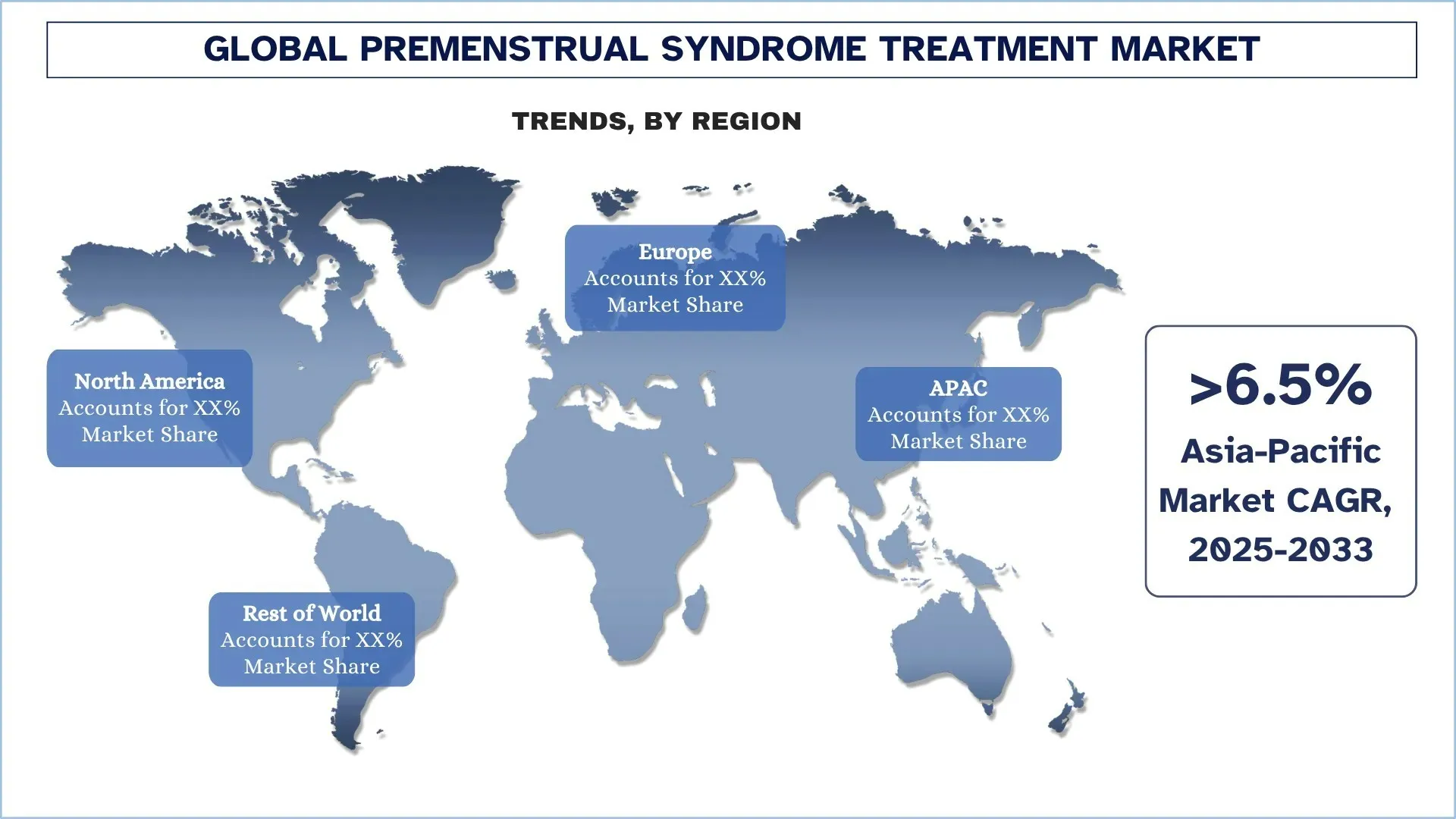
North America holds the largest market share in the global premenstrual syndrome treatment market
North America holds the largest market share of the premenstrual syndrome treatment market due to government-supported healthcare programs and increasing patient education initiatives. Expanding access through local clinics, pharmacies, and digital health platforms encourages early diagnosis and adoption of therapies. The market is supported by the availability of prescription and OTC medications, as well as ongoing investment from global pharmaceutical companies. Lifestyle factors such as urbanization, stress, and dietary habits are increasing PMS prevalence, creating consistent demand for PMS treatment in the region, thereby driving the growth of the market.
The U.S. held a Dominant share of the North America Premenstrual Syndrome Treatment Market in 2024
The U.S. dominates the PMS treatment market due to high awareness, developed healthcare infrastructure, and the presence of pharmaceutical companies. Women in America have access to a smart health infrastructure where doctors and patients are aware of PMS and conditions like Premenstrual Dysphoric Disorder (PMDD). This awareness supports early diagnosis and related treatment. The market growth is also boosted by the availability of over-the-counter and prescription treatments, including analgesics, hormonal therapies, and antidepressants. Furthermore, favorable insurance coverage, high per-capita healthcare spending, and the growth of telemedicine, retail pharmacies, and e-commerce channels have improved access to treatments. The rising stress levels, busy lifestyles, and hormonal health issues among working women have increased PMS cases, thereby driving a consistent demand for PMS-related solutions in the market.
Premenstrual Syndrome Treatment Industry Competitive Landscape
The global premenstrual syndrome treatment market is competitive, with several global and international market players. The key players are adopting different growth strategies to enhance their market presence, such as partnerships, agreements, collaborations, geographical expansions, and mergers and acquisitions.
Top Premenstrual Syndrome Treatment Market Companies
Some of the major players in the market are Midol (Bayer), Motrin (Kenvue), Teva Pharmaceuticals USA, Inc., Herbalife International of America, Inc., Looni, Sonika Lifesciences, Amway Singapore Pte.Ltd., Nature's Bounty, Bonafide Health, LLC, and InStrength.
Recent Developments in the Premenstrual Syndrome Treatment Market
In October 2025, Samphire Neuro launched Lutea, a wearable device designed to support women's brain health throughout their menstrual cycle. The product aims to improve mood, focus, and overall well-being during periods. The device is controlled via the Samphire App and is currently available for pre-order in the United States.
In January 2025, Life Extension launched Daily PMS Relief, a dietary supplement formulated to alleviate common premenstrual symptoms. The supplement contains ginger extract, magnesium glycinate, and vitamin B6 to alleviate common premenstrual symptoms such as cramps, fatigue, nausea, and mood swings.
Global Premenstrual Syndrome Treatment Market Report Coverage
Report Attribute | Details |
Base year | 2024 |
Forecast period | 2025-2033 |
Growth momentum | Accelerate at a CAGR of 4.74% |
Market size 2024 | USD 1,951.79 million |
Regional analysis | North America, Europe, APAC, Rest of the World |
Major contributing region | The North America region is expected to dominate the market during the forecast period. |
Key countries covered | U.S., Canada, Germany, U.K., Spain, Italy, France, China, Japan, and India. |
Companies profiled | Midol (Bayer), Motrin (Kenvue), Teva Pharmaceuticals USA, Inc., Herbalife International of America, Inc., Looni, Sonika Lifesciences, Amway Singapore Pte.Ltd., Nature's Bounty, Bonafide Health, LLC, and InStrength. |
Report Scope | Market Trends, Drivers, and Restraints; Revenue Estimation and Forecast; Segmentation Analysis; Demand and Supply Side Analysis; Competitive Landscape; Company Profiling |
Segments Covered | By Drug Type By Type, By Distribution Channel, and By Region/Country |
Reasons to Buy the Premenstrual Syndrome Treatment Market Report:
The study includes market sizing and forecasting analysis confirmed by authenticated key industry experts.
The report briefly reviews overall industry performance at a glance.
The report covers an in-depth analysis of prominent industry peers, primarily focusing on key business financials, type portfolios, expansion strategies, and recent developments.
Detailed examination of drivers, restraints, key trends, and opportunities prevailing in the industry.
The study comprehensively covers the market across different segments.
Deep dive regional level analysis of the industry.
Customization Options:
The global premenstrual syndrome treatment market can further be customized as per the requirements or any other market segment. Besides this, UnivDatos understands that you may have your own business needs; hence, feel free to contact us to get a report that completely suits your requirements.
Table of Content
Research Methodology for the Global Premenstrual Syndrome Treatment Market Analysis (2023-2033)
We analyzed the historical market, estimated the current market, and forecasted the future market of the global premenstrual syndrome treatment market to assess its application in major regions worldwide. We conducted exhaustive secondary research to gather historical market data and estimate the current market size. To validate these insights, we carefully reviewed numerous findings and assumptions. Additionally, we conducted in-depth primary interviews with industry experts across the premenstrual syndrome treatment value chain. After validating market figures through these interviews, we used both top-down and bottom-up approaches to forecast the overall market size. We then employed market breakdown and data triangulation methods to estimate and analyze the market size of industry segments and sub-segments.
Market Engineering
We employed the data triangulation technique to finalize the overall market estimation and derive precise statistical numbers for each segment and sub-segment of the global premenstrual syndrome treatment market. We split the data into several segments and sub-segments by analyzing various parameters and trends, including drug type, type, distribution channel, and region within the global premenstrual syndrome treatment market.
The Main Objective of the Global Premenstrual Syndrome Treatment Market Study
The study identifies current and future trends in the global premenstrual syndrome treatment market, providing strategic insights for investors. It highlights regional market attractiveness, enabling industry participants to tap into untapped markets and gain a first-mover advantage. Other quantitative goals of the studies include:
Market Size Analysis: Assess the current and forecast market size of the global premenstrual syndrome treatment market and its segments in terms of value (USD).
Premenstrual Syndrome Treatment Market Segmentation: Segments in the study include areas of drug type, type, distribution channel, and region.
Regulatory Framework & Value Chain Analysis: Examine the regulatory framework, value chain, customer behavior, and competitive landscape of the premenstrual syndrome treatment industry.
Regional Analysis: Conduct a detailed regional analysis for key areas such as Asia Pacific, Europe, North America, and the Rest of the World.
Company Profiles & Growth Strategies: Company profiles of the premenstrual syndrome treatment market and the growth strategies adopted by the market players to sustain the fast-growing market.
Frequently Asked Questions FAQs
Q1: What is the global Premenstrual Syndrome Treatment market’s current market size and growth potential?
As of 2024, the global Premenstrual Syndrome Treatment market is valued at USD 1,951.79 million and is projected to grow at an impressive CAGR of 4.74% from 2025 to 2033. The growth is driven by increasing awareness of PMS, rising healthcare expenditure, and advancements in personalized treatment solutions.
Q2: Which segment has the largest share of the global premenstrual syndrome treatment market by drug type category?
The analgesics segment leads the global premenstrual syndrome treatment market, accounting for the largest share due to their effectiveness in alleviating common PMS symptoms such as cramps, headaches, and body pain
Q3: What are the driving factors for the growth of the global premenstrual syndrome treatment market?
Top growth drivers of the premenstrual syndrome treatment market include:
• Rising prevalence of PMS among women of reproductive age.
• Increasing healthcare expenditure and access to modern treatments.
• Growing female workforce participation is leading to a higher demand for symptom management solutions.
Q4: What are the emerging technologies and trends in the global premenstrual syndrome treatment market?
Emerging trends in the premenstrual syndrome treatment market include:
• Adoption of digital health platforms for symptom tracking and personalized care.
• Rising use of herbal and natural supplements as complementary therapies.
• Integration of wearable devices and mobile apps for monitoring PMS symptoms and treatment efficacy.
Q5: What are the key challenges in the global premenstrual syndrome treatment market?
Key challenges in the premenstrual syndrome treatment market include:
• Lack of standardized treatment guidelines results in inconsistent care.
• Low market penetration in developing countries due to limited awareness and access to treatments.
• Regulatory complexities in approving new PMS therapies across regions.
Q6: Which region dominates the global premenstrual syndrome treatment market?
North America dominates the global premenstrual syndrome treatment market, driven by high awareness levels, strong healthcare infrastructure, and the presence of leading pharmaceutical companies actively investing in women’s health solutions.
Q7: Who are the key competitors in the global premenstrual syndrome treatment market?
Top players in the premenstrual syndrome treatment industry include:
• Midol (Bayer)
• Motrin (Kenvue)
• Teva Pharmaceuticals USA, Inc.
• Herbalife International of America, Inc.
• Looni
• Sonika Lifesciences
• Amway Singapore Pte.Ltd.
• Nature's Bounty
• Bonafide Health, LLC
• InStrength
Q8: What investment opportunities exist in the global PMS treatment market?
Investment opportunities are prominent in emerging regions like Asia-Pacific and Latin America, where PMS awareness and healthcare infrastructure are growing. High-potential segments include:
• Herbal and natural supplements
• Digital therapeutics and mobile apps
• Over-the-counter (OTC) analgesics
These areas offer promising returns for investors and businesses seeking to enter the PMS treatment market.
Q9: How do regulatory policies impact the PMS treatment market globally?
Regulatory frameworks, including FDA approvals, clinical trial requirements, and regional market authorizations, play a critical role in shaping the PMS treatment market. Compliance ensures product safety, market credibility, and smooth market entry, while delays or stringent regulations can affect new product launches and market expansion.
Related Reports
Customers who bought this item also bought
Intramedullary Nail Leg Lengthening Market: Current Analysis and Forecast (2025-2033)
Emphasis on Technology (Magnetically Controlled Intramedullary Lengthening Nails, Motorized Intramedullary Lengthening Nails, Mechanical Intramedullary Lengthening Nails); Indication (Medical/Reconstructive Indication, Cosmetic/Stature Lengthening); Bone Type (Femoral Lengthening Nails, Tibial Lengthening Nails); End-use (Hospitals, Specialty Orthopedic Clinics, Other); and Region/Country
Non-Invasive Intracranial Pressure Monitoring Devices Market: Current Analysis and Forecast (2025-2033)
Emphasis on Technology (MRI/CT, Optic Nerve Sheath Diameter (ONSD) Ultrasound, Transcranial Doppler (TCD), Near-Infrared Spectroscopy (NIRS), and Others); Applications (Traumatic Brain Injury, Meningitis, Stroke, Intracerebral Hemorrhage, and Others); End-User (Hospitals & ICUs, Neurology Clinics, Ambulance & Emergency Services, Home Care Settings, and Others); and Region/Country
Southeast Asia Blood Glucose Monitoring Market: Current Analysis and Forecast (2025-2033)
Emphasis on Product Type (Self-Monitoring Blood Glucose (SMBG) Systems, {Glucometers, Testing Strips, Lancets & Lancing Devices}, Continuous Glucose Monitoring (CGM) Systems, {Sensors, Transmitters, Receivers}); Application (Diabetes Management, Health & Wellness Monitoring, Others); End-User (Hospitals & Clinics, Home-Care Settings, Diagnostic Centers, Others); and Country.
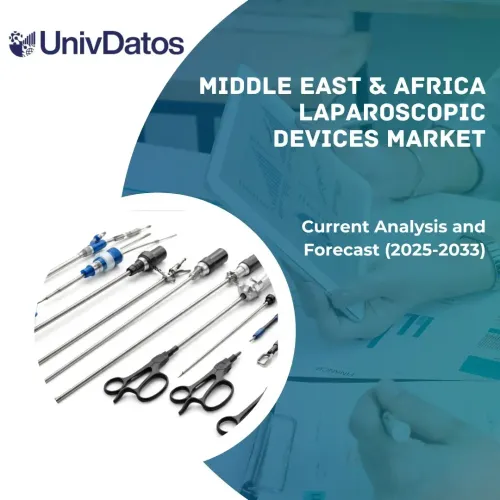
Middle East & Africa Laparoscopic Devices Market: Current Analysis and Forecast (2025-2033)
Emphasis By Product (Energy Systems, Robot-Assisted Systems, Laparoscopes, Insufflation Devices, Suction Devices and Access Devices), by Application (General Surgery, Colorectal Surgery, Bariatric Surgery, Gynaecological Surgery, Others), By End-User (Hospitals & Clinics and Ambulatory Surgical ), By Country (Saudi Arabia, UAE, Egypt, South Africa, Turkey, Israel, and the Rest of Middle East & Africa)