Hydrogen-Powered Hospital Backup Systems Market: Current Analysis and Forecast (2026-2034)
Emphasis on System Type (Portable, Stationary, Hybrid); Power Capacity (Below 100 kW, 100–500 kW, and Above 500 kW); End-User (Public Hospitals, Private Hospitals, Specialty Hospitals, and Emergency Care Facilities); and Region/Country
Global Hydrogen-Powered Hospital Backup Systems Market Size & Forecast
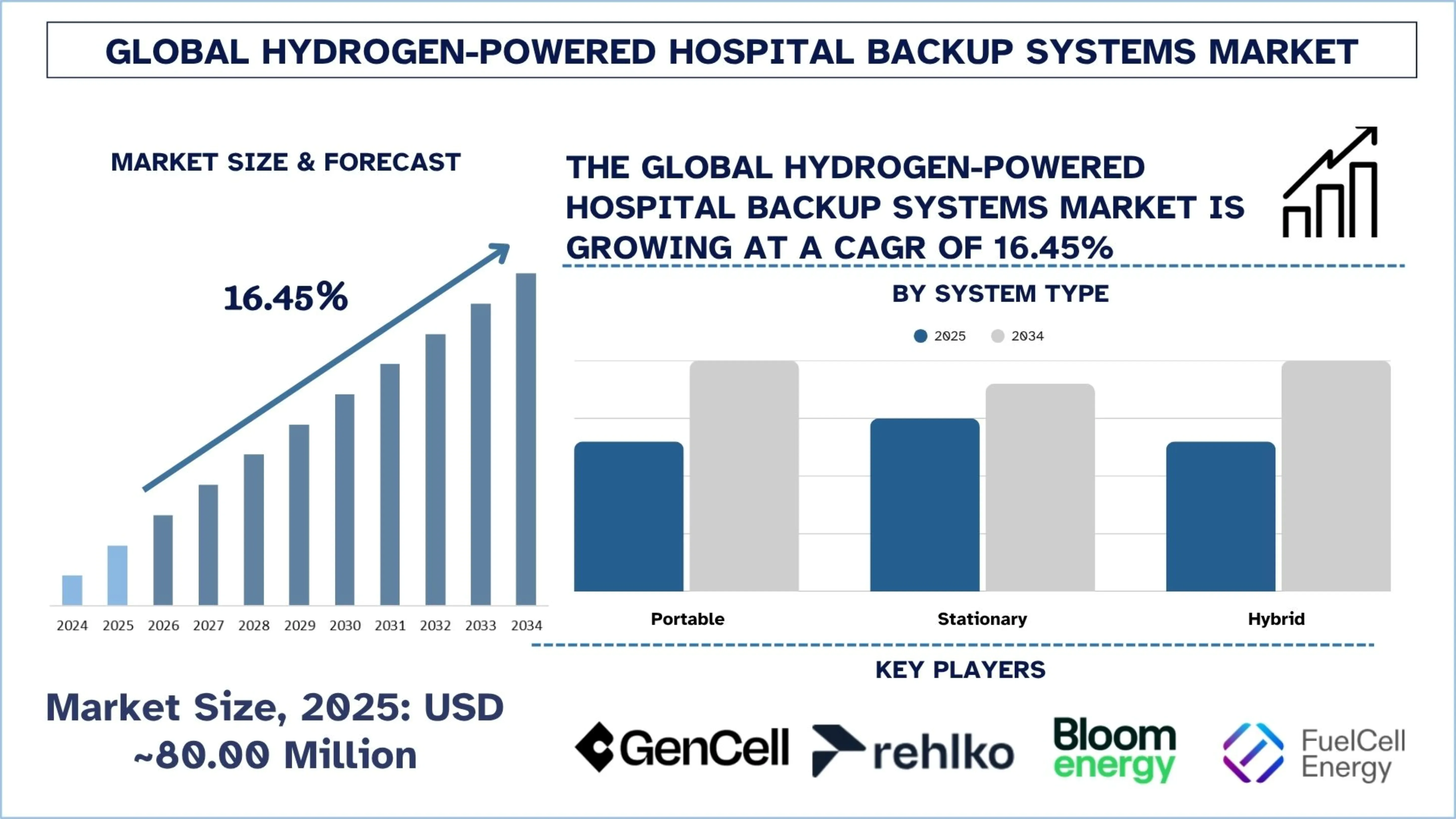
The global Hydrogen-Powered Hospital Backup Systems Market was valued at USD 80.00 million in 2025 and is expected to grow at a strong CAGR of around 16.45% during the forecast period (2026-2034F), driven by growth in large and multi-specialty hospitals requiring high-capacity backup solutions.
Hydrogen-Powered Hospital Backup Systems Market Analysis
Hydrogen-based hospital backup systems are a clean energy technology that relies on hydrogen fuel cells to produce electricity in the case of grid failures or volatility. It offers affordable, low-emissions power to supply the hospital with essential functions like ICUs, surgical units, and life-support systems. Such systems are increasing in use as alternatives to diesel generators for resilient, sustainable healthcare infrastructure.
The adoption is shifting toward early commercialization, with deployments focusing on stationary fuel cell systems integrated into hospital microgrids. Also, the implementations are usually a combination of on-site hydrogen storage (compressed or liquid) with fuel cell stacks that can provide continuous or backup power during outages, usually combined with a renewable energy source such as solar to allow low-carbon operation. In developed countries, hospitals are exploring the use of hydrogen-based backup as a decarbonization requirement and an energy resiliency policy, and new facilities are incorporating these systems into their design. Furthermore, partnerships with hydrogen suppliers, system integrators, and healthcare infrastructure developers also contribute to growth, with an emphasis on scalable modularity, longer run times than batteries, and the ability to meet high emergency power requirements.
For example, on March 16, 2026, Hydrexia was awarded a contract to deliver a solid-state hydrogen storage system that will supply a fuel cell backup at a US hospital and healthcare clinic. The technology will be installed at Klickitat Valley Health’s facility in Goldendale, Washington State, to provide hydrogen to an existing stationary fuel cell system for critical back-up power. A 100kW Rehlko stationary power generator, which uses fuel cell modules from Toyota, has been operating at the hospital since 2025 under a state and federally-backed trial for emergency backup power.
Global Hydrogen-Powered Hospital Backup Systems Market Trends
This section discusses the key market trends that are influencing the various segments of the global Hydrogen-Powered Hospital Backup Systems market, as found by our team of research experts.
Expansion Of Green Hydrogen Integration In Healthcare Facilities
The integration of green hydrogen is emerging as a key trend as hospitals shift toward low-carbon and sustainable energy systems. Hospitals are now moving towards using hydrogen generated from renewable sources to power backup systems and eliminate fossil fuel use. Adding to this, the shift aligns with global decarbonization and strict environmental policies in the healthcare industry. Also, on-site generation of green hydrogen using solar or wind energy is becoming increasingly popular, enabling energy independence and long-term backup. Moreover, government incentives and increased investment in hydrogen ecosystems support the trend. With infrastructural development and reduced costs, green hydrogen will become a natural part of the hospital's energy policies.
On March 6, 2024, a decentralized fuel cell system by Robert Bosch GmbH was successfully installed at Hermann-Josef-Krankenhaus (HJK) in Erkelenz, Germany, as part of the Multi-SOFC Erkelenz demonstration project. The project is organized by the Helmholtz Hydrogen Cluster (HC-H2) and the Institute of Sustainable Hydrogen Economy at Forschungszentrum Jülich.
The next step will be to make the system compatible with the hydrogen storage technology offered by Hydrogenious LOHC Technologies GmbH, which will enable a unique combined hydrogen energy solution to be applied in hospitals. By 2026, the project will provide the hospital with a reliable, climate-friendly energy source and will be supported by the German Federal Ministry of Education and Research (BMBF).
Hydrogen-Powered Hospital Backup Systems Industry Segmentation
This section provides an analysis of the key trends in each segment of the global Hydrogen-Powered Hospital Backup Systems market report, along with forecasts at the global, regional, and country levels for 2026-2034.
The stationary segment held a dominant share of the market in 2025.
Based on the system type, the hydrogen-powered hospital backup systems market is portable, stationary, and hybrid. In 2025, the stationary segment held a dominant share of the market. The stationary systems are fueling market development because hospitals need permanently installed, high-reliability backup infrastructure that can be integrated with existing electrical systems. The fact that they provide continuous power for long durations aligns well with rigid healthcare compliance and emergency requirements. While hybrid systems are growing by enhancing uptake and integrating hydrogen fuel cells with batteries or renewable energy sources, making them more efficient and flexible in operation. Also, it reduces reliance on hydrogen and provides immediate response during outages, which are important performance gaps in independent systems. This combination strategy is attracting resilience- and sustainability-oriented hospitals, expanding market opportunities.
The above 500 kW are expected to grow at a significant CAGR during the forecast period (2026-2034).
Based on the power capacity, the market is categorized into below 100 kW, 100–500 kW, and above 500 kW. Among these, above 500 kW are expected to grow at a significant CAGR during the forecast period (2026-2034). This is driving the market as large hospitals and multi-specialty facilities are seeking powerful solutions to power critical operations. These systems sustain entire hospital loads, such as ICUs and surgical units, and are therefore necessary for deploying full-scale backups. The growing size of hospitals and related energy consumption are driving the vendors into higher-capacity offerings.
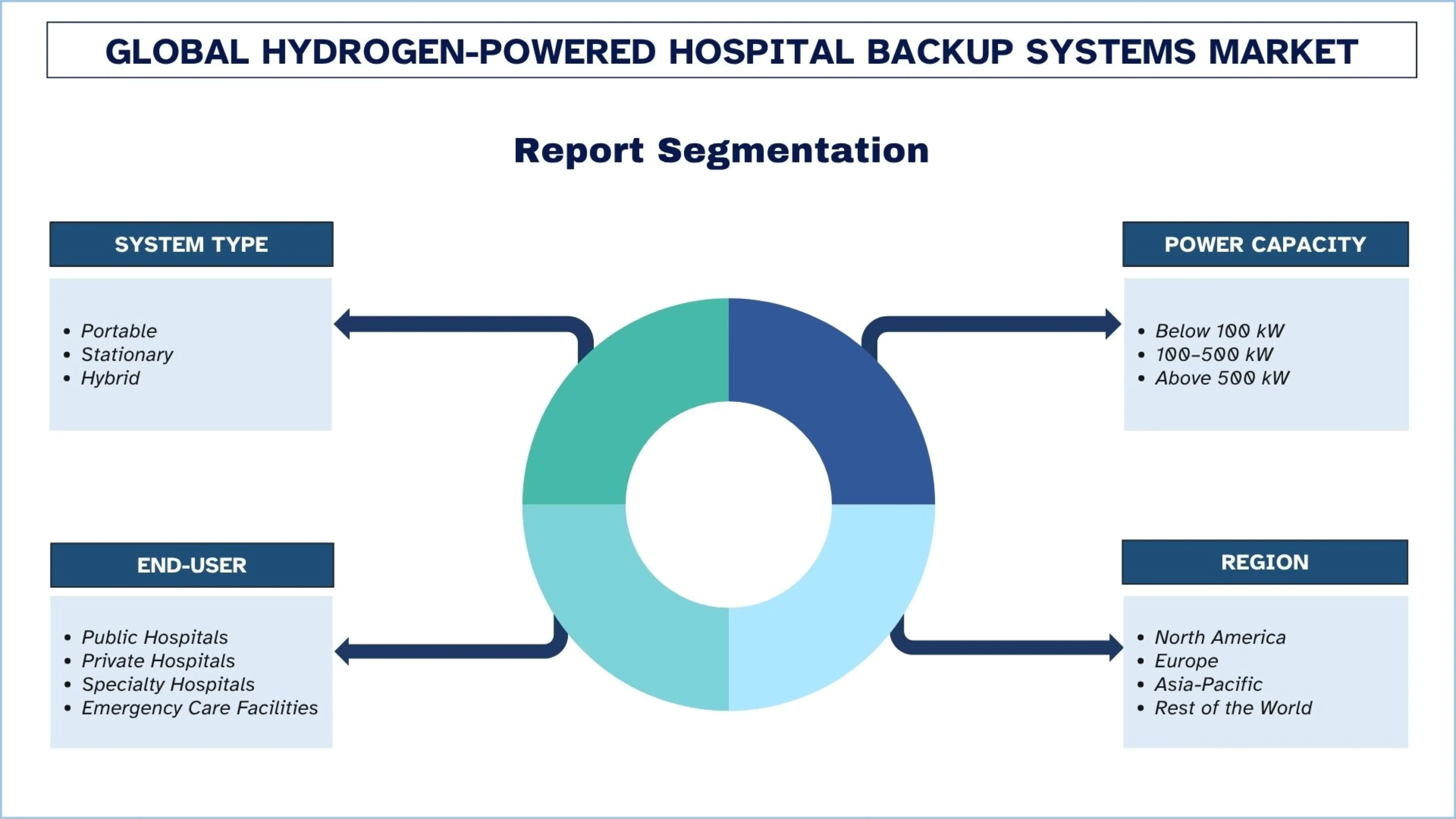
North America holds the largest market share in the global Hydrogen-Powered Hospital Backup Systems market
The market is dominated by North America because it adopted hydrogen fuel cell technologies early and has a well-developed, energy-resilience-oriented healthcare infrastructure. The high regulatory backing of decarbonization, as well as the phase-out of diesel generators, is enhancing the adoption of hydrogen-based backup faster. The region enjoys established hydrogen supply chains, developed microgrid integration, and financing schemes in favor of clean energy in critical facilities. To address grid instability and extreme weather events, hospitals are increasingly investing in long-duration backup solutions. Moreover, the strategic collaboration between the energy provider and the healthcare system also enhances deployment. This policy, infrastructure, and innovation have continued to place North America at the forefront.
In April 2025, Kaiser Permanente inaugurated the largest hospital-based renewable energy microgrid in the United States at its Ontario Medical Center, marking a major milestone in California’s clean energy transition while driving down operating expenses and protecting patient care. The Ontario Medical Center system integrates 2 megawatts of rooftop solar and 9 megawatt-hours of non-lithium battery storage into the grid, plus a 1 MW fuel cell, enabling the hospital to run entirely on site-generated clean power and serve as its primary emergency backup during outages.
The United States held a dominant share of the North American Hydrogen-Powered Hospital Backup Systems Market in 2025
The US is the leading country because of its high healthcare expenditure and serious concerns about the continuity of essential health services. The federal and state-level incentives for hydrogen and clean energy technologies are prompting hospitals to replace the diesel-based systems with fuel cells. Also, the increasing number of natural disasters and grid outages is compelling hospitals to implement resilient backup solutions. The presence of major hydrogen technology providers and system integrators helps enable rapid commercialization. Also, the major hospital chains are investing in microgrid-based energy systems, adding hydrogen to provide long-duration backup.
Hydrogen-Powered Hospital Backup Systems Industry Competitive Landscape
The global Hydrogen-Powered Hospital Backup Systems market is competitive, with several global and international market players. The key players are adopting different growth strategies to enhance their market presence, such as partnerships, agreements, collaborations, geographical expansions, and mergers and acquisitions.
Top Hydrogen-Powered Hospital Backup Systems Market Companies
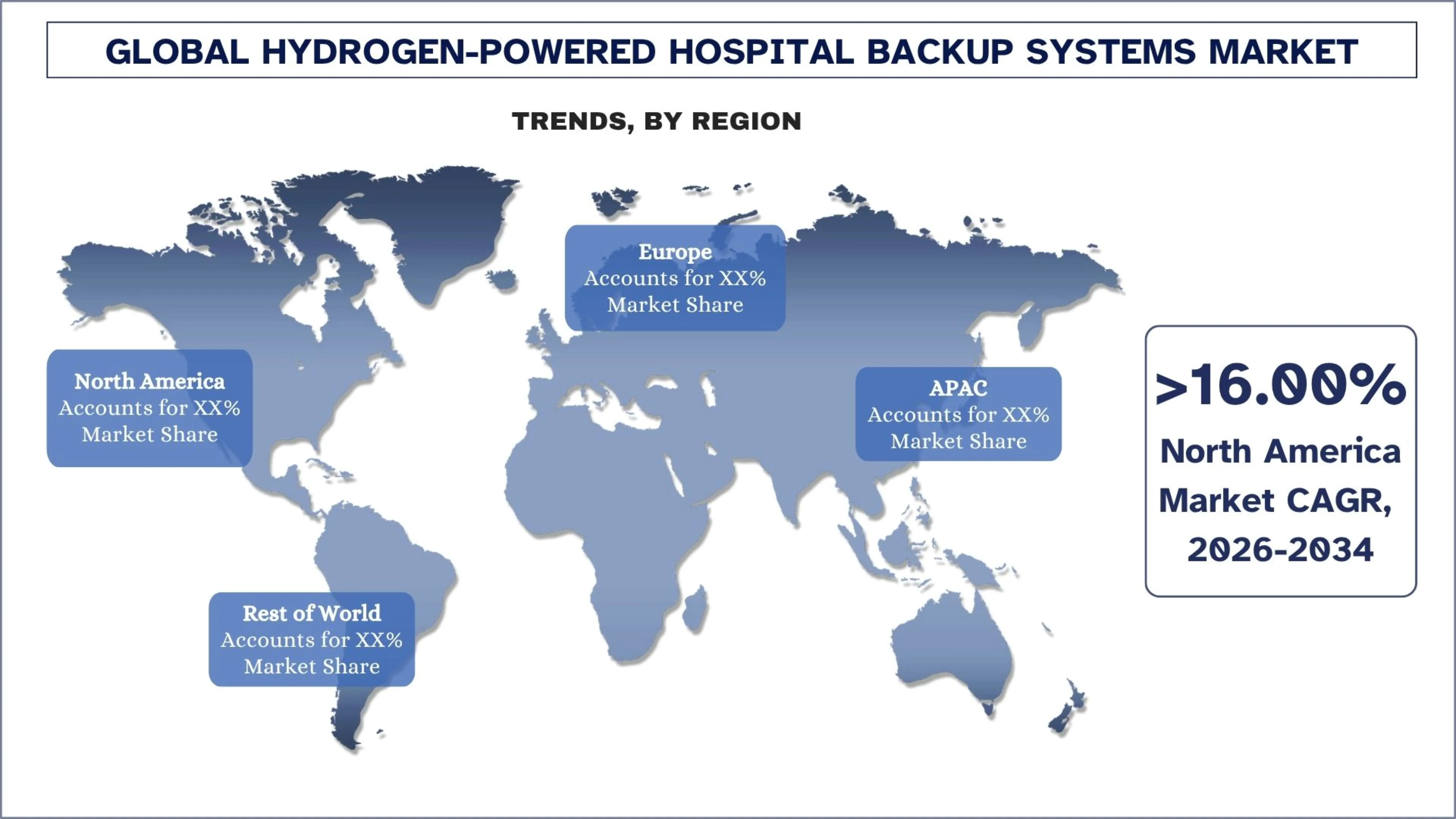
Some of the major players in the market are GenCell Ltd., Rehlko (Discovery Energy, LLC), Bloom Energy, FuelCell Energy, Inc., Plug Power Inc., Ballard Power Systems, Cummins Inc., Doosan Fuel Cell Co., Ltd., TOSHIBA CORPORATION, and Panasonic.
Recent Developments in the Hydrogen-Powered Hospital Backup Systems Market
In October 2024, Rehlko, formerly known as Kohler Energy, collaborated with Toyota Motor North America to develop and install a hydrogen-powered fuel cell system at a hospital in Goldendale, Washington, U.S. The 100 kW Solid Polymer Electrolyte Membrane fuel cell will be used by Klickitat Valley Health (KVH), a leading non-profit care provider, for emergency backup, peak shaving, and demand response. This new initiative supports Rehlko’s sustainability strategy that focuses on reducing environmental impact across operations and helping customers reduce their environmental footprints.
On May 26, 2022, ABB collaborated with Israel fuel cell manufacturer GenCell to install a unique hydrogen-based Uninterrupted Power Supply (UPS) system at the Hillel Yaffe Medical Center in Israel. The breakthrough fuel cell backup technology is a first for an Israeli hospital, with the innovative solution guaranteed to keep the power on 24/7 for critical life-saving equipment and procedures.
On March 20, 2023, Stamford Health announced the successful installation of fuel cell systems at Stamford Hospital on the Bennett Medical Center Campus and Tully Heath Center. The fuel cell systems deliver always-on low-carbon energy and are resilient to electricity grid disruptions caused by weather or other factors, ensuring a reliable source of power for patients and staff while having a positive environmental impact.
Global Hydrogen-Powered Hospital Backup Systems Market Report Coverage
Details | |
Base year | 2025 |
Forecast period | 2026-2034 |
Growth momentum | Accelerate at a CAGR of 16.45% |
Market size 2025 | ~USD 80.00 million |
Regional analysis | North America, Europe, APAC, Rest of the World |
Major contributing region | The Asia-Pacific region is expected to dominate the market during the forecast period. |
Key countries covered | U.S., Canada, Germany, U.K., Spain, Italy, France, China, Japan, and India. |
Companies profiled | GenCell Ltd., Rehlko (Discovery Energy, LLC), Bloom Energy, FuelCell Energy, Inc., Plug Power Inc., Ballard Power Systems, Cummins Inc., Doosan Fuel Cell Co., Ltd., TOSHIBA CORPORATION, Panasonic |
Report Scope | Market Trends, Drivers, and Restraints; Revenue Estimation and Forecast; Segmentation Analysis; Demand and Supply Side Analysis; Competitive Landscape; Company Profiling |
Segments Covered | By System Type, By Power Capacity, By End User, and By Region/Country |
Reasons to Buy the Hydrogen-Powered Hospital Backup Systems Market Report:
The study includes market sizing and forecasting analysis confirmed by authenticated key industry experts.
The report briefly reviews overall industry performance at a glance.
The report covers an in-depth analysis of prominent industry peers, primarily focusing on key business financials, type portfolios, expansion strategies, and recent developments.
Detailed examination of drivers, restraints, key trends, and opportunities prevailing in the industry.
The study comprehensively covers the market across different segments.
Deep dive regional level analysis of the industry.
Customization Options:
The global Hydrogen-Powered Hospital Backup Systems Market can further be customized as per the requirements or any other market segment. Besides this, UnivDatos understands that you may have your own business needs; hence, feel free to contact us to get a report that completely suits your requirements.
Table of Content
Research Methodology for the Global Hydrogen-Powered Hospital Backup Systems Market Analysis (2024-2034)
We analyzed the historical market, estimated the current market, and forecasted the future market of the global Hydrogen-Powered Hospital Backup Systems market to assess its application in major regions worldwide. We conducted exhaustive secondary research to gather historical market data and estimate the current market size. To validate these insights, we carefully reviewed numerous findings and assumptions. Additionally, we conducted in-depth primary interviews with industry experts across the Hydrogen-Powered Hospital Backup Systems value chain. After validating market figures through these interviews, we used both top-down and bottom-up approaches to forecast the overall market size. We then employed market breakdown and data triangulation methods to estimate and analyze the market size of industry segments and sub-segments.
Market Engineering
We employed the data triangulation technique to finalize the overall market estimation and derive precise statistical numbers for each segment and sub-segment of the global Hydrogen-Powered Hospital Backup Systems market. We split the data into several segments and sub-segments by analyzing various parameters and trends, including system type, power capacity, end-user, and regions within the global Hydrogen-Powered Hospital Backup Systems market.
The Main Objective of the Global Hydrogen-Powered Hospital Backup Systems Market Study
The study identifies current and future trends in the global Hydrogen-Powered Hospital Backup Systems market, providing strategic insights for investors. It highlights regional market attractiveness, enabling industry participants to tap into untapped markets and gain a first-mover advantage. Other quantitative goals of the studies include:
Market Size Analysis: Assess the current and forecast market size of the global Hydrogen-Powered Hospital Backup Systems market and its segments in terms of value (USD).
Hydrogen-Powered Hospital Backup Systems Market Segmentation: Segments in the study include areas of system type, power capacity, end-user, and region.
Regulatory Framework & Value Chain Analysis: Examine the regulatory framework, value chain, customer behavior, and competitive landscape of the Hydrogen-Powered Hospital Backup Systems industry.
Regional Analysis: Conduct a detailed regional analysis for key areas such as Asia Pacific, Europe, North America, and the Rest of the World.
Company Profiles & Growth Strategies: Company profiles of the Hydrogen-Powered Hospital Backup Systems market and the growth strategies adopted by the market players to sustain the fast-growing market.
Frequently Asked Questions FAQs
Q1: What is the current market size and growth potential of the global Hydrogen-Powered Hospital Backup Systems market?
The global Hydrogen-Powered Hospital Backup Systems market is valued at ~USD 80.00 million in 2025. The market is expanding due to increasing demand for reliable, low-emission backup power solutions in hospitals, along with rising investments in hydrogen infrastructure and fuel cell technologies.
Q2: Which segment has the largest share of the global Hydrogen-Powered Hospital Backup Systems market by system type category?
The stationary segment holds the largest market share, as hospitals require fixed, high-capacity backup systems integrated with their electrical infrastructure. These systems offer long-duration power supply and high reliability, making them the preferred choice for critical healthcare operations.
Q3: What are the driving factors for the growth of the global Hydrogen-Powered Hospital Backup Systems market?
Key growth drivers include rising demand for uninterrupted power in hospitals, increasing regulatory pressure to reduce emissions, growing grid instability, and advancements in hydrogen fuel cell technologies. Additionally, the expansion of healthcare infrastructure and the adoption of microgrid-based energy systems are accelerating market growth.
Q4: What are the emerging technologies and trends in the global Hydrogen-Powered Hospital Backup Systems market?
Major trends include the adoption of hybrid systems combining hydrogen and battery storage, integration with hospital microgrids, and the emergence of on-site hydrogen production and storage solutions. Continuous innovation in fuel cell efficiency and scalability is also shaping the market landscape.
Q5: What are the key challenges in the global Hydrogen-Powered Hospital Backup Systems market?
Major market faces challenges such as high initial capital investment, limited hydrogen infrastructure, safety concerns related to hydrogen storage, and a lack of standardization. Additionally, competition from battery storage and conventional backup systems may impact adoption rates.
Q6: Which region dominates the global Hydrogen-Powered Hospital Backup Systems market?
North America dominates the market due to strong policy support, advanced healthcare infrastructure, and early adoption of hydrogen technologies. The presence of leading energy solution providers and increasing investments in clean energy further strengthen the region’s position.
Q7: Who are the key competitors in the global Hydrogen-Powered Hospital Backup Systems market?
Top players in the Hydrogen-Powered Hospital Backup Systems industry include:
• GenCell Ltd.
• Rehlko (Discovery Energy, LLC)
• Bloom Energy
• FuelCell Energy, Inc.
• Plug Power Inc.
• Ballard Power Systems
• Cummins Inc.
• Doosan Fuel Cell Co., Ltd.
• TOSHIBA CORPORATION
• Panasonic
Q8: What investment opportunities exist in the Hydrogen-Powered Hospital Backup Systems market?
The market presents strong investment opportunities in hydrogen production, fuel cell manufacturing, and system integration solutions. Increasing government funding, public-private partnerships, and growing demand for sustainable healthcare infrastructure are creating long-term revenue potential for investors and technology providers.
Q9: How are hydrogen-powered backup systems being implemented in hospitals globally?
Hospitals are deploying hydrogen-powered systems through stationary fuel cells integrated with microgrids, often combined with renewable energy sources like solar. These systems are used for both emergency backup and continuous power supply, ensuring energy resilience and reducing carbon emissions.
Related Reports
Customers who bought this item also bought

India Decarbonization HVAC Market: Current Analysis and Forecast (2026-2034)
Emphasis on Product Type (Heating Equipment, Ventilation Equipment, Air Conditioning Equipment, Others); Decarbonization Type (Direct, Indirect); Capacity (Up to 5 Tons, 5-20 Tons, Above 20 Tons); End User (Commercial Buildings, Residential Buildings, Industrial Facilities, Healthcare Facilities, Data Centers, Others); and Region/States

Midstream Oil & Gas Filtration Market: Current Analysis and Forecast (2026-2034)
Emphasis on Filter Technology (Coalescer Filters, Cartridge Filters, Mechanical Filters, Bag Filters, Particulate Filters, Activated Carbon Filters, Strainers, and Others); by Application (Gas Processing Plants, Compression Stations, Storage And Distribution, Pipeline Transportation, LNG Processing, and Others); by Filtration Stage (Oil Filtration and Gas Filtration), by End User (Refineries and Petrochemical Industry), and Region/Country
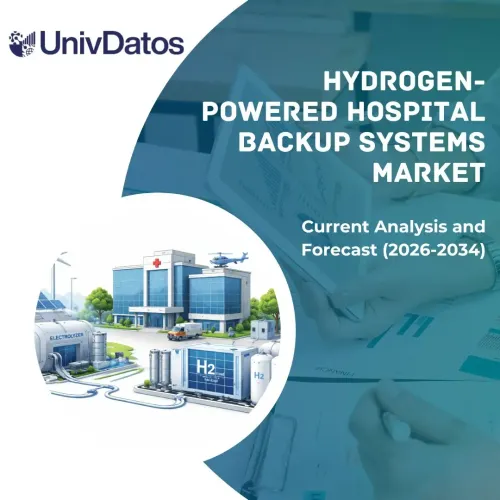
Hydrogen-Powered Hospital Backup Systems Market: Current Analysis and Forecast (2026-2034)
Emphasis on System Type (Portable, Stationary, Hybrid); Power Capacity (Below 100 kW, 100–500 kW, and Above 500 kW); End-User (Public Hospitals, Private Hospitals, Specialty Hospitals, and Emergency Care Facilities); and Region/Country

Wind LiDAR Market: Current Analysis and Forecast (2025-2033)
Emphasis on Product Type (Vertical Profiling Wind LiDAR, Ground-Based Wind LiDAR, Nacelle-Mounted Wind LiDAR, Airborne Wind LiDAR, and Others); Component (Sensor, Navigator, Laser, and Others); Location (Onshore and Offshore); Application (Wind Power, Meteorology & Environment, and Aviation); and Region/Country