Wind LiDAR Market: Current Analysis and Forecast (2025-2033)
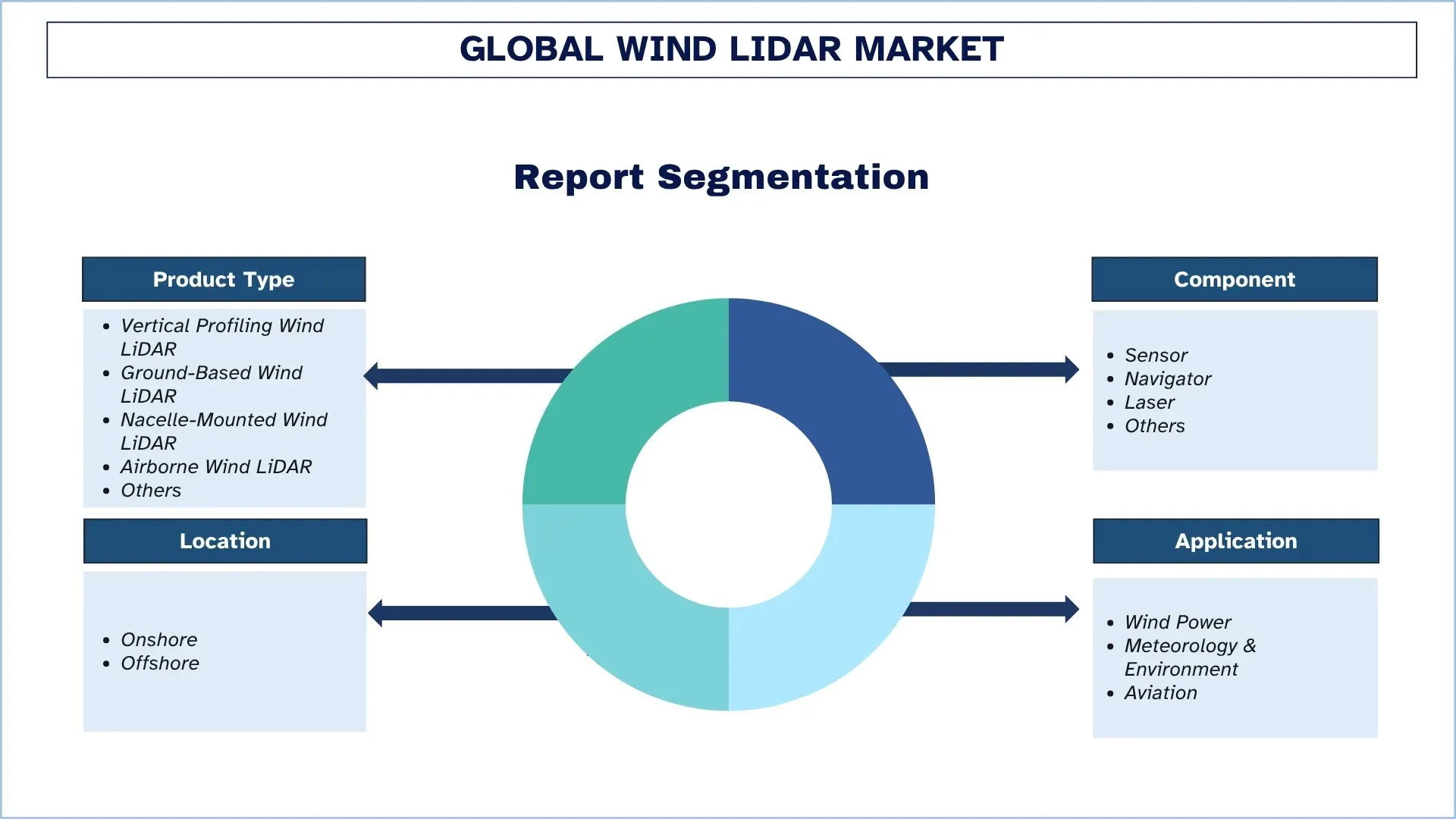
Emphasis on Product Type (Vertical Profiling Wind LiDAR, Ground-Based Wind LiDAR, Nacelle-Mounted Wind LiDAR, Airborne Wind LiDAR, and Others); Component (Sensor, Navigator, Laser, and Others); Location (Onshore and Offshore); Application (Wind Power, Meteorology & Environment, and Aviation); and Region/Country
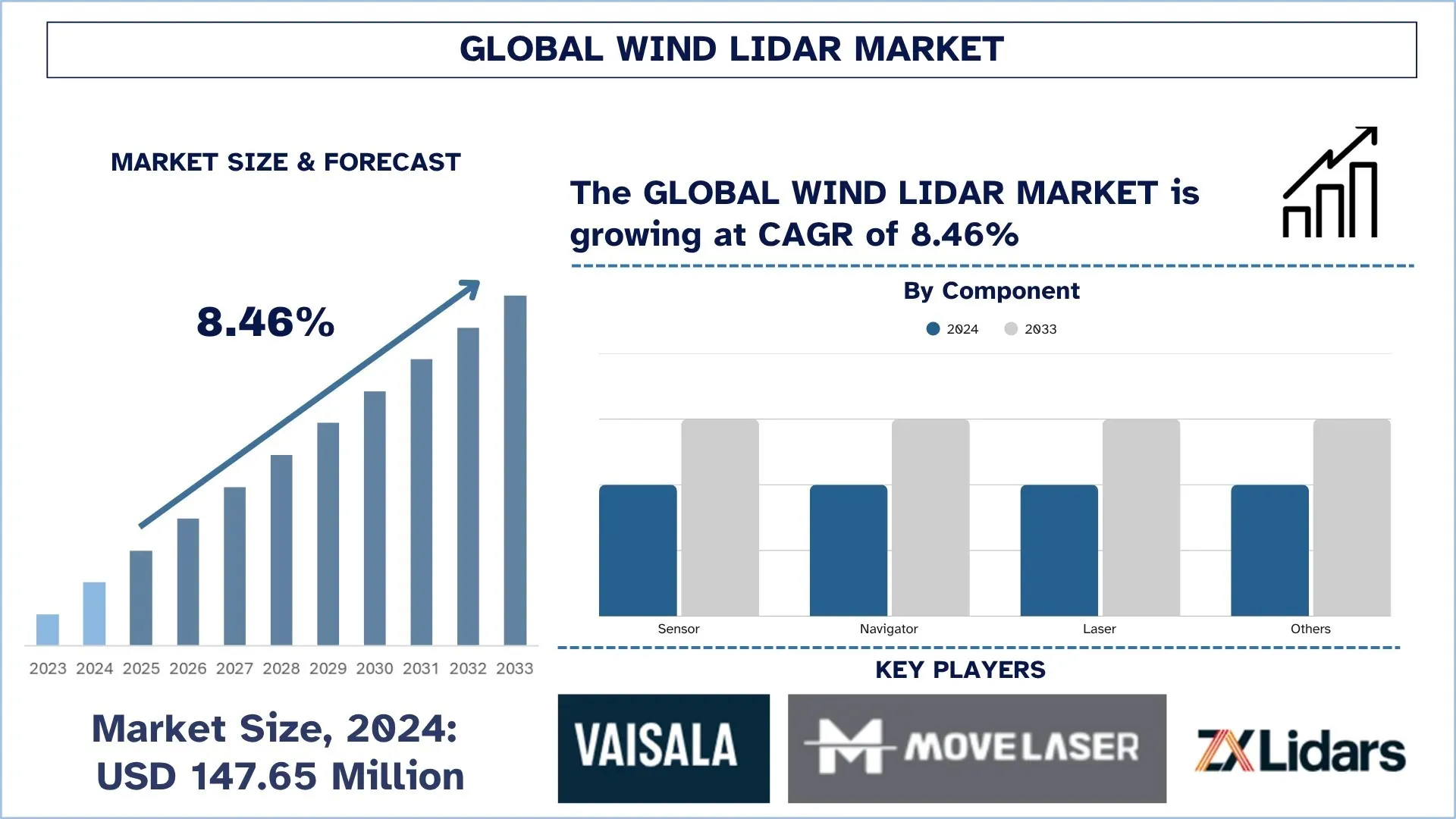
Global Wind LiDAR Market Size & Forecast
The Global Wind LiDAR Market was valued at USD 147.65 million in 2024 and is expected to grow at a CAGR of around 8.46% during the forecast period (2025–2033F), driven by the increasing deployment of onshore and offshore wind energy projects, and the growing need for turbine performance optimization and operational efficiency.
Wind LiDAR Market Analysis
The increase is mainly due to increased demand for precise, remote wind measurement systems in renewable energy and meteorological applications. And with more of the world shifting towards cleaner energy infrastructure and a growing focus on improving the efficiency of wind farms, reducing operational risks, and improving the accuracy of resource evaluation, the market has momentum. Further market impetus is coming from increased investments in onshore and offshore wind developments and the enhanced promotion of the advantages of data-driven site assessment and turbine performance optimization. With developers, operators, and researchers shifting to more advanced monitoring technologies, the use of Wind LiDAR has been more widely accepted because of its ability to deliver accurate wind speed, direction, and turbulence measurements at various heights without relying on traditional met masts. The application is common in wind resource evaluation, power testing, turbine nacelle-mounted optimization, and offshore surveying, as its high accuracy and flexibility enhance project planning and operational efficiency. In addition, sensor design, data analytics, and system integration development are enhancing measurement reliability, portability, and performance in different environmental conditions. The growth in offshore wind installations and in research investments to optimize system capabilities and lower deployment costs further contributes to market growth.
Global Wind LiDAR Market Trends
This section discusses the key market trends that are influencing the various segments of the global wind lidar market, as found by our team of research experts.
Rising Use of Wind LiDAR in Offshore Wind Projects
Wind LiDAR is emerging as a significant offshore wind trend since it assists in assessing critical wind parameters like wind speed, wind direction, and turbulence, without necessarily constructing expensive fixed meteorological masts. This simplifies offshore wind analysis a lot, increasing its speed and cost-efficiency for the project developers. It is also more flexible as the LiDAR systems can be mounted on floating platforms or can be combined with turbines to measure the data in various conditions of the sea and at various developmental stages of the project. The trend is increasing due to the fact that the offshore wind projects are becoming more demanding in terms of the wind resource information, as it needs to be highly accurate to enhance the energy generation forecasts, reduce the uncertainties, and strengthen the investment and financing choices. Developers are finding Wind LiDAR a convenient and efficient tool to use as offshore wind farms are getting larger and are located in deeper water, and this is driving its growing relevance in the global wind LiDAR industry. In September 2024, DNV performed the first stage 3 floating LiDAR verification in Latin America on Fugro in Brazil, demonstrating the high data availability and low uncertainty of offshore wind measurements. This indicates why Wind LiDAR is becoming popular and increasing the demand within the global wind LiDAR market.
Wind LiDAR Industry Segmentation
This section provides an analysis of the key trends in each segment of the global wind lidar market report, along with forecasts at the global, regional, and country levels for 2025-2033.
The Ground-Based Wind LiDAR Segment held the Largest Market Share in the Wind LiDAR Market.
Based on product type, the global Wind LiDAR market is segmented into Vertical Profiling Wind LiDAR, Ground-Based Wind LiDAR, Nacelle-Mounted Wind LiDAR, Airborne Wind LiDAR, and Others. In 2024, the Ground-Based Wind LiDAR segment is expected to account for the largest market share and maintain its leading position throughout the forecast period. The increase is mainly due to increased demand for precise, remote wind measurement systems in renewable energy and meteorological applications. And with more of the world shifting towards cleaner energy infrastructure and a growing focus on improving the efficiency of wind farms, reducing operational risks, and improving the accuracy of resource evaluation, the market has momentum. Further market impetus is coming through increased investments in onshore and offshore wind developments, and enhanced promotion of the advantages of data-driven site assessment and optimization of turbine performance. With developers, operators, and researchers shifting to more advanced monitoring technologies, the use of Wind LiDAR has been more widely accepted because of its capability to deliver accurate wind speed, direction, and turbulence measurements at a variety of heights without considering traditional met masts. In addition, sensor design, data analytics, and system integration development are enhancing measurement reliability, portability, and performance in different environmental conditions. The growth in offshore wind installations and in research investments to optimize system capabilities and lower deployment costs further contributes to market growth.
The Laser Segment held the Largest Market Share in the Wind LiDAR Market.
Based on component, the global Wind LiDAR market is segmented into Sensor, Navigator, Laser, and Others. In 2024, the Laser segment is expected to account for the largest market share and maintain its leading position throughout the forecast period. This is mainly because lasers are the heart of the operating element of Wind LiDAR systems, whereby one can accurately measure and locate the wind speed, direction, and movement over long distances. They are critical in data accuracy, range, and system reliability, and are essential in ground-based, nacelle-mounted, and airborne Wind LiDAR systems. Moreover, ongoing improvements in laser performance, reliability, and energy efficiency have led to their integration in onshore and offshore wind surveillance systems, where the reliability of the measurement in different environmental conditions is paramount.
Asia Pacific Shows the Fastest Growth in the Global Wind LiDAR Market
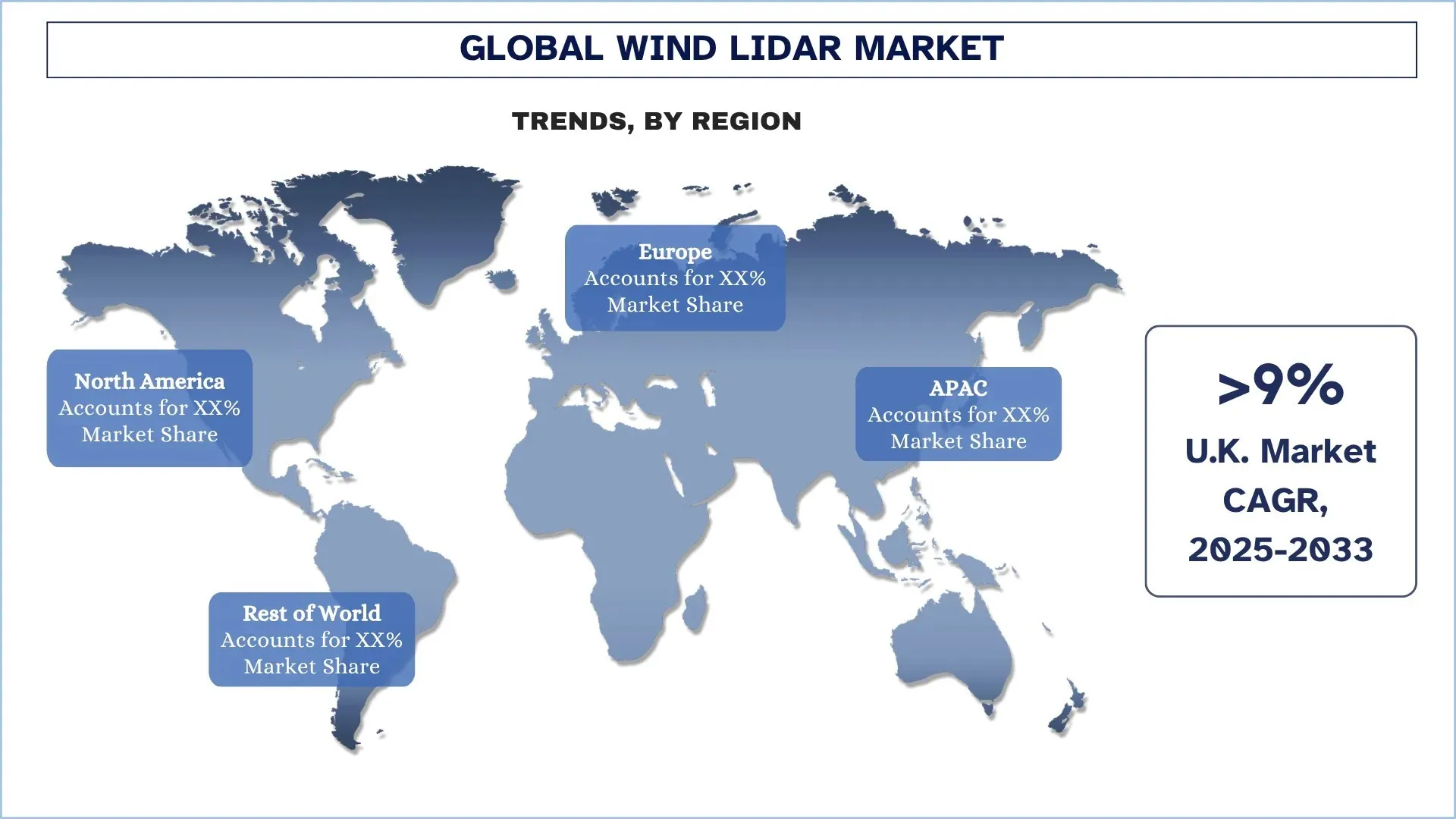
Asia Pacific shows the fastest growth rate in the global wind LiDAR market due to the growing expansion in wind power capacity in the region, especially in China and other prominent emerging countries such as Japan and South Korea. According to the International Energy Agency, China alone will also contribute about half of the global offshore wind by 2030, and Japan and Korea are also now new markets of gigawatts annually. Meanwhile, in November 2024, GWEC announced that Asia-Pacific will account for 61% of global new wind installations between 2024 and 2030, with robust prospects in both onshore and offshore. This explosive growth in project development underscores the need for proper wind resource assessment, turbine optimization, and lower-cost site studies that favor increased acceptance of Wind LiDAR. As a result, the Asia-Pacific region is emerging as the most rapidly expanding regional market for wind LiDAR solutions.
China held a dominant Share of the Asia Pacific Wind LiDAR Market in 2024
The Chinese Wind LiDAR market exhibits high growth, as China is the world's largest wind power developer and continues to develop onshore and offshore installations at an exceptionally high rate. According to the International Energy Agency, China has more than 76 GW of wind capacity in 2023, including 5 GW offshore, and states that the 14th Five-Year Plan of Renewable Energy of the country is anticipated to stimulate additional deployment in the coming years. IEE also indicates that the global offshore wind market will continue to grow rapidly through 2030, with half of the increase attributable to China. With this high project pipeline, there is a strong need to precisely measure the wind, evaluate the resources, examine the performance of turbines, and conduct cheaper offshore surveying processes, in which Wind LiDAR can be extremely helpful. Because of this, China is emerging as one of the most significant and the quickest expanding national markets for wind LiDAR solutions.
Wind LiDAR Industry Competitive Landscape
The global wind lidar market is competitive, with several global and international market players. The key players are adopting different growth strategies to enhance their market presence, such as partnerships, agreements, collaborations, new product launches, geographical expansions, and mergers and acquisitions.
Top Wind LiDAR Companies
Some of the major players in the market are Vaisala, Movelaser, ZX Lidars, John Wood Group Limited, Lockheed Martin Corporation, Qingdao Leice Transient Technology Co., Ltd., Seaglet Co., Ltd., Lumibird Group, Windar Photonics A/S, and NRG Systems.
Recent Developments in the Wind LiDAR Market
In March 2026, Fortis Energy and its partner New Energy Solutions selected ZX Lidars’ ZX 300e Wind Lidar systems to support wind resource measurement campaigns for two wind project sites in Serbia. The ZX 300e units are currently undergoing 200 m mast verification with DNV in Germany before field deployment, where they will provide high‑accuracy, bankable wind data to strengthen resource assessments and reduce uncertainty in early‑stage development.
In October 2025, ZX Measurement Services expanded its rental wind LiDAR fleet with the addition of a new ZX 300e unit, strengthening its ability to offer developers fast and accurate wind data for onshore wind project development.
In 2025, NRG Systems’ advanced measurement solutions played a key role in supporting the wind resource assessment for the 600 MW Monsoon Wind Power Project in Laos, Southeast Asia’s largest wind project, marking a significant milestone in regional renewable energy development. NRG provided its comprehensive resource measurement technologies, deployed in collaboration with Thailand’s authorized dealer, Strong Engineering and Consultant Co., Ltd, to gather critical pre‑construction data.
Global Wind LiDAR Market Report Coverage
Details | |
Base year | 2024 |
Forecast period | 2025-2033 |
Growth momentum | Accelerate at a CAGR of 8.46% |
Market size 2024 | USD 147.65 Million |
Regional analysis | North America, Europe, APAC, Rest of the World |
Major contributing region | Europe is expected to dominate the market during the forecast period. |
Key countries covered | U.S., Canada, Germany, U.K., Spain, Italy, France, China, Japan, and India |
Companies profiled | Vaisala, Movelaser, ZX Lidars, John Wood Group Limited, Lockheed Martin Corporation, Qingdao Leice Transient Technology Co., Ltd., Seaglet Co., Ltd., Lumibird Group, Windar Photonics A/S, and NRG Systems. |
Report Scope | Market Trends, Drivers, and Restraints; Revenue Estimation and Forecast; Segmentation Analysis; Demand and Supply Side Analysis; Competitive Landscape; Company Profiling |
Segments Covered | By Product Type, By Component, By Location, By Application, and By Region/Country |
Reasons to Buy the Wind LiDAR Market Report:
The study includes market sizing and forecasting analysis confirmed by authenticated key industry experts.
The report briefly reviews overall industry performance at a glance.
The report covers an in-depth analysis of prominent industry peers, primarily focusing on key business financials, type portfolios, expansion strategies, and recent developments.
Detailed examination of drivers, restraints, key trends, and opportunities prevailing in the industry.
The study comprehensively covers the market across different segments.
Deep dive regional-level analysis of the industry.
Customization Options:
The global wind lidar market can further be customized as per the requirements or any other market segment. Besides this, UnivDatos understands that you may have your own business needs; hence, feel free to contact us to get a report that completely suits your requirements.
Table of Content
Research Methodology for the Global Wind LiDAR Market Analysis (2023-2033)
We analyzed the historical market, estimated the current market, and forecasted the future market of the global wind lidar market to assess its application in major regions worldwide. We conducted exhaustive secondary research to gather historical market data and estimate the current market size. To validate these insights, we carefully reviewed numerous findings and assumptions. Additionally, we conducted in-depth primary interviews with industry experts across the wind lidar value chain. After validating market figures through these interviews, we used both top-down and bottom-up approaches to forecast the overall market size. We then employed market breakdown and data triangulation methods to estimate and analyze the market size of industry segments and sub-segments.
Market Engineering
We employed the data triangulation technique to finalize the overall market estimation and derive precise statistical numbers for each segment and sub-segment of the global wind lidar market. We split the data into several segments and sub-segments by analyzing various parameters and trends, including product type, component, location, application, and regions within the global wind lidar market.
The Main Objective of the Global Wind LiDAR Market Study
The study identifies current and future trends in the global wind lidar market, providing strategic insights for investors. It highlights regional market attractiveness, enabling industry participants to tap into untapped markets and gain a first-mover advantage. Other quantitative goals of the studies include:
Market Size Analysis: Assess the current market size and forecast the market size of the global wind lidar market and its segments in terms of value (USD).
Wind LiDAR Market Segmentation: Segments in the study include areas of product type, component, location, application, and regions.
Regulatory Framework & Value Chain Analysis: Examine the regulatory framework, value chain, customer behavior, and competitive landscape of the wind lidar industry.
Regional Analysis: Conduct a detailed regional analysis for key areas such as Asia Pacific, Europe, North America, and the Rest of the World.
Company Profiles & Growth Strategies: Company profiles of the wind lidar market and the growth strategies adopted by the market players to sustain the fast-growing market.
Frequently Asked Questions FAQs
Q1: What is the global wind lidar current market size and its growth potential?
The global wind lidar market was valued at USD 147.65 million in 2024 and is expected to grow at a CAGR of 8.46% during the forecast period (2025-2033).
Q2: Which segment has the largest share of the global wind lidar market by Product Type?
The Ground-Based Wind LiDAR segment accounted for a major share, contributing to growth driven by increased demand for precise, remote wind measurement systems in renewable energy and meteorological applications.
Q3: What are the driving factors for the growth of the global wind lidar market?
• Rising Demand for Precise Wind Resource Assessment
• Growing Deployment of Onshore and Offshore Wind Energy Projects
• Increasing Need for Turbine Performance Optimization and Operational Efficiency
Q4: What are the emerging technologies and trends in the global wind lidar market?
• Increasing Adoption of Nacelle-Mounted Wind LiDAR Systems
• Rising Use of Wind LiDAR in Offshore Wind Projects
Q5: What are the key challenges in the global wind lidar market?
• High Initial Cost of Wind LiDAR Systems and Deployment
• Growing Complexity in Wind Data Interpretation and Analytics
Q6: Which region dominates the global wind lidar market?
Europe is currently the leading market for Wind LiDAR systems for several reasons, including its mature wind energy sector, strong offshore wind market, and focus on innovation in renewable energy generation.
Q7: Who are the key players in the global wind lidar market?
Top players in the Wind LiDAR industry include:
• Vaisala
• Movelaser
• ZX Lidars
• John Wood Group Limited
• Lockheed Martin Corporation
• Qingdao Leice Transient Technology Co., Ltd.
• Seaglet Co.,Ltd
• Lumibird group
• Windar Photonics A/S
• NRG Systems
Q8: How does wind LiDAR technology contribute to improving wind farm site selection?
• Wind LiDAR technology helps improve wind farm site selection by providing accurate wind measurements over a wide range of heights, which are critical for assessing wind patterns, optimizing turbine placement, and reducing project risk. This ensures better energy yield predictions, efficient resource assessment, and informed decision-making in project planning.
Q9: What are the environmental benefits of using wind LiDAR technology?
• Wind LiDAR technology supports environmental sustainability by reducing the need for traditional meteorological masts, which require substantial material use and can impact the environment. Additionally, by providing more accurate wind data, it ensures optimal turbine placement, thus maximizing energy efficiency and reducing overall carbon footprints in wind energy projects.
Related Reports
Customers who bought this item also bought




India Decarbonization HVAC Market: Current Analysis and Forecast (2026-2034)
Emphasis on Product Type (Heating Equipment, Ventilation Equipment, Air Conditioning Equipment, Others); Decarbonization Type (Direct, Indirect); Capacity (Up to 5 Tons, 5-20 Tons, Above 20 Tons); End User (Commercial Buildings, Residential Buildings, Industrial Facilities, Healthcare Facilities, Data Centers, Others); and Region/States

Midstream Oil & Gas Filtration Market: Current Analysis and Forecast (2026-2034)
Emphasis on Filter Technology (Coalescer Filters, Cartridge Filters, Mechanical Filters, Bag Filters, Particulate Filters, Activated Carbon Filters, Strainers, and Others); by Application (Gas Processing Plants, Compression Stations, Storage And Distribution, Pipeline Transportation, LNG Processing, and Others); by Filtration Stage (Oil Filtration and Gas Filtration), by End User (Refineries and Petrochemical Industry), and Region/Country

Hydrogen-Powered Hospital Backup Systems Market: Current Analysis and Forecast (2026-2034)
Emphasis on System Type (Portable, Stationary, Hybrid); Power Capacity (Below 100 kW, 100–500 kW, and Above 500 kW); End-User (Public Hospitals, Private Hospitals, Specialty Hospitals, and Emergency Care Facilities); and Region/Country
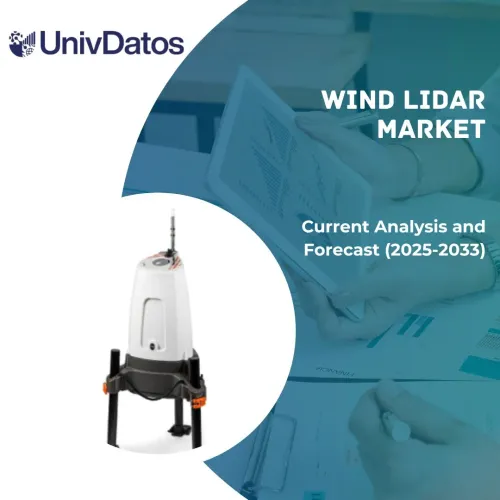
Wind LiDAR Market: Current Analysis and Forecast (2025-2033)
Emphasis on Product Type (Vertical Profiling Wind LiDAR, Ground-Based Wind LiDAR, Nacelle-Mounted Wind LiDAR, Airborne Wind LiDAR, and Others); Component (Sensor, Navigator, Laser, and Others); Location (Onshore and Offshore); Application (Wind Power, Meteorology & Environment, and Aviation); and Region/Country