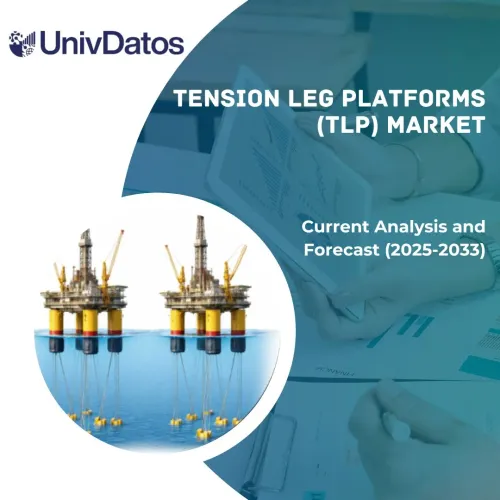
Tension Leg Platforms (TLP) Market: Current Analysis and Forecast (2025-2033)
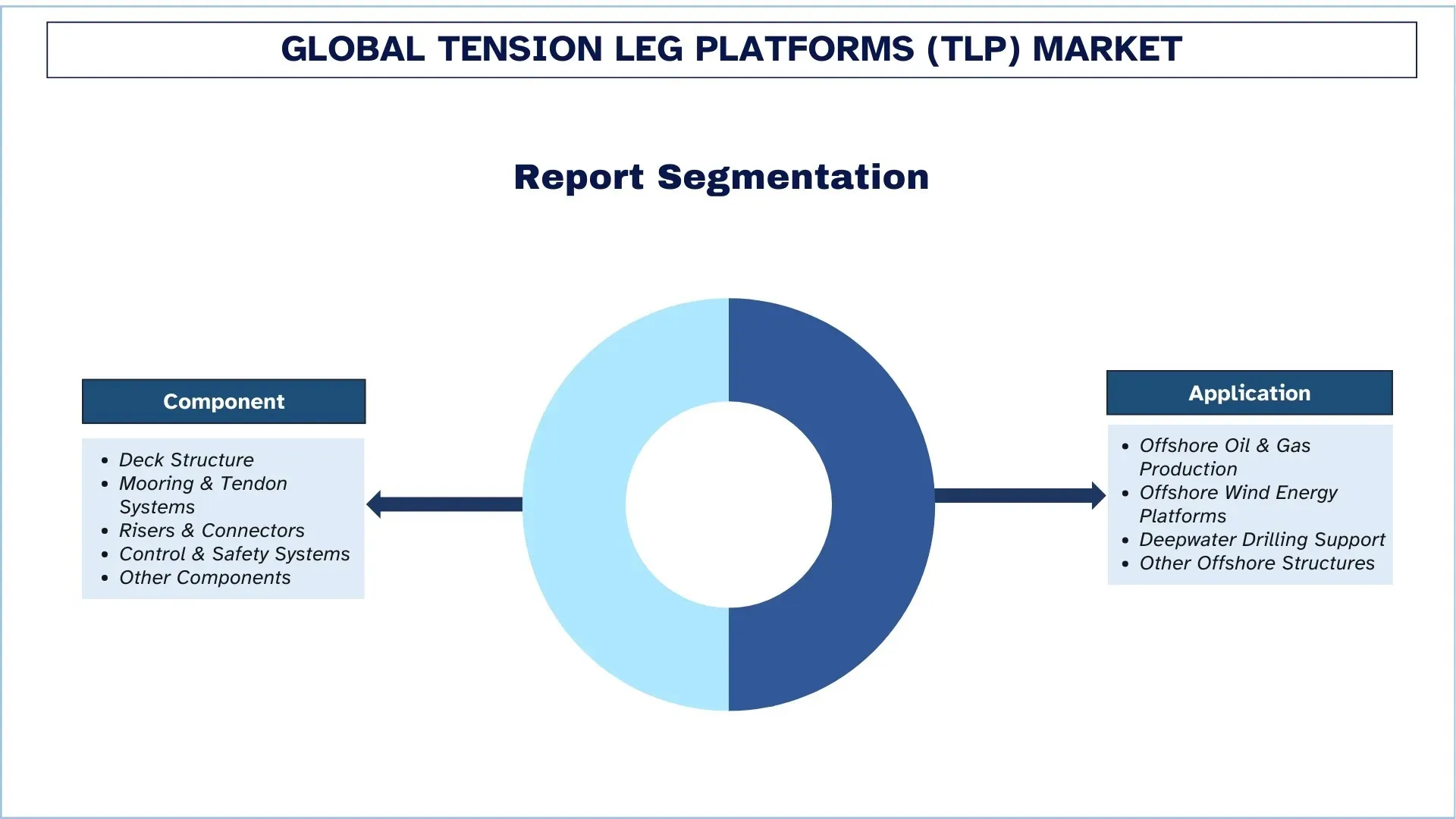
Emphasis on Component (Deck Structure, Mooring & Tendon Systems, Risers & Connectors, Control & Safety Systems, and Other Components); Application (Offshore Oil & Gas Production, Offshore Wind Energy Platforms, Deepwater Drilling Support, and Other Offshore Structures); and Region/Country
Global Tension Leg Platforms (TLP) Market Size & Forecast
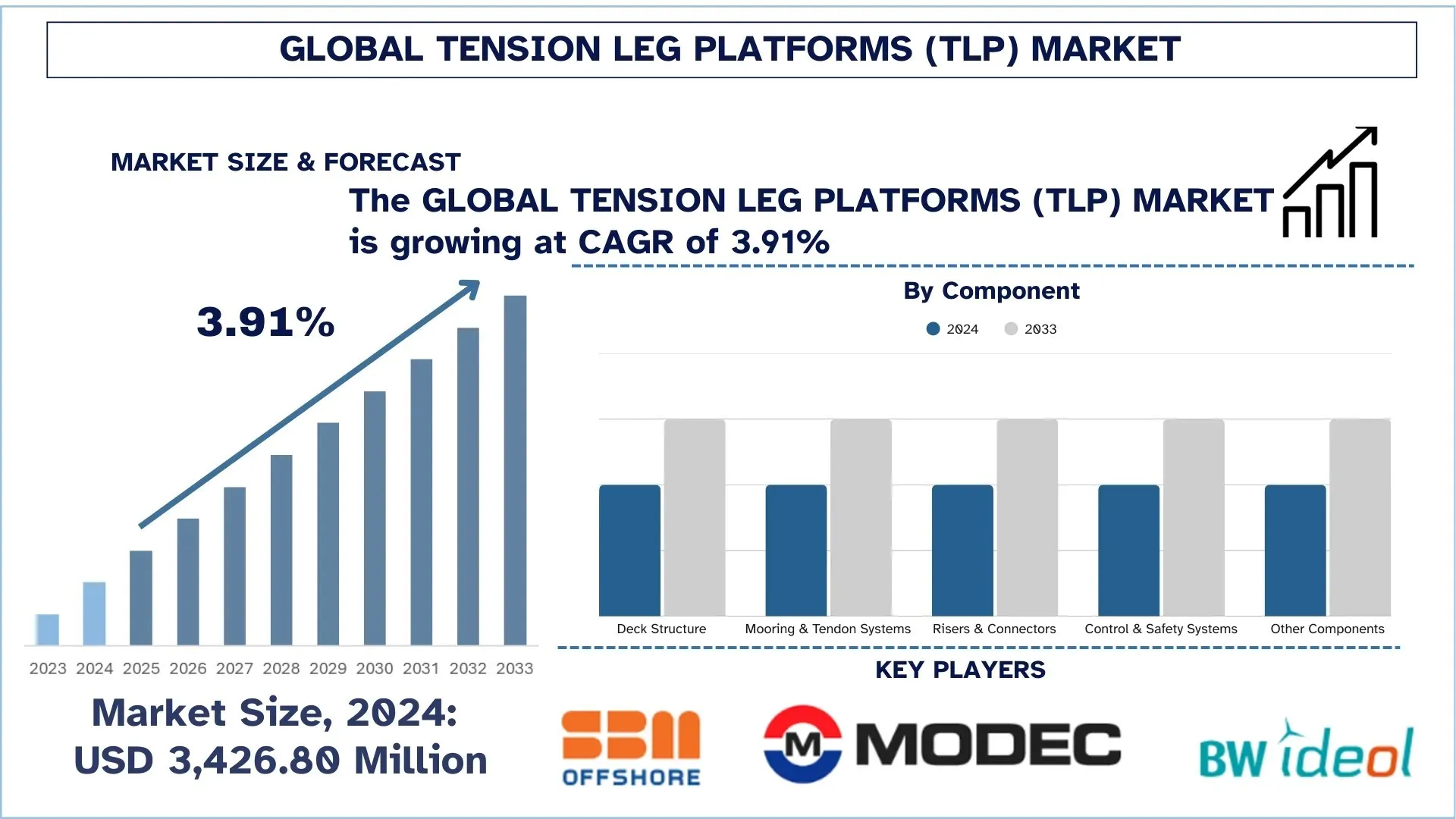
The global tension leg platforms market was valued at USD 3,426.80 million in 2024 and is expected to grow at a steady CAGR of around 3.91% during the forecast period (2025-2033F), driven by rising deepwater and ultra-deepwater project activity and preference for dry-tree and surface wellhead capability.
Tension Leg Platforms (TLP) Market Analysis
The tension leg platforms have emerged as a solution for offshore energy projects where buoyant floating systems with minimal vertical motion are required, particularly in deepwater and ultra-deepwater fields. Their ability to deliver superior stability, drilling and production capabilities, and efficient operation in difficult offshore conditions is making them important for long-life field development. The market is evolving with operators targeting to recover reserves in deeper offshore basins, enhance the economics of production, and implement floating infrastructure with the capacity to strike a balance between technical performance and long-term operational reliability.
Global Tension Leg Platforms (TLP) Market Trends
This section discusses the key market trends that are influencing the various segments of the global tension leg platforms market, as found by our team of research experts.
Greater Focus on Compact and Fit-For-Purpose TLP Designs
The increased emphasis on compact and fit-for-purpose TLP designs is one of the trends in the tension leg platforms market as offshore operators are increasingly focusing on low-cost, field-specific designs rather than oversized one-size-fits-all designs. TLPs have been appreciated due to their low vertical operation and their ability to produce dry-trees; however, newer agendas are requiring designs that are dependent on the size of the reservoir, the water depth, the payload requirement, and the installation limitations. SPE records the development of TLP technology in hull shapes, tendon systems, and riser designs, as this is a shift towards application-focused platform concepts. MODEC is no exception, emphasizing the main TLP benefit of stable floating support via tensioned tethers, where design optimization is a key factor in deepwater operation. Simultaneously, engineers and designers are employing combined engineering and digital analysis software to enhance hydrodynamics, structural consistency, fatigue behavior, and tendon analysis, in order to enable compact TLP concepts to be technically healthier and enhance the project economics. The trend in general helps to expedite deployment, enhance capital efficiency, and realize deepwater development.
Tension Leg Platforms (TLP) Industry Segmentation
This section provides an analysis of the key trends in each segment of the global tension leg platforms market report, along with forecasts at the global, regional, and country levels for 2025-2033.
The Deck Structure Segment Dominates the Global Tension Leg Platforms (TLP) Market
Based on component, the market is categorized into deck structure, mooring & tendon systems, risers & connectors, control & safety systems, and other components. In 2024, deck structure holds the largest share of the global tension leg platforms market. The deck structure is the main backbone that carries across all significant offshore operations. It has vital topside equipment, housing of operation and utility systems, and necessitates heavy capital outlay in design, construction, and installation. Its structural significance, as well as the necessity to work in difficult conditions at sea, makes it the most value-intensive part. This superior functional and economic value has made deck structure the top segment worldwide in the TLP market. Control & safety systems are likely to increase the most because the use of sophisticated monitoring, automation, and safety devices to provide safe offshore activities and regulatory standards is becoming widespread.
The Offshore Oil & Gas Production Segment Dominates the Global Tension Leg Platforms (TLP) Market.
Based on application, the market is categorized into offshore oil & gas production, offshore wind energy platforms, deepwater drilling support, and other offshore structures. In 2024, offshore oil & gas production holds the largest share of the global tension leg platforms (TLP) market. This is because of the increased use of TLPs in the deepwater and ultra-deepwater hydrocarbon developments, where high vertical stability, reduced motion rejection, and the ability to provide long-term operations of production make it highly appropriate. Moreover, the persistence in the development of offshore fields and the necessity of having stable floating production infrastructure add to the domination of this part. Meanwhile, the offshore wind energy platforms segment will be the fastest-growing in the forecast period, as floating offshore wind projects in deeper waters are growing rapidly and fixed-bottom foundations are less practical. The increased interest in renewable power generation in the world, the favorable policy framework, and the increased commitment of investment to floating wind technologies are further increasing the adoption of the TLP-based platform concepts in the offshore applications of wind power.
Asia-Pacific Shows the Fastest-Growing Region in the Global Tension Leg Platforms (TLP) Market
Asia-Pacific is becoming the fastest-growing market of the tension leg platforms as the offshore energy companies and governments invest more in deepwater and ultra-deepwater oil and gas developments in various countries. The increased offshore exploration and emerging interest in exploiting the complex deep water reserves, as well as the need to use stable floating production systems capable of functioning in the harsh marine conditions, are boosting the momentum of the region. Besides significant offshore operations in Southeast Asia and Australia, there are other rising markets that are increasing the regional demand with new field development schemes, upstream investment, and attempts to enhance their domestic offshore engineering expertise. Also, growing cooperation between regional operators, engineering contractors, and technology suppliers is helping to establish expanded ecosystem growth and drive long-term demand for advanced floating production infrastructure, tendon systems, underwater integration, and platform lifecycle services on the Asia-Pacific offshore energy marketplace.
China held a Dominant share of the Asia-Pacific Tension Leg Platforms (TLP) Market in 2024
China led the market in the Asia-Pacific tension leg platforms market because of its high level of offshore oil and gas development activity, high levels of state-supported energy investment, and growing deepwater project pipeline in the South China Sea. CNOOC has been of benefit to the country, as it still runs major offshore production fields in the eastern and western South China Sea, which have a normal water depth of up to 1,500 meters, necessitating the need to adopt more sophisticated floating production technologies that are just below the depth. Another factor that supports the position of China is its wide offshore engineering and fabrication sector, which enhances the local performance of intricate offshore projects. Besides this, sustained offshore discoveries and development efforts to enhance energy security are contributing to long-term investment in deepwater infrastructure that will keep China ahead of the pack in the tension leg platform and associated floating production system market in the region.
Tension Leg Platforms (TLP) Industry Competitive Landscape
The global tension leg platforms market is competitive, with several global and international market players. The key players are adopting different growth strategies to enhance their market presence, such as partnerships, agreements, collaborations, geographical expansions, and mergers and acquisitions.
Top Tension Leg Platforms (TLP) Market Companies
Some of the major players in the market are SBM Offshore, MODEC, Inc., BW Ideol, TechnipFMC plc, Heerema International Group, Aker Solutions, McDermott, Keppel Ltd, Wärtsilä, and VELESTO ENERGY BERHAD.
Recent Developments in the Tension Leg Platforms (TLP) Market
In July 2025, MODEC was granted Approval in Principle on its i-TLP2 design of offshore wind turbines by ABS. MODEC describes that the idea will reduce the motions of floaters and seabed footprint and allow faster construction and turbine integration, with further innovation in the next-generation TLP design.
In February 2025, Shell declared its intentions to expand its shares in the Ursa Tension-Leg Platform and the associated pipeline network. This was one of the most obvious operator-level investment actions directly related to TLP assets, and the company explicitly named Ursa as TLP.
In May 2024, JERA, MODEC, Toyo Construction, and Furukawa Electric were given a Cost-cutting TLP floating offshore wind turbine project Approval in Principle (AiP) by ClassNK. The project itself had been placed as one of the projects of the Green Innovation Fund project in Japan, and shows how the concepts of TLP are being extended to floating offshore wind projects, as well as oil and gas.
Global Tension Leg Platforms (TLP) Market Report Coverage
Report Attribute | Details |
Base year | 2024 |
Forecast period | 2025-2033 |
Growth momentum | Accelerate at a CAGR of 3.91% |
Market size 2024 | USD 3,426.80 million |
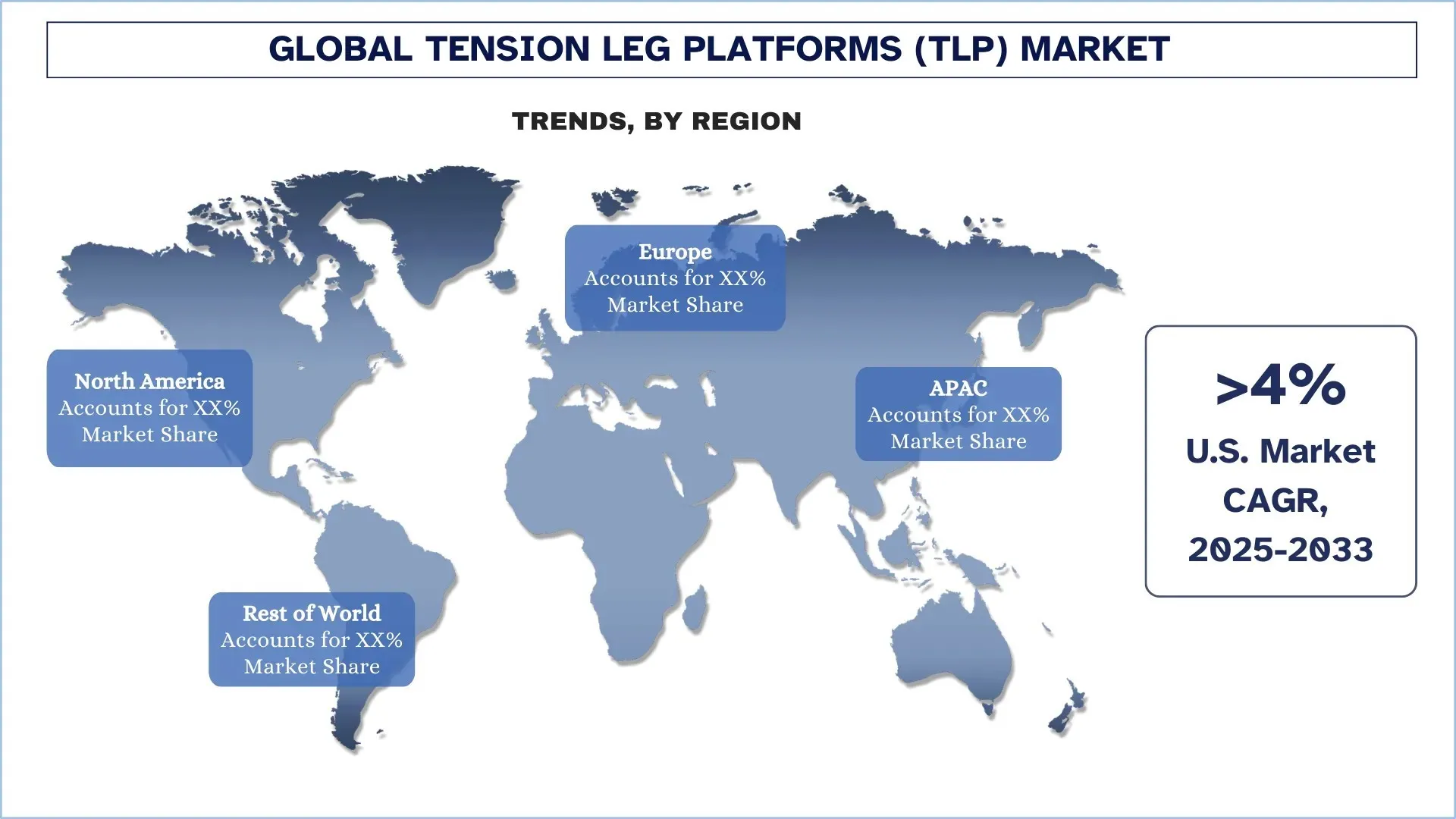
Regional analysis | North America, Europe, APAC, Rest of the World |
Major contributing region | The North America region is expected to dominate the market during the forecast period. |
Key countries covered | U.S., Canada, Germany, U.K., Spain, Italy, France, China, Japan, and India. |
Companies profiled | SBM Offshore, MODEC, Inc., BW Ideol, TechnipFMC plc, Heerema International Group, Aker Solutions, McDermott, Keppel Ltd, Wärtsilä, and VELESTO ENERGY BERHAD |
Report Scope | Market Trends, Drivers, and Restraints; Revenue Estimation and Forecast; Segmentation Analysis; Demand and Supply Side Analysis; Competitive Landscape; Company Profiling |
Segments Covered | By Component, By Application, and By Region/Country |
Reasons to Buy the Tension Leg Platforms (TLP) Market Report:
The study includes market sizing and forecasting analysis confirmed by authenticated key industry experts.
The report briefly reviews overall industry performance at a glance.
The report covers an in-depth analysis of prominent industry peers, primarily focusing on key business financials, type portfolios, expansion strategies, and recent developments.
Detailed examination of drivers, restraints, key trends, and opportunities prevailing in the industry.
The study comprehensively covers the market across different segments.
Deep dive regional-level analysis of the industry.
Customization Options:
The global tension leg platforms market can further be customized as per the requirements or any other market segment. Besides this, UnivDatos understands that you may have your own business needs; hence, feel free to contact us to get a report that completely suits your requirements.
Table of Content
Research Methodology for the Global Tension Leg Platforms (TLP) Market Analysis (2023-2033)
We analyzed the historical market, estimated the current market, and forecasted the future market of the global tension leg platforms market to assess its application in major regions worldwide. We conducted exhaustive secondary research to gather historical market data and estimate the current market size. To validate these insights, we carefully reviewed numerous findings and assumptions. Additionally, we conducted in-depth primary interviews with industry experts across the tension leg platforms value chain. After validating market figures through these interviews, we used both top-down and bottom-up approaches to forecast the overall market size. We then employed market breakdown and data triangulation methods to estimate and analyze the market size of industry segments and sub-segments.
Market Engineering
We employed the data triangulation technique to finalize the overall market estimation and derive precise statistical numbers for each segment and sub-segment of the global tension leg platforms market. We split the data into several segments and sub-segments by analyzing various parameters and trends, including component, application, and regions within the global Tension leg platforms market.
The Main Objective of the Global Tension Leg Platforms (TLP) Market Study
The study identifies current and future trends in the global tension-leg platform market, providing strategic insights for investors. It highlights regional market attractiveness, enabling industry participants to tap into untapped markets and gain a first-mover advantage. Other quantitative goals of the studies include:
Market Size Analysis: Assess the current and forecast market size of the global tension leg platforms market and its segments in terms of value (USD).
Tension Leg Platforms (TLP) Market Segmentation: Segments in the study include areas of component, application, and region.
Regulatory Framework & Value Chain Analysis: Examine the regulatory framework, value chain, customer behavior, and competitive landscape of the tension leg platforms industry.
Regional Analysis: Conduct a detailed regional analysis for key areas such as Asia Pacific, Europe, North America, and the Rest of the World.
Company Profiles & Growth Strategies: Company profiles of the tension leg platforms market and the growth strategies adopted by the market players to sustain the fast-growing market.
Frequently Asked Questions FAQs
Q1: What is the current size and growth potential of the global tension leg platform market?
As of 2024, the global tension leg platforms market was valued at USD 3,426.80 million and is expected to grow at a CAGR of 3.91% from 2025 to 2033, driven by rising deepwater and ultra-deepwater project activity and preference for dry-tree and surface wellhead capability.
Q2: Which segment has the largest share of the global tension leg platforms market by component?
The deck structure dominated the global tension leg platforms market due to its critical role in supporting topside processing, drilling, utility, and accommodation systems, along with its high design, fabrication, and installation cost.
Q3: What are the driving factors for the growth of the global tension leg platforms market?
Top growth drivers of the tension leg platforms market include:
• Rising Deepwater and Ultra-Deepwater Project Activity
• Preference for Dry-Tree and Surface Wellhead Capability
• Need for High Stability with Efficient Long-Term Production
Q4: What are the emerging technologies and trends in the global tension leg platforms market?
Emerging trends in the tension leg platforms market include:
• Greater Focus on Compact and Fit-For-Purpose TLP Designs
• Expansion of TLP Concepts into Floating Offshore Wind
Q5: What are the key challenges in the global tension leg platforms market?
Key challenges in the global tension leg platforms market are:
• High Capital Cost and Engineering Complexity
• Exposure to Cautious Upstream Spending
Q6: Which region dominates the global tension leg platforms market?
North America dominated the global tension leg platforms market, driven by extensive deepwater oil and gas developments, established offshore engineering capabilities, and a mature ecosystem of operators, contractors, and fabrication infrastructure supporting Gulf of Mexico projects.
Q7: Who are the key competitors in the global tension leg platforms market?
Top players in the tension leg platforms industry include:
• SBM Offshore
• MODEC, Inc.
• BW Ideol
• TechnipFMC plc
• Heerema International Group
• Aker Solutions
• McDermott
• Keppel Ltd
• Wärtsilä
• VELESTO ENERGY BERHAD
Q8: How are offshore operators selecting contractors and suppliers for tension leg platforms?
Operators prioritize engineering expertise, deepwater project experience, structural reliability, and proven installation capabilities, while also evaluating fabrication capacity, project timelines, cost efficiency, and long-term operational support.
Q9: How are deepwater developments influencing demand for tension leg platforms?
Increasing exploration and production in deepwater and ultra-deepwater fields are driving demand for stable floating platforms that support dry-tree wells, enhance drilling efficiency, and ensure reliable long-term offshore production.
Related Reports
Customers who bought this item also bought
India Decarbonization HVAC Market: Current Analysis and Forecast (2026-2034)
Emphasis on Product Type (Heating Equipment, Ventilation Equipment, Air Conditioning Equipment, Others); Decarbonization Type (Direct, Indirect); Capacity (Up to 5 Tons, 5-20 Tons, Above 20 Tons); End User (Commercial Buildings, Residential Buildings, Industrial Facilities, Healthcare Facilities, Data Centers, Others); and Region/States
Midstream Oil & Gas Filtration Market: Current Analysis and Forecast (2026-2034)
Emphasis on Filter Technology (Coalescer Filters, Cartridge Filters, Mechanical Filters, Bag Filters, Particulate Filters, Activated Carbon Filters, Strainers, and Others); by Application (Gas Processing Plants, Compression Stations, Storage And Distribution, Pipeline Transportation, LNG Processing, and Others); by Filtration Stage (Oil Filtration and Gas Filtration), by End User (Refineries and Petrochemical Industry), and Region/Country
Hydrogen-Powered Hospital Backup Systems Market: Current Analysis and Forecast (2026-2034)
Emphasis on System Type (Portable, Stationary, Hybrid); Power Capacity (Below 100 kW, 100–500 kW, and Above 500 kW); End-User (Public Hospitals, Private Hospitals, Specialty Hospitals, and Emergency Care Facilities); and Region/Country
Wind LiDAR Market: Current Analysis and Forecast (2025-2033)
Emphasis on Product Type (Vertical Profiling Wind LiDAR, Ground-Based Wind LiDAR, Nacelle-Mounted Wind LiDAR, Airborne Wind LiDAR, and Others); Component (Sensor, Navigator, Laser, and Others); Location (Onshore and Offshore); Application (Wind Power, Meteorology & Environment, and Aviation); and Region/Country