Whirlpool Turbine Market: Current Analysis and Forecast (2025-2033)
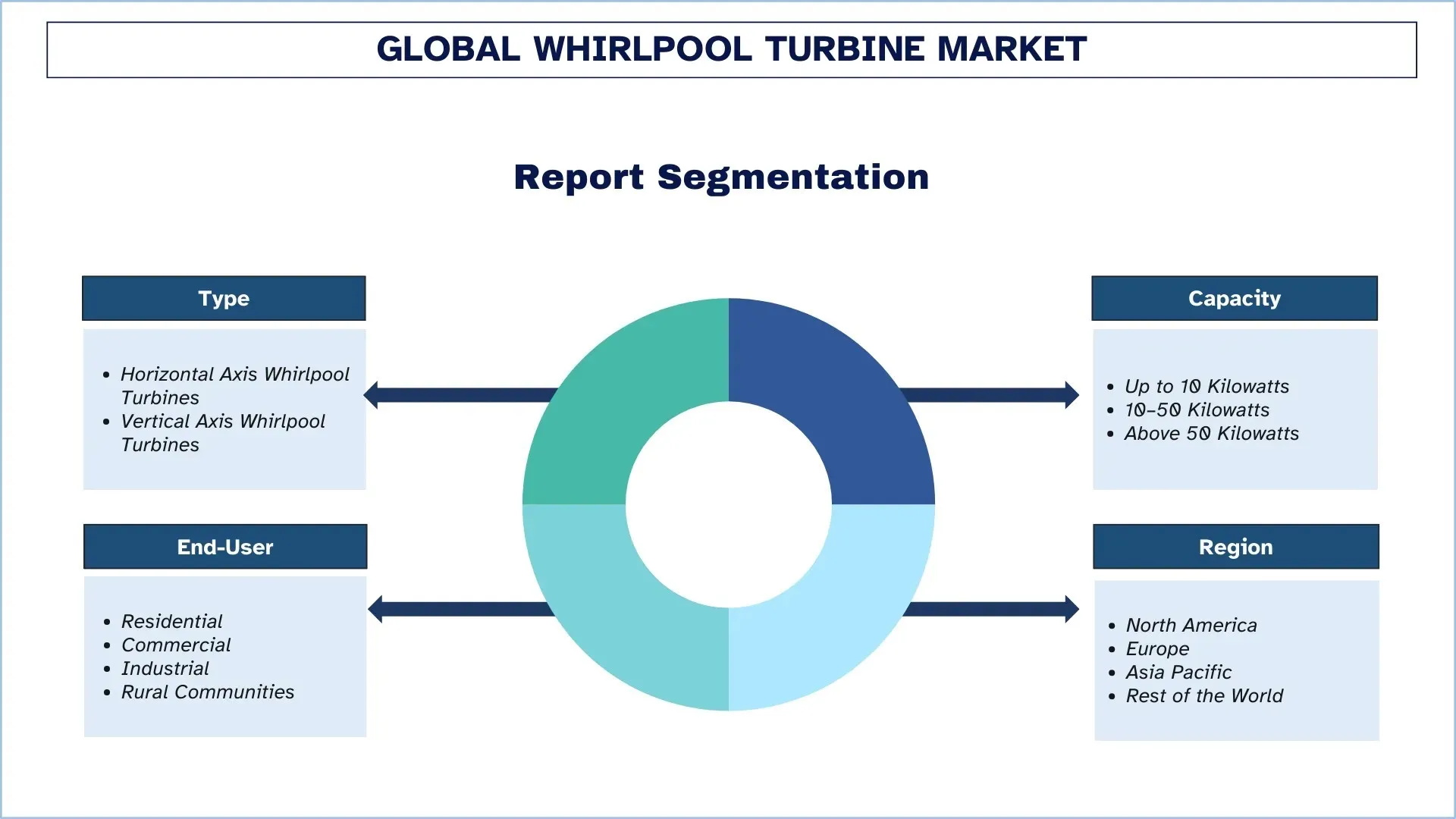
Emphasis on Type (Horizontal Axis Whirlpool Turbines and Vertical Axis Whirlpool Turbines); Capacity (Up to 10 Kilowatts, 10–50 Kilowatts, and Above 50 Kilowatts); End-User (Residential, Commercial, Industrial, and Rural Communities); and Region/Country
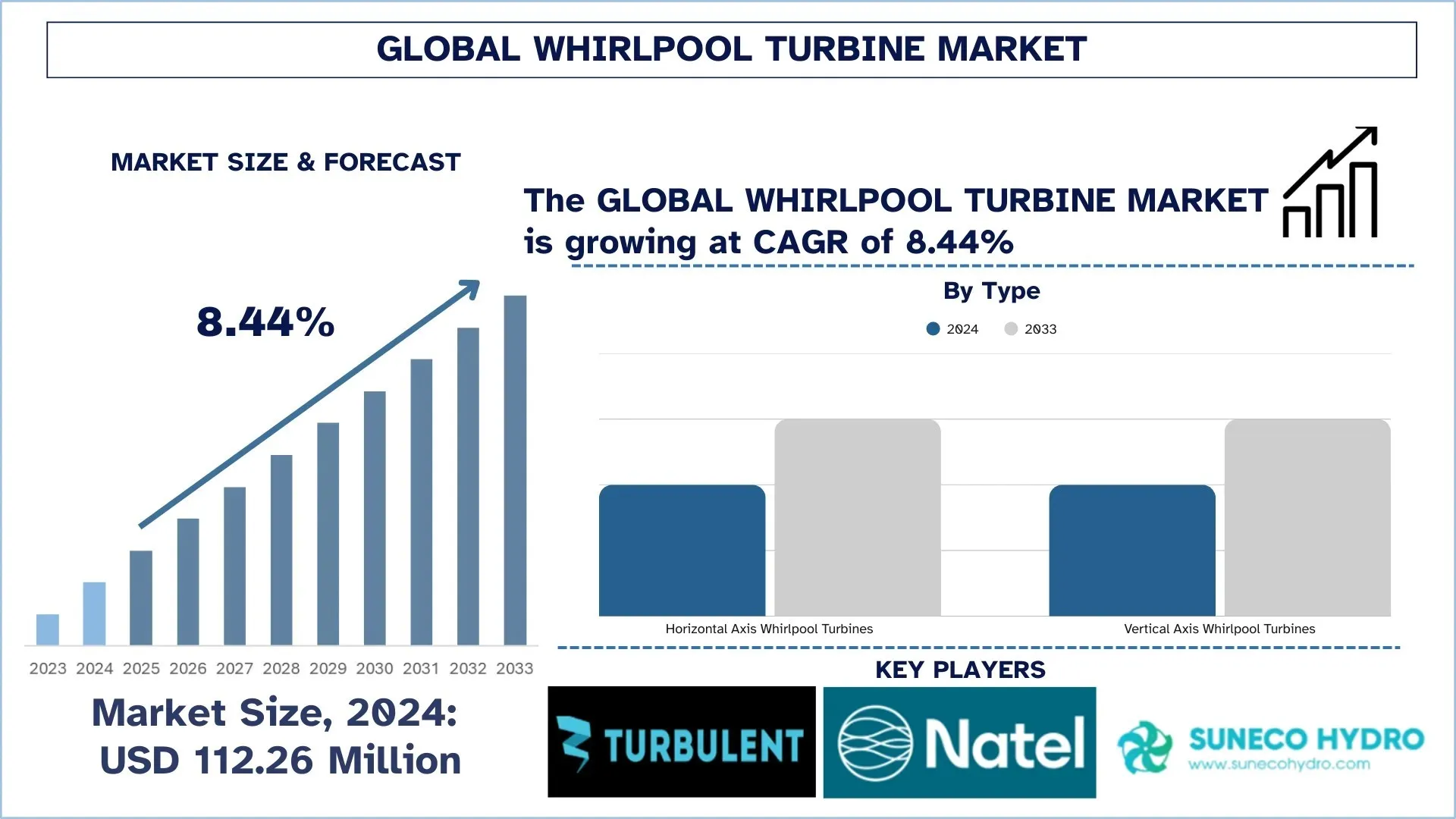
Global Whirlpool Turbine Market Size & Forecast
The Global Whirlpool Turbine Market was valued at USD 112.26 million in 2024 and is expected to grow at a CAGR of around 8.44% during the forecast period (2025–2033F), driven by the growing emphasis on renewable hydropower solutions, the increasing investments in off-grid and micro-hydro projects, and the supportive government policies promoting clean energy are driving the global whirlpool turbine market growth.
Whirlpool Turbine Market Analysis
The energy systems in the world are becoming more sophisticated, and modern practice demands efficient and reliable hydropower generation with a broad set of flowing conditions. The introduction of new opportunities has been experienced in the global whirlpool turbine market due to the growth of sustainability demands and the need for decentralized renewable energy, where small-scale and low-head hydropower products are beginning to gain momentum. Since whirlpool turbines are considered a significant factor in the utilization of rivers, canals, and industrial effluents for power generation, they are perceived by utilities, project developers, and other environmental planners as the main driver of increased access to clean energy, reduced ecological footprint, and improved grid stability. This has been augmented by the development of robust, fish-friendly turbine models, which enhance ecosystem compatibility, reduce civil construction requirements, and increase the feasibility of low-flow sites. Expanding the market also requires the ability to incorporate advanced composite materials, predictive maintenance, and IoT-capable sensors to control turbine functionality more effectively, optimize energy production, and provide more reliable off-grid power. At the same time, the adoption of hybrid renewable micro-grids over the last years has opened up the need to have turbines that can work in harmony with the solar arrays and battery cells.
Global Whirlpool Turbine Market Trends
This section discusses the key market trends that are influencing the various segments of the global whirlpool turbine market, as found by our team of research experts.
Shift Toward Modular and Prefabricated Turbine Units
The trend of moving to modular, prefabricated turbine units is emerging as the key characteristic of the world market in whirlpool turbines. Manufacturers are also working towards the design of systems that can be manufactured in standardized modules at the factory and assembled quickly on-site. This methodology greatly shortens the construction period, complexity of the engineering, and risks of the whole project, particularly with small developers and community energy projects that have less technical capacity. Prefabricated basins, turbine housings, and integrated control units can contribute to the achievement of consistent quality and performance at various sites, as well as facilitate replication of successful project designs. Modular solutions are made more flexible than one-off, custom-built solutions by being able to be scaled up or down by adding and removing units to suit local conditions of flow and power demand. Consequently, lower entry barriers, faster implementation, and the accessibility and marketability of small hydropower globally are facilitated by modular and prefabricated whirlpool turbines.
Whirlpool Turbine Industry Segmentation
This section provides an analysis of the key trends in each segment of the global whirlpool turbine market report, along with forecasts at the global, regional, and country levels for 2025-2033.
The Horizontal Axis Whirlpool Turbines Dominate the Whirlpool Turbine Market
Based on type, the global whirlpool turbine market is segmented into Horizontal Axis Whirlpool Turbines and Vertical Axis Whirlpool Turbines. In 2024, the Horizontal Axis Whirlpool Turbines segment is anticipated to hold the largest market share and continue its dominance throughout the forecast period. This is mainly because they are widely used in smaller run-of-river and micro-hydropower stations, where the developed design has proven efficient under constant water flow, is mechanically simple, and integrates easily with other conventional generators. These high-tech horizontal-axis turbines offer secure energy production, reduced maintenance, and a high payback, complement grid-stabilization and community-based power developments, and represent the core value propositions for utility and industrial developers in this category. The Vertical Axis Whirlpool Turbines segment will grow at the fastest rate, however, because it is more adaptable, as it can be used in low-head, variable-flow, and tidal applications. These small, omnidirectional turbines are gaining significant focus as a choice of urban water channels, agricultural canals, and retrofit into existing infrastructure, due to their ability to maximize energy capture irrespective of varied conditions, minimize ecological disturbance, and cost less overall to install.
The 10–50 kilowatts Segment held the Largest Market Share in the Whirlpool Turbine Market.
By capacity, the global whirlpool turbine market is segmented into Up to 10 Kilowatts, 10–50 Kilowatts, and Above 50 Kilowatts. In 2024, the 10–50 kilowatts segment is anticipated to hold the largest market share and maintain its leading position throughout the forecast period. This is mainly due to its high level of appropriateness to community-level micro-hydropower, decentralized industrial energy, and small utility projects, which are the main development focus of low-head hydropower here on earth. The mid-capacity turbines offer an optimal power-to-cost ratio and a relatively simple installation, making them the solution of choice for powering remote villages, agricultural processing units, and small commercial facilities seeking energy independence. The segment of less than 10 Kilowatts, though, is expected to grow at the highest rate as the demand for ultra-decentralized and off-grid power to small homes, remote telecom towers, and small-scale irrigation has increased. They are very accessible due to their small size, low capital expenditure, and low civil work. At the same time, the above 50 kilowatt segment is still crucial in the context of larger industrial complexes, district energy systems, and project-based on feed-in tariff, where a higher energy yield is worth the extra initial investment required and infrastructure.
Asia Pacific Dominated the Global Whirlpool Turbine Market
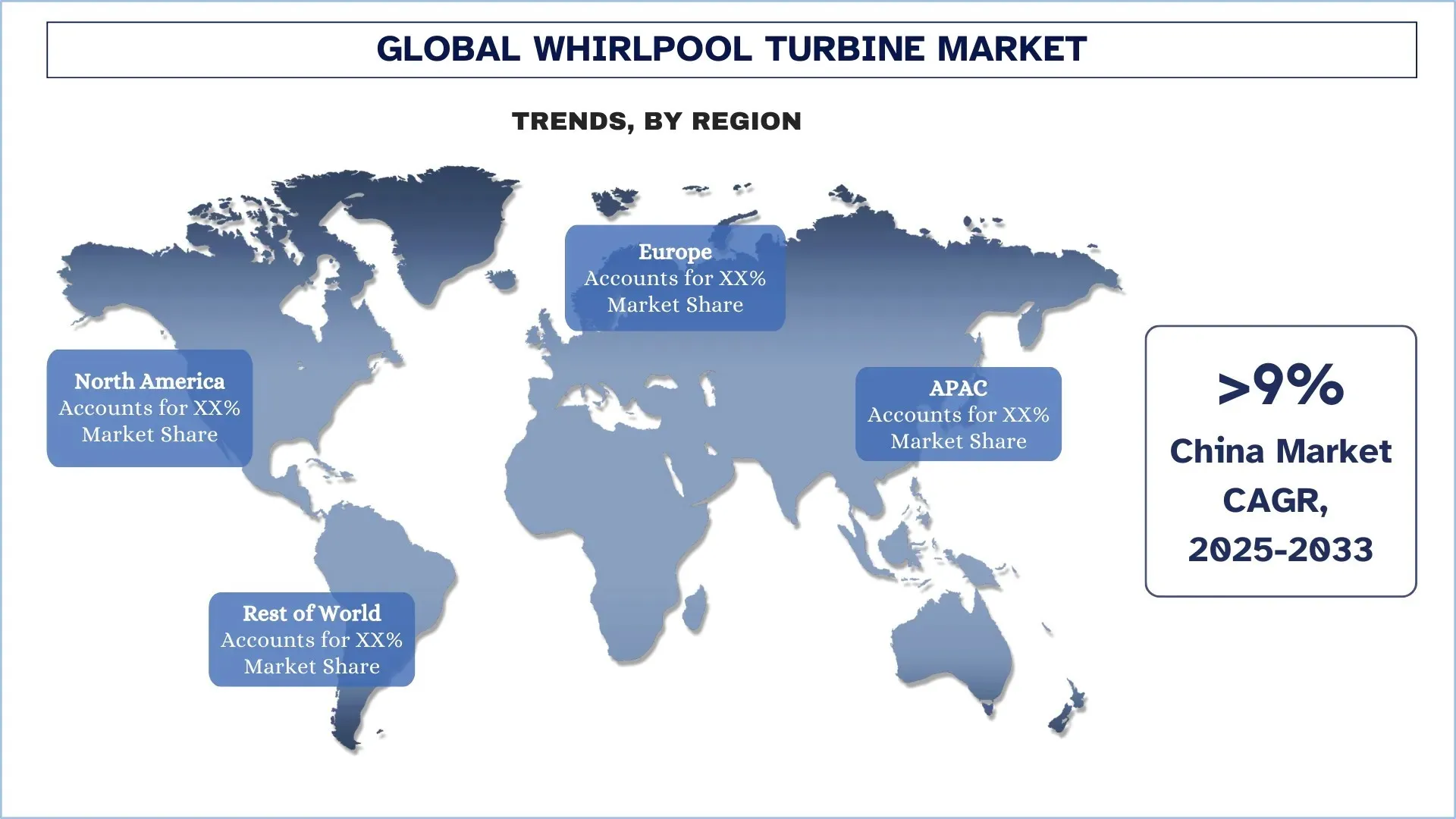
The Asia-Pacific market is the global leader in the whirlpool turbine market, driven by rising energy demand, high river density, and strong government support for small-scale hydropower, particularly in China, India, and Southeast Asia. The region enjoys the huge investments made in rural electrification and decentralized renewable energy to serve remote communities and assist the growth of industries. The abundance of agricultural canals, industrial effluents, and untapped low-head hydropower sites has created a substantial market for turbine installation. In addition, the local production capacity and affordable supply chains of turbine components also promote the pace of adoption. The main growth drivers are supportive policies and subsidies to reduce diesel dependence and meet renewable energy targets. Although Europe continues to be a significant market with sophisticated and high-efficiency turbine technologies, as well as North America with consistent increases in community and off-grid projects, the magnitude of growth, emergent and dire access to energy, and sustained governmental effort firmly place the Asia-Pacific as the biggest and quickest expanding market of whirlpool turbines in the world.
China held a dominant Share of the Asia Pacific Whirlpool Turbine Market in 2024
China's leadership in the whirlpool turbine is attributed to its large hydro resource base and its rapid adoption of new technologies in renewable energy. The country also has many hydropower developers, EPC providers, and turbine manufacturers, thereby increasing demand for new installations and replacement whirlpool turbine units. This is also reinforced by the introduction of rural electrification schemes with government financial assistance and by the increased implementation of off-grid and micro-hydro systems based on low-head vortex design. The large rates of Chinese companies' investment in research and development and cost-effective manufacturing ecosystem have enabled the country to become a significant force in the whirlpool turbine market worldwide.
Whirlpool Turbine Industry Competitive Landscape
The global whirlpool turbine market is competitive, with several global and international market players. The key players are adopting different growth strategies to enhance their market presence, such as partnerships, agreements, collaborations, new product launches, geographical expansions, and mergers and acquisitions.
Top Whirlpool Turbine Companies
Some of the major players in the market are TURBULENT, Natel Energy, Suneco Hydro, Gaia Turbine SA, Idénergie, EcoInnovation Ltd., Voith GmbH & Co. KGaA, ANDRITZ, Kourispower Pty. Ltd., and Dobriyal Brothers.
Recent Developments in the Whirlpool Turbine Market
In March 2024, Turbulent Hydro introduced an improved micro-hydropower vortex turbine to operate on extremely low-head locations (down to 1 meter). The new system enhances energy capture and minimizes civil works, enabling rapid deployment to rural electrification and river-based renewable projects.
In February 2024, Blue Freedom presented its new generation off-grid hydropower system in a portable version to supply off-grid users as well as emergencies. The product unites with better turbine blades, better battery storage, and performance monitoring based on IoT, hence being applicable in outdoor, military, and humanitarian applications.
In January 2024, Natel Energy also made progress in its sustainable hydro technology by developing pilot projects of its fish-safe Restoration Hydro Turbine (RHT) in North America and Europe. The company's designs aim to reduce ecological impact while maintaining generation efficiency, thereby contributing to the overall transformation of hydropower solutions toward environmentally friendly solutions globally.
Global Whirlpool Turbine Market Report Coverage
Report Attribute | Details |
Base year | 2024 |
Forecast period | 2025-2033 |
Growth momentum | Accelerate at a CAGR of 8.44% |
Market size 2024 | USD 112.26 Million |
Regional analysis | North America, Europe, APAC, Rest of the World |
Major contributing region | Asia Pacific is expected to dominate the market during the forecast period |
Key countries covered | U.S., Canada, Germany, U.K., Spain, Italy, France, China, Japan, and India |
Companies profiled | TURBULENT, Natel Energy, Suneco Hydro, Gaia Turbine SA, Idénergie, EcoInnovation Ltd., Voith GmbH & Co. KGaA, ANDRITZ, Kourispower Pty. Ltd., and Dobriyal Brothers |
Report Scope | Market Trends, Drivers, and Restraints; Revenue Estimation and Forecast; Segmentation Analysis; Demand and Supply Side Analysis; Competitive Landscape; Company Profiling |
Segments Covered | By Type, By Capacity, By End-User, and By Region/Country |
Reasons to Buy the Whirlpool Turbine Market Report:
The study includes market sizing and forecasting analysis confirmed by authenticated key industry experts.
The report briefly reviews overall industry performance at a glance.
The report covers an in-depth analysis of prominent industry peers, primarily focusing on key business financials, type portfolios, expansion strategies, and recent developments.
Detailed examination of drivers, restraints, key trends, and opportunities prevailing in the industry.
The study comprehensively covers the market across different segments.
Deep dive regional-level analysis of the industry.
Customization Options:
The global whirlpool turbine market can further be customized as per the requirements or any other market segment. Besides this, UnivDatos understands that you may have your own business needs; hence, feel free to contact us to get a report that completely suits your requirements.
Table of Content
Research Methodology for the Global Whirlpool Turbine Market Analysis (2023-2033)
We analyzed the historical market, estimated the current market, and forecasted the future market of the global whirlpool turbine market to assess its application in major regions worldwide. We conducted exhaustive secondary research to gather historical market data and estimate the current market size. To validate these insights, we carefully reviewed numerous findings and assumptions. Additionally, we conducted in-depth primary interviews with industry experts across the whirlpool turbine value chain. After validating market figures through these interviews, we used both top-down and bottom-up approaches to forecast the overall market size. We then employed market breakdown and data triangulation methods to estimate and analyze the market size of industry segments and sub-segments.
Market Engineering
We employed the data triangulation technique to finalize the overall market estimation and derive precise statistical numbers for each segment and sub-segment of the global whirlpool turbine market. We split the data into several segments and sub-segments by analyzing various parameters and trends, including type, capacity, end-user, and regions within the global whirlpool turbine market.
The Main Objective of the Global Whirlpool Turbine Market Study
The study identifies current and future trends in the global whirlpool turbine market, providing strategic insights for investors. It highlights regional market attractiveness, enabling industry participants to tap into untapped markets and gain a first-mover advantage. Other quantitative goals of the studies include:
Market Size Analysis: Assess the current market size and forecast the market size of the global whirlpool turbine market and its segments in terms of value (USD).
Whirlpool Turbine Market Segmentation: Segments in the study include areas of type, capacity, end-user, and regions.
Regulatory Framework & Value Chain Analysis: Examine the regulatory framework, value chain, customer behavior, and competitive landscape of the whirlpool turbine industry.
Regional Analysis: Conduct a detailed regional analysis for key areas such as Asia Pacific, Europe, North America, and the Rest of the World.
Company Profiles & Growth Strategies: Company profiles of the whirlpool turbine market and the growth strategies adopted by the market players to sustain the fast-growing market.
Frequently Asked Questions FAQs
Q1: What is the global whirlpool turbine current market size and its growth potential?
The global whirlpool turbine market was valued at USD 112.26 million in 2024 and is expected to grow at a CAGR of 8.44% during the forecast period (2025-2033).
Q2: Which segment has the largest share of the global whirlpool turbine market by Type?
he Horizontal Axis Whirlpool Turbines segment is anticipated to hold the largest market share due to its widespread use in smaller run-of-river and micro-hydropower stations, where the developed design has proven efficient under constant water flow, is mechanically simple, and integrates easily with other conventional generators.
Q3: What are the driving factors for the growth of the global whirlpool turbine market?
• Growing Focus on Small & Decentralized Renewable Energy
• Rising Demand for Low-Impact, Eco-Friendly Hydropower
• Utilization of Untapped Low-Head Sites
Q4: What are the emerging technologies and trends in the global whirlpool turbine market?
• Shift Toward Modular and Prefabricated Turbine Units
• Integration With Hybrid Microgrids and Storage
Q5: What are the key challenges in the global whirlpool turbine market?
• Limited Commercial Scale and Technology Standardization
• High Upfront Costs and Financing Barriers for Small Projects
Q6: Which region dominates the global whirlpool turbine market?
The Asia-Pacific market is the global leader in the whirlpool turbine market, driven by rising energy demand, high river density, and strong government support for small-scale hydropower, particularly in China, India, and Southeast Asia.
Q7: Who are the key players in the global whirlpool turbine market?
Some of the key companies include:
• TURBULENT
• Natel Energy
• Suneco Hydro
• Gaia Turbine SA
• Idénergie
• EcoInnovation Ltd.
• Voith GmbH & Co. KGaA
• ANDRITZ
• Kourispower Pty. Ltd.
• Dobriyal Brothers
Q8: How does the growing focus on decentralized and off-grid power solutions influence the adoption of whirlpool turbines globally?
• Off-Grid Electrification: Remote communities and industrial sites require reliable, small-scale generation, making compact whirlpool turbines attractive for run-of-river and low-head locations.
• Cost & Installation Advantages: Simple civil works, low maintenance, and modular construction reduce project costs and accelerate deployment compared with conventional hydropower plants.
• Energy Security: Countries seeking to improve local energy resilience and reduce grid dependency are increasingly investing in micro-hydro and vortex-based turbine projects.
Q9: How do government incentives and renewable energy policies drive investment in whirlpool turbine projects?
• Subsidies & Tariffs: Feed-in tariffs, capital subsidies, and tax benefits for small hydro and renewable projects directly improve project economics for whirlpool turbine installations.
• Climate & Emission Targets: National and regional commitments to decarbonization push utilities and developers to consider low-impact hydropower technologies like whirlpool turbines.
• Supportive Regulation: Streamlined permitting, environmental approvals, and rural electrification schemes encourage faster adoption and scaling of vortex-based micro-hydro systems.
Related Reports
Customers who bought this item also bought



India Decarbonization HVAC Market: Current Analysis and Forecast (2026-2034)
Emphasis on Product Type (Heating Equipment, Ventilation Equipment, Air Conditioning Equipment, Others); Decarbonization Type (Direct, Indirect); Capacity (Up to 5 Tons, 5-20 Tons, Above 20 Tons); End User (Commercial Buildings, Residential Buildings, Industrial Facilities, Healthcare Facilities, Data Centers, Others); and Region/States

Midstream Oil & Gas Filtration Market: Current Analysis and Forecast (2026-2034)
Emphasis on Filter Technology (Coalescer Filters, Cartridge Filters, Mechanical Filters, Bag Filters, Particulate Filters, Activated Carbon Filters, Strainers, and Others); by Application (Gas Processing Plants, Compression Stations, Storage And Distribution, Pipeline Transportation, LNG Processing, and Others); by Filtration Stage (Oil Filtration and Gas Filtration), by End User (Refineries and Petrochemical Industry), and Region/Country

Hydrogen-Powered Hospital Backup Systems Market: Current Analysis and Forecast (2026-2034)
Emphasis on System Type (Portable, Stationary, Hybrid); Power Capacity (Below 100 kW, 100–500 kW, and Above 500 kW); End-User (Public Hospitals, Private Hospitals, Specialty Hospitals, and Emergency Care Facilities); and Region/Country
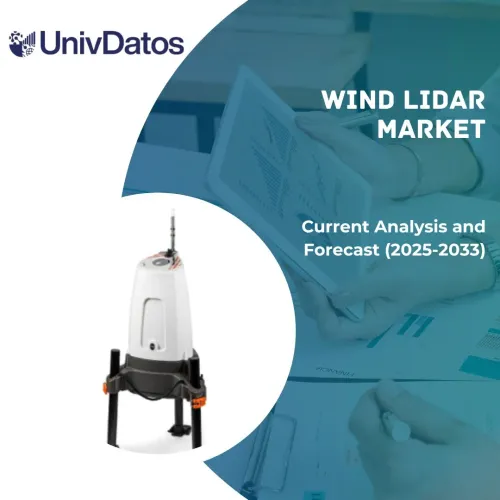
Wind LiDAR Market: Current Analysis and Forecast (2025-2033)
Emphasis on Product Type (Vertical Profiling Wind LiDAR, Ground-Based Wind LiDAR, Nacelle-Mounted Wind LiDAR, Airborne Wind LiDAR, and Others); Component (Sensor, Navigator, Laser, and Others); Location (Onshore and Offshore); Application (Wind Power, Meteorology & Environment, and Aviation); and Region/Country